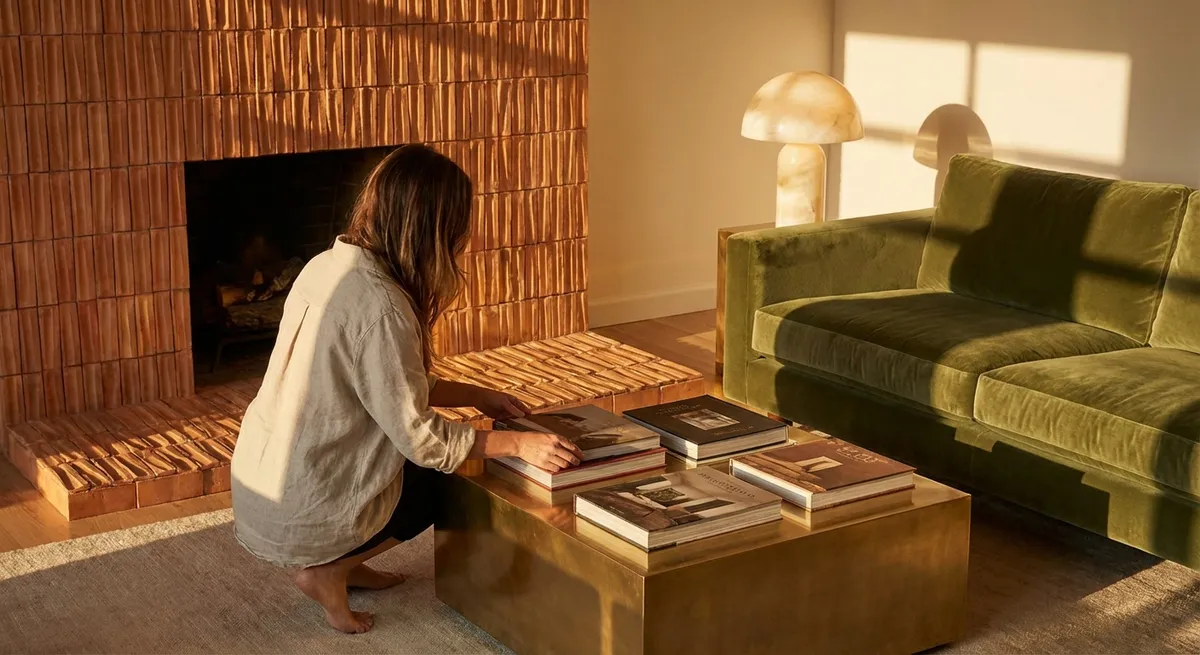
Below are five exclusive, design-forward insights for homeowners who expect more from their tile than pattern and durability. These concepts are less about trends and more about enduring nuance—subtle decisions that distinguish a competent installation from a genuinely exceptional one.
1. Designing in Layers: Treating Tile as a Spatial Story, Not a Single Surface
Most projects begin with one big question: “What tile should we choose?” Sophisticated spaces, however, start by asking, “What sequence of surfaces do we want to experience?” Instead of selecting tile per room, think in layers—foyers, thresholds, transitions, and sightlines—so that the home reads as a continuous story rather than a series of episodes.
Consider how a honed limestone at the entry quietly hands off to a soft, matte porcelain in the kitchen, while a complementary, smaller-scale mosaic appears only in intimate zones such as a bar niche or shower floor. The same palette appears in different scales and textures, creating continuity without repetition.
Let your floor plan dictate where the story changes. Align shifts in pattern or format with natural breaks in architecture—doorways, cased openings, or changes in ceiling height—instead of arbitrary lines in the middle of a room. This not only feels intentional but subtly guides guests through the home.
Think of the walls as a second layer of the narrative. A restrained wainscot of elongated subway tile in a powder room can echo the proportions of large-format floor tiles nearby, while a single dramatic feature wall—perhaps a veined porcelain slab—anchors the entire composition. The goal is coherence without uniformity: one language, multiple dialects.
2. The Art of Restraint: Luxury Through Controlled Contrast
Premium tile design isn’t afraid of contrast—it simply curates it. The difference between refined drama and visual noise is not the amount of contrast, but how precisely it’s controlled.
Begin with one dominant character: perhaps a warm, stone-look porcelain with gentle veining, or a deep charcoal tile with a velvety matte finish. Everything else should support that protagonist. Grout tone, trim pieces, and adjacent materials (wood, plaster, metal) should be chosen to either heighten or soften the tile’s presence, not compete for attention.
Use contrast selectively and deliberately. A dark pencil liner tracing the edge of a light shower niche, or a single band of textured tile at eye level in an otherwise smooth wall, creates a tailored effect—akin to a well-chosen lapel on a custom suit. Similarly, a highly patterned encaustic-style tile feels more elevated when framed by quiet, solid fields that give it room to breathe.
Color temperature is as important as color itself. Pair cool marbles with cooler whites and metals like chrome or brushed nickel; match warm, earthy porcelains with off-whites, brass, or bronzed finishes. This harmonizing of undertones is often the difference between “nice tile” and a space that feels intentionally composed.
3. Precision in the Lines: Elevating Layout, Grout, and Scale
To a discerning eye, luxury begins long before the first tile is set—it begins in the drawing. Layout planning is where refinement lives, and where many installations quietly fall short.
Start by anchoring your layout to the architecture, not to the room’s perimeter. Center lines on key elements: an island, a soaking tub, a fireplace, or a window. Make sure grout joints align with thresholds, doorways, or the midline of focal features wherever possible. This alignment creates a sense of visual order that guests may not consciously notice, but will absolutely feel.
Grout deserves as much thought as the tile. For a seamless, gallery-like look, choose grout that nearly disappears into the body of the tile, especially with stone or large-format pieces. When the design leans on geometry—a herringbone floor, a chevron wall, or a small-format mosaic—a slightly contrasting grout can outline the craftsmanship without feeling busy. The key is nuance: one or two shades lighter or darker, not a stark jump.
Scale is your ally in sophistication. Large-format tiles (24x24, 24x48, and beyond) on floors create a calm, generous canvas, particularly in open-plan living spaces. In more intimate zones—showers, powder rooms, dressing areas—introduce smaller formats or mosaics where the human body engages closely with the surface. Think of scale as proxemics: the closer you are, the finer the detail should be.
Don’t overlook edge conditions. Mitred corners, properly aligned bullnose, or metal trim profiles finished to match your fixtures all telegraph craftsmanship. Poorly finished edges betray even the most expensive material; carefully resolved edges quietly suggest a higher tier of design and execution.
4. Curated Texture: Sculpting Light and Tactility with Tile
Sophisticated interiors consider not just how a surface looks, but how it receives light and how it feels to the touch. Texture, when curated thoughtfully, becomes a powerful design tool rather than mere decoration.
In rooms that receive ample natural light, lightly textured or subtly ribbed tiles can produce an elegant play of shadow throughout the day. A vertically fluted wall behind a freestanding tub, for instance, can transform morning light into a gentle, shifting pattern that feels almost architectural. In lower-light spaces, smoother, gently reflective surfaces prevent the room from feeling heavy or flat.
Underfoot, pay attention to the dialogue between tile and bare feet. A honed finish, with its soft, low-sheen surface, offers both comfort and understated luxury in bathrooms and primary suites. In entryways or kitchens, where slip resistance matters, look for tiles with micro-texture or structured finishes that provide grip without feeling overtly rough or “outdoor.”
Mixing finishes within the same color family—matte field tile with a matching glossy trim, or a honed floor tile with a polished slab on a vanity—creates layered richness without resorting to busy patterns. The eye reads the subtle difference in sheen as depth and quality.
Finally, consider maintenance as part of the tactile experience. Textures that trap dirt or soap scum can quickly dull the effect of even the most exquisite tile. The most successful designs walk the line between visual interest and cleanability, ensuring that what looks luxurious on day one still feels elevated in year ten.
5. Intimate Moments of Detail: Creating “Discovery Points” with Tile
Luxury often reveals itself in quiet, almost secret details—the ones noticed not on a walkthrough, but while living in the space. Tile is an ideal medium for these “discovery points” that reward closer inspection.
Consider the inside of a shower niche lined in a contrasting mosaic, or a shelf backed with a hand-crafted, subtly irregular tile that reveals its character only when you reach for a book or glass. The risers of a stair, faced with a delicate pattern or a thin border inlaid across each step, create a refined rhythm experienced as one ascends or descends.
Behind closed doors, tile can transform utility into ceremony. A laundry room with a meticulously laid chevron backsplash, or a mudroom bench framed by a crisp, rectified tile wainscot, signals that attention to detail is not reserved only for showpiece rooms. These spaces become small proofs of intent—the homeowner’s quiet signature.
In powder rooms, where guests often encounter the boldest expressions of design, tile can be tailored yet theatrical. A full-height feature wall of deeply veined porcelain, balanced by simple fixtures and restrained lighting, can make a small room feel like a jewel box rather than a compromise on space.
These details are less about cost and more about thoughtfulness. Small areas of premium material, precision-cut borders, or a single meticulously aligned pattern can elevate the entire home’s perceived craftsmanship. The aim is not to overwhelm, but to leave an impression: each encounter with tile feels considered, never accidental.
Conclusion
Refined tile design is as much about what you edit out as what you add in. It’s the alignment of joints with architecture, the control of contrast, the calibration of texture, and the quiet intelligence of detail that distinguish truly elevated work. When surfaces are choreographed rather than merely covered, the home begins to feel composed—measured, intentional, and quietly luxurious.
For homeowners who see tile not just as a finish but as a design language, these insights form a framework: think in layers, curate contrast, prioritize precision, sculpt light with texture, and invest in small moments of discovery. In doing so, tile ceases to be background—and becomes the refined foundation on which the entire experience of the home is built.
Sources
- The National Tile Contractors Association (NTCA) – Technical resources and best practices for high-quality tile installation and detailing
- Ceramic Tile Education Foundation (CTEF) – Articles on craftsmanship, layout planning, and professional tile standards
- The Tile Council of North America (TCNA) Handbook – Authoritative reference on tile assemblies, layouts, and performance considerations
- Porcelanosa – Inspiration & Projects – High-end residential case studies showcasing sophisticated tile use, textures, and finishes
- ArchDaily – Interior Design with Ceramic and Porcelain Tiles – Global design examples illustrating advanced tile composition, scale, and detailing