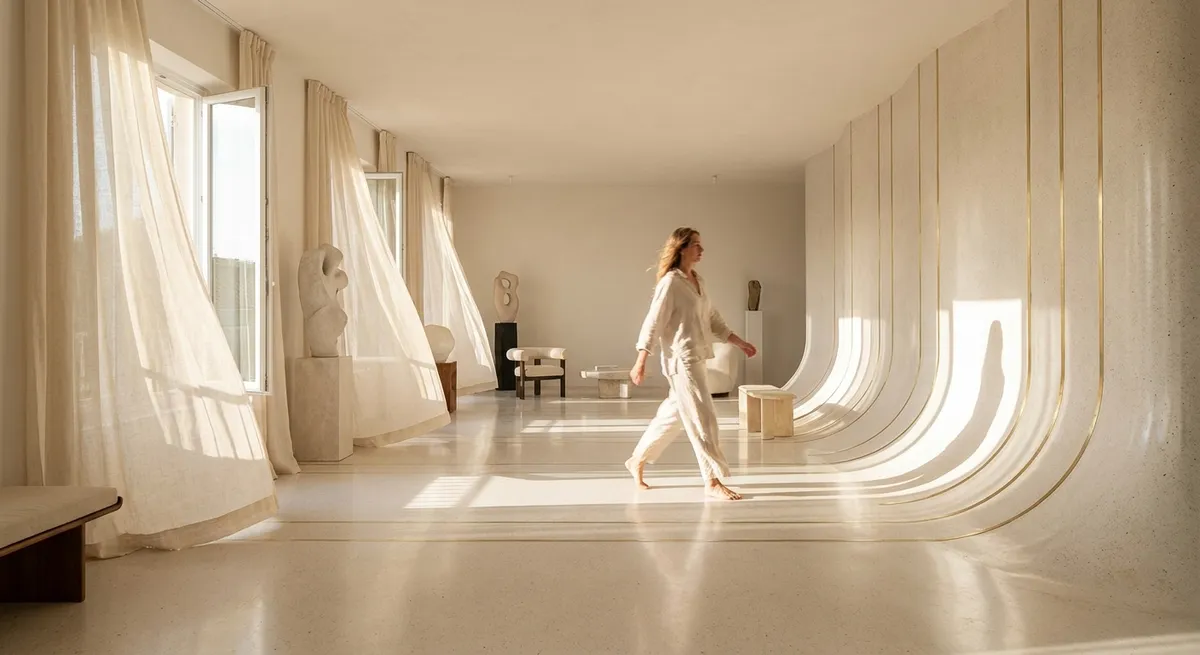
Below are five exclusive, detail‑driven insights that help transform tile from a backdrop into the subtle architecture of a room’s character.
1. Designing a “Visual Spine” Instead of Isolated Rooms
Sophisticated tile schemes don’t treat each room as an island; they establish a visual spine that threads through the home. Think of this as the underlying melody, with each room playing a variation rather than a new song.
Begin with one anchor surface—often the main floor running through an entry, kitchen, and living area. Choose a tile that is calm, enduring, and texturally rich: honed limestone, a restrained porcelain terrazzo, or a low‑contrast concrete-look porcelain. This becomes your base line.
From there, secondary spaces (powder rooms, laundry, ensuite baths) should reference that main tile through tone, finish, or format. A powder room might feature a bolder pattern but in the same palette; a primary bath could use the same family of stone in a smaller format or different finish. The goal is not uniformity, but a deliberate echo that makes the home feel composed, not stitched together.
Pay attention to how this “spine” meets other materials: timber floors, carpet, or stone thresholds. Slim metal trims in brushed bronze or stainless can serve as elegant commas in your visual sentence—clean, precise transitions that preserve the continuity of the spine without abrupt breaks.
2. Curating Light With Tile, Not Just Reflecting It
Tile isn’t merely decorative; it is a light‑shaping tool. The most considered spaces use tile to sculpt how natural and artificial light behaves throughout the day.
High‑gloss glazes on walls can catch grazing light and create a soft, liquid shimmer that enlivens otherwise quiet palettes. In contrast, a honed or matte finish on floors suppresses glare and footfall reflections, yielding a calmer, gallery‑like ambience. Use one to animate, the other to ground.
Orientation matters. Vertical wall tiles elongate sightlines and can make a lower ceiling feel taller, especially when they extend almost to the ceiling with a fine reveal. Horizontally laid tiles visually widen a narrow room and soften the impact of tall cabinetry or shower screens.
In windowed bathrooms and kitchens, be diligent about where the sun lands. Strong direct light on a heavily patterned or high‑gloss floor can feel restless. Reserve the more expressive surfaces for walls that catch softer, angled light, and let the floor remain more understated. Under cabinet or niche lighting should highlight texture: ribbed, fluted, or hand‑pressed tiles become quietly dramatic when lit from above or below with a warm, dimmable strip.
3. Elevating Grout From Afterthought to Design Instrument
A premium tile installation often reveals itself at the grout lines. They are the grid behind the story—a subtle layer of order that can either support or distract from the design.
For a seamless, monolithic look, specify a grout tone that closely matches the dominant hue of the tile. This is especially effective with large-format porcelain, stone-look tiles, or micro-terrazzo floors, where the intent is to read the surface as one continuous field. Minimal contrast allows the tile’s texture and tone to take center stage.
Where the layout or pattern is the hero (for example, a herringbone, chevron, or a meticulously aligned stack bond), a gently contrasting grout can articulate the geometry. The key is restraint: one or two steps darker or lighter, not a harsh, line‑drawing effect. This works beautifully in shower walls, feature niches, and kitchen backsplashes where the rhythm of joints becomes decorative in its own right.
Consider grout joint width as part of the design vocabulary. Narrow joints (1/16–1/8 inch) read more architectural and refined, particularly with rectified porcelain. Slightly wider joints can feel more traditional or rustic and are sometimes appropriate for hand‑made or tumbled tile. Specify performance as carefully as color: epoxy or high-performance cementitious grouts are more stain-resistant—a critical consideration in kitchens and heavily used baths.
4. Using Format and Pattern to Quietly Guide Movement
The most elegant tile layouts do something subtle: they direct how people move through a space without obvious visual cues. Format and pattern can nudge you along a path, frame a focal point, or gently slow you as you approach a significant area.
In long corridors or open-plan living spaces, running bond or staggered planks of porcelain that emulate timber can lead the eye and body along their length. Lay them parallel to the primary direction of travel for a graceful, elongated effect. Conversely, a chevron or herringbone pattern across the path can add a sense of arrival and intentionality, almost like a softly woven runner.
In transitional zones—a mudroom between garage and kitchen, or a vestibule between entry and living room—consider a change in format rather than a change in material. For example, maintain the same stone throughout, but shift from a large-format tile in the living areas to smaller, more tactile mosaics in the mudroom or bathroom. It visually marks the shift in function without sacrificing cohesion.
Borders and “tile rugs” can be refined when executed with discipline: a slender border of the main floor tile framing a contrasting inset beneath a dining table, or a subtle marble mosaic inlay at an entry, flush with the surrounding floor. Align these with architecture (doors, columns, kitchen islands) rather than furniture that may move, so they always feel intentional and well placed.
5. Layering Texture and Scale for Quiet Luxury
Truly elevated tile design rarely shouts. Instead, it layers texture, scale, and subtle variations to create depth that reveals itself gradually.
Begin with one dominant scale—often a large-format tile for main floors and key walls. This establishes calm. Then introduce one secondary scale that brings intimacy to touchpoints: mosaics in shower floors, a smaller brick format on a backsplash, or slender slats in a shower niche. Two or three scales in total, well chosen, feel curated; more than that risks visual noise.
Texture should be purposeful. A slightly structured or slip-resistant finish underfoot in wet areas provides both safety and tactile interest. On vertical surfaces, hand-made or hand-glazed tiles with gentle irregularities can lend warmth and humanity to otherwise minimal spaces. This is particularly effective in kitchens with highly linear cabinetry or in bathrooms dominated by glass and metal.
When mixing materials—ceramic with natural stone, porcelain with concrete, or terra cotta with timber—let one material hold the spotlight while the others play supporting roles. For instance, a veined marble feature wall in a shower pairs best with understated porcelain on the remaining surfaces and a nearly invisible linear drain. The luxury lies not in how much statement you make, but in how controlled and deliberate each decision feels.
Conclusion
Tile, at its most sophisticated, is less about decoration and more about orchestration—of light, movement, and material. By thinking beyond individual rooms and pattern trends, and instead focusing on continuity, light management, grout as a design instrument, directional layouts, and layered texture, you cultivate spaces that feel composed rather than merely finished.
For homeowners who value refinement, these details are where everyday surfaces become a quiet expression of taste: understated, enduring, and unmistakably considered.
Sources
- [The Tile Council of North America (TCNA) Handbook](https://www.tcnatile.com/technical-services/publications/handbook.html) - Industry guidelines on tile layouts, grout joints, and performance standards
- [American Institute of Architects – Residential Design Resources](https://www.aia.org/resources/6077661-residential-design) - Insight into spatial flow, material selection, and architectural coherence in homes
- [Ceramic Tilework: Health, Safety & Durability – U.S. EPA](https://www.epa.gov/indoor-air-quality-iaq/ceramic-tile-flooring-and-other-surfaces) - Discussion of tile surfaces, indoor environments, and performance considerations
- [Design Principles: Light & Space – MIT OpenCourseWare](https://ocw.mit.edu/courses/4-341-introduction-to-architecture-design-spring-2014/pages/lecture-notes/) - Explores how light interacts with architectural surfaces and materials
- [Porcelain Tile Certification – Porcelain Tile Certification Agency](https://ptcausa.com/) - Technical information on porcelain tile quality, absorption, and recommended applications