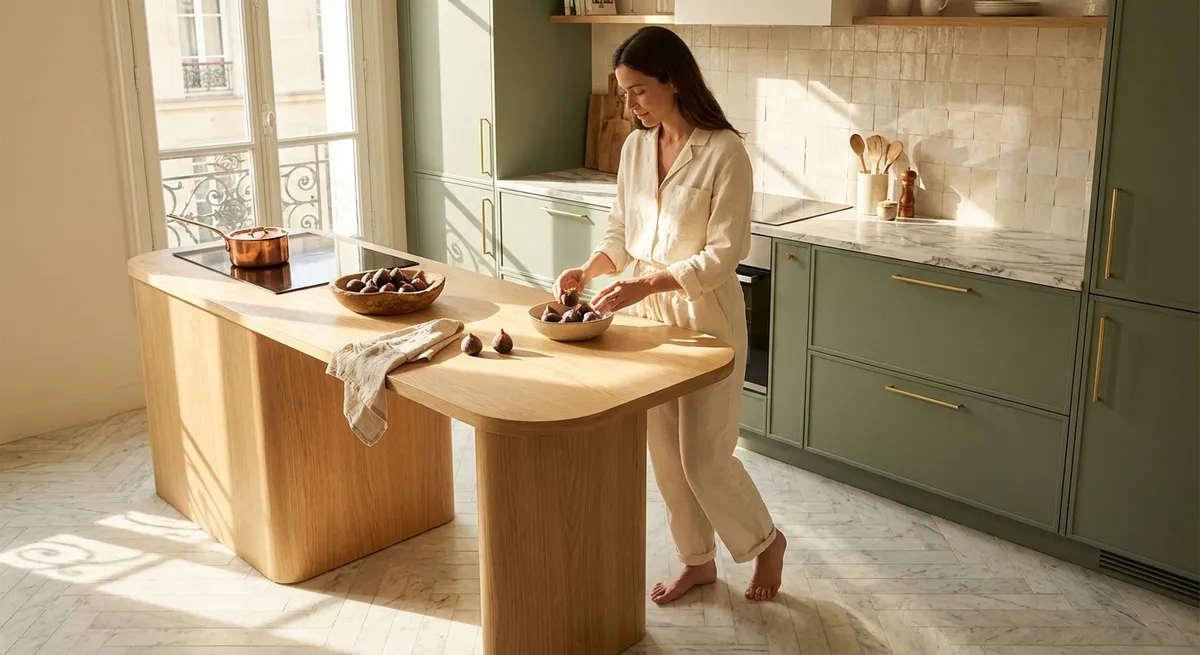
Below are five exclusive, design‑driven insights that move beyond trends and into the realm of lasting, refined tile work—ideas you can bring to your architect, designer, or tile setter to shape a home of rare composure.
1. Designing With Light, Not Just Layout
Most tile plans begin with the floor plan; the more sophisticated approach begins with the light.
Instead of starting with “where does the tile go,” consider “how will the light read this surface at 8 a.m., at dusk, and in low evening light.” Gloss, satin, and honed finishes all interact differently with natural and artificial light, and that interplay can subtly choreograph how a room feels throughout the day.
In a north-facing bathroom, a satin or semi-polished wall tile adds a soft, diffused glow without the clinical glare of full gloss. In a sun-drenched kitchen, a honed or matte floor prevents visual “hot spots” while still allowing a delicate grazing light across the surface, emphasizing artisanal texture rather than specular shine. Directional lighting—such as wall washers over a tiled feature wall or cove lighting along a tiled niche—can intentionally highlight a handcrafted edge, a troweled surface, or a gentle variation in tone, lending depth and dimension.
Thoughtful alignment between tile finish, window placement, and lighting design transforms tile from a mere protective layer into a luminous surface that evolves quietly with the day.
2. Quiet Geometry: Using Proportions to Calm the Space
Many installations treat tiles as repeating units; refined spaces treat them as elements in a geometric composition.
When selecting tile sizes and layouts, think in terms of proportion and rhythm. Large-format tiles with generous proportions (for example, 24" x 48" or elongated planks) visually expand a room and minimize grout interruptions, which is especially powerful in smaller bathrooms or long corridors. But the true elegance comes from how those proportions relate to the architecture: aligning tile joints with window mullions, vanity edges, door frames, or stair treads creates a continuous visual grid that feels composed rather than incidental.
Subtle shifts in pattern can also alter the room’s emotional tone. A vertical stack bond in a shower niche lifts the eye and heightens the wall, while a horizontal stack bond along a backsplash emphasizes linear calm. Herringbone with long, narrow tiles feels more tailored and contemporary than traditional, busier chevron layouts; laid at a shallow angle relative to circulation, it can gently “steer” movement through a space.
By orchestrating proportions and geometry with intention, tile becomes a tool for restoring visual order and tranquility, especially in open-plan homes where multiple functions share a single field of view.
3. Layered Neutrals: Elevating “Simple” Into Subtle Luxury
Neutral tile is often dismissed as safe or predictable. Yet neutral done well—layered, textured, and tonally calibrated—is one of the most luxurious expressions of tile design.
Begin with an anchor tile: this could be a porcelain that convincingly echoes limestone, a softly variegated zellige, or a finely grained terrazzo. Then build a restrained supporting cast rather than a competing ensemble. For instance, pair a warm grey stone-look floor with a slightly lighter, cooler-toned wall tile to create barely-there contrast that reads as shadow rather than pattern. Introduce a third, highly tactile surface in a related tone—such as a fluted tile on a vanity wall or a ribbed ceramic in a shower niche—to add depth and touchable interest without disturbing the palette.
The sophistication comes from tonal discipline: staying within a narrow value range while varying texture and format. Instead of adding a bold accent color, consider a shift in sheen (matte field tile with a satin mosaic inset) or a small change in scale (large main tiles with a tight, small-format border). These moves create richness that reveals itself slowly, standing up to time and changing tastes.
In this approach, “neutral” becomes anything but generic; it becomes the visual equivalent of a tailored cashmere coat—unassuming yet unmistakably elevated.
4. Thresholds as Moments, Not Afterthoughts
Where one surface meets another, the story of the home either breaks—or becomes more compelling. Thresholds, transitions, and edge conditions are where premium tile work truly distinguishes itself.
Instead of standard metal strips or abrupt material changes, consider designed transitions. A slender band of mosaic or a single row of elongated tile can bridge between wood and stone, echoing the tones of both materials. In bathrooms, running the floor tile up the wall by a few inches as a plinth or “baseboard” creates a tailored, custom-built appearance and provides practical protection from splashes and cleaning.
For room-to-room connections, explore elongated stone or porcelain thresholds that sit flush with both surfaces, maintaining a continuous plane and avoiding the trip-prone ridge of traditional saddles. Where tile ends at painted walls, mitered corners, minimal bullnose, or tightly detailed schluter profiles can make edges vanish rather than shout.
By elevating these seemingly minor details, you create a sense of architectural continuity: every room feels linked to the next, and every surface change reads as a deliberate design decision rather than a construction compromise.
5. Narrative Zoning: Using Tile to Shape How Rooms Are Lived In
Tile can quietly guide how a home is used, without a single wall being moved. Instead of thinking of tile as “wet-area material” only, consider its potential to define zones and rituals.
In an open-plan main level, a change in tile pattern or tone beneath a dining table visually “grounds” the area much like a rug would, but with far better durability. In an entry hall, continuing the same stone-look porcelain from outside to inside—perhaps in a slightly smoother finish indoors—blurs the boundary and creates a sense of arrival that feels both grand and easy to maintain.
In bathrooms and primary suites, consistent tile in both bedroom vestibule and bath can connect daily routines into a single, flowing experience. A softly textured tile “runner” along a kitchen’s working zone subtly indicates where the chef stands, differentiating function without erecting physical barriers.
These narrative uses of tile—anchoring, guiding, connecting—elevate it from a merely practical surface to a design language that orchestrates how the home is experienced day to day. Homeowners who embrace this mindset often find their spaces feel more intuitive, coherent, and genuinely tailored to their lives.
Conclusion
Exceptional tile design is rarely about spectacle; it is about control—of light, proportion, texture, and thresholds. When these elements are orchestrated with intention, tile stops being a background finish and becomes a quiet framework for daily life, lending a sense of calm, continuity, and cultivated taste to every room it touches.
For homeowners who view their residence as a long-term composition rather than a short-term project, approaching tile with this level of nuance pays lasting dividends. The surfaces underfoot and at hand will not only endure; they will age with grace, revealing the care and thought invested in every joint, transition, and plane.
Sources
- Ceramic Tile Distributors Association (CTDA) – Tile Trends & Design – Industry perspectives on emerging tile trends and design directions.
- Porcelanosa – Tile Finishes and Applications – Overview of finishes, formats, and suitable uses in premium residential projects.
- Florim – Large Format Porcelain and Design Guidelines – Technical and aesthetic considerations for large-format porcelain in contemporary design.
- U.S. General Services Administration – Flooring Guidelines – Authoritative guidance on flooring performance, transitions, and durability.
- University of Minnesota – Residential Lighting Design – Principles of residential lighting that inform how tile finishes and textures are perceived.