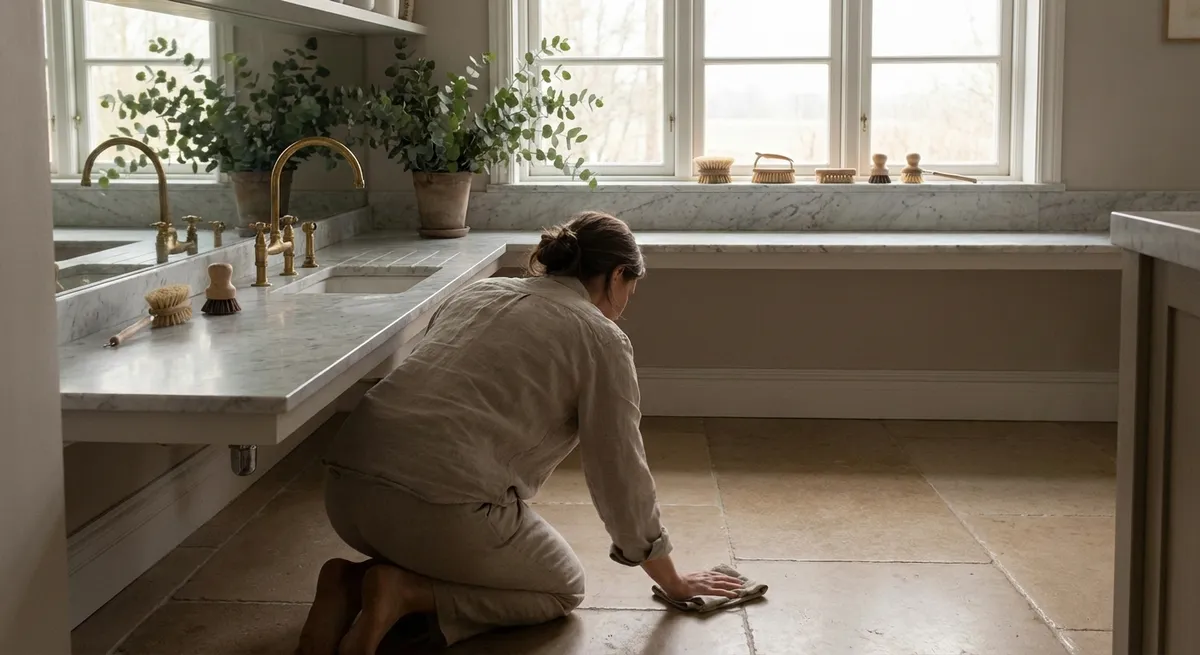
Below are five exclusive, often-overlooked maintenance insights that separate merely “well-kept” tile from surfaces that age with genuine grace.
1. Treat Grout as a Finish, Not a Filler
Many homeowners lavish attention on the tile itself while treating grout as an afterthought. Yet visually, grout is the field on which your tile pattern rests—and its condition dramatically influences how “fresh” or “fatigued” a room feels.
Think of grout as a finish, akin to fine millwork. That means:
- Early sealing as a design decision: Once grout has cured (typically after 48–72 hours, per manufacturer guidance), sealing is not a chore but a step in preserving color consistency and crisp joints. High-performance penetrating sealers protect without altering the matte elegance of quality grout.
- Color stewardship: Routine cleaning with a pH-neutral cleaner prevents gradual discoloration, especially in light or warm-toned grout. Avoid “brightening” powders or harsh scouring agents that can abrade the surface and roughen joints, making them more receptive to future staining.
- Focused grout-only cleaning: Every few months, treat the grout lines independently: a soft nylon brush, a neutral cleaner, and patient, linear strokes along the joints. This detail work sharpens the entire installation visually—much like pressing a suit transforms the fabric you already own.
- Scheduled resealing, not emergency sealing: Reseal high-traffic or splash-prone grout on a rhythm (often annually in kitchens and entries, every 2–3 years in light-use spaces), before staining becomes an issue. Preventive attention is far more elegant than corrective scrubbing.
When grout is maintained as a designed element rather than a byproduct, the entire surface appears more intentional, more architectural, and more expensive.
2. Calibrate Cleaning to the Tile’s Personality
Not every tile wants to be treated the same. Porcelain, natural stone, and handmade tiles each have their own “temperament,” and maintenance that honors those differences quietly extends their life and beauty.
- Porcelain and ceramic: These dense, non-porous tiles appreciate simplicity. A pH-neutral cleaner, warm water, and a microfiber mop are usually sufficient. Avoid waxes or glossy coatings that form a film; instead, maintain the original finish, whether matte, honed, or polished.
- Natural stone (marble, limestone, travertine, slate): These are more sensitive and porous by nature.
- Never use vinegar, lemon-based products, or acidic bathroom cleaners; they can etch and dull the surface.
- Opt for cleaners specifically formulated for stone, and keep an eye on sealer performance: if water no longer beads on the surface, it is time to reseal.
- Textured and matte tiles: Structured porcelain and anti-slip finishes can capture fine dirt in their micro-texture. A two-step approach—a vacuum or soft broom followed by a damp mop—ensures that you are not simply driving grit deeper into texture.
- Handmade or encaustic cement tiles: These artisanal surfaces often demand gentler routines and careful adherence to manufacturer recommendations. Overly strong cleaners can strip protective treatments or affect coloration.
Aligning your cleaning products and techniques with the specific material communicates respect for the tile’s character—and that respect is reflected back as lasting clarity, depth, and tactility.
3. Master the “Micro-Response” to Spills and Foot Traffic
The difference between a surface that quietly ages and one that obviously wears often comes down to the first few minutes—and the first few weeks—of daily life.
- Immediate, not aggressive, response: Coffee, wine, cooking oils, and cosmetics should be addressed quickly, but gently. Blot, don’t scrub. Introduce cleaner only after excess liquid has been lifted so you do not push pigment deeper into grout or stone.
- Soft tools by default: Microfiber cloths and mops have a unique advantage: they capture particles rather than simply moving them. This reduces the “micro-scratching” that can gradually dull glazed or polished finishes.
- Traffic choreography: Place high-quality mats or runners at exterior entries, but ensure they complement your design rather than fight it. The goal is to remove grit before it reaches tile, particularly in long hallways or open-plan living areas.
- Rotating focus zones: Once a month, select a different “zone of attention” (kitchen perimeter, main bath, entry, or mudroom). Give it ten extra minutes—edge cleaning along baseboards, corners, and under cabinet overhangs. This subtle rotation preserves a uniform standard across the home without requiring a marathon cleaning session.
This philosophy is not about perfectionism; it is about thoughtful micro-responses that prevent small, repeated assaults from accumulating into visible wear.
4. Honor Movement Joints and Edges as Critical Details
In the most refined installations, movement joints and edges are almost invisible—yet they are crucial to performance. Ignoring them during maintenance can compromise even the finest tile work.
- Respect flexible joints: Silicone or urethane caulks at perimeters, along bathtubs, and where tile meets other materials are not aesthetic compromises; they are engineered allowances for expansion and contraction. Clean these joints gently to avoid cutting, tearing, or pulling at them.
- Mind the transitions: Where tile meets wood flooring, metal trims, thresholds, or shower pans, take extra care. Use soft brushes rather than metal or overly stiff tools to lift debris from edges without scuffing trims or chipping tile edges.
- Avoid flooding: Excessive water during mopping can infiltrate under baseboards, edge trims, or unsealed joints, undermining adhesives or subfloors over time. A well-wrung mop and controlled moisture are luxuries in disguise—they protect the unseen layers that keep tile flat and secure.
- Gentle inspection as you clean: Maintenance time is also inspection time. As you move through the space, note any slight movement, hollow sound, hairline cracking, or soft caulk. Early detection allows a discreet, contained repair instead of an intrusive intervention later.
Treating edges and movement joints as integral parts of the surface composition, rather than mere boundaries, supports both the visual continuity and structural serenity of your tile.
5. Establish a Seasonal “Reset” for Tile Brilliance
Day-to-day routines preserve cleanliness; seasonal resets preserve refinement. A considered, quarterly approach allows you to recalibrate conditions before minor changes become visible flaws.
A seasonal tile reset might include:
- Deep but delicate cleaning: Use a pH-neutral, residue-free cleaner over the entire floor or wall surface, followed by a second pass with clean water to remove any remaining product. This prevents build-up that can cloud finishes or create dull patches.
- Sealer evaluation: For natural stone and unglazed tile, perform a simple water-drop test in a discreet location. If water darkens the tile quickly rather than beading, discuss resealing with a professional or follow manufacturer guidelines for a premium, breathable sealer.
- Lighting-based inspection: View your tile under different light conditions—daylight, evening ambient lighting, and task lighting. Oblique light will reveal streaks, film, or etched areas that are less obvious head-on. Subtle correction now preserves a uniform visual field later.
- Refinement of tools and products: Replace worn mop heads, past-their-prime brushes, and half-used experimental cleaners you will never realistically use. Curate a small, trusted set of products that are compatible with your specific tile types and finishes.
- Strategic professional support: Every few years—especially for extensive stone installations or legacy tile in a main living area—engage a professional cleaning and sealing service that specializes in tile and stone. A properly executed professional refresh can restore luminosity that is difficult to achieve with consumer tools alone.
A seasonal reset transforms tile care from a reactive obligation into a deliberate, curated ritual—one that reinforces the quiet luxury your surfaces already suggest.
Conclusion
Enduring tile beauty is less about perfection than about intention. When grout is treated as a designed element, cleaning is calibrated to material personality, spills and traffic are met with measured micro-responses, edges are respected as structural details, and seasonal resets are observed, tile stops being a surface and becomes an architectural constant.
In the most elevated homes, tile is not simply “maintained”; it is stewarded. With these five insights, your floors and walls can age with the same composed confidence as the rest of your home—quietly, gracefully, and unmistakably well cared for.
Sources
- U.S. Environmental Protection Agency – Safer Choice: Cleaning Products - Guidance on selecting safer, effective cleaning solutions for home surfaces
- Natural Stone Institute – Stone Care, Maintenance and Sealing - Professional recommendations for cleaning and sealing natural stone surfaces
- Tile Council of North America (TCNA) – Resources for Homeowners - Authoritative information on tile performance, grout, and maintenance best practices
- Martha Stewart – How to Clean Tile Floors - Practical overview of cleaning methods and product considerations for various tile types
- This Old House – Caring for Natural Stone - Detailed advice on everyday care and periodic maintenance of natural stone tile