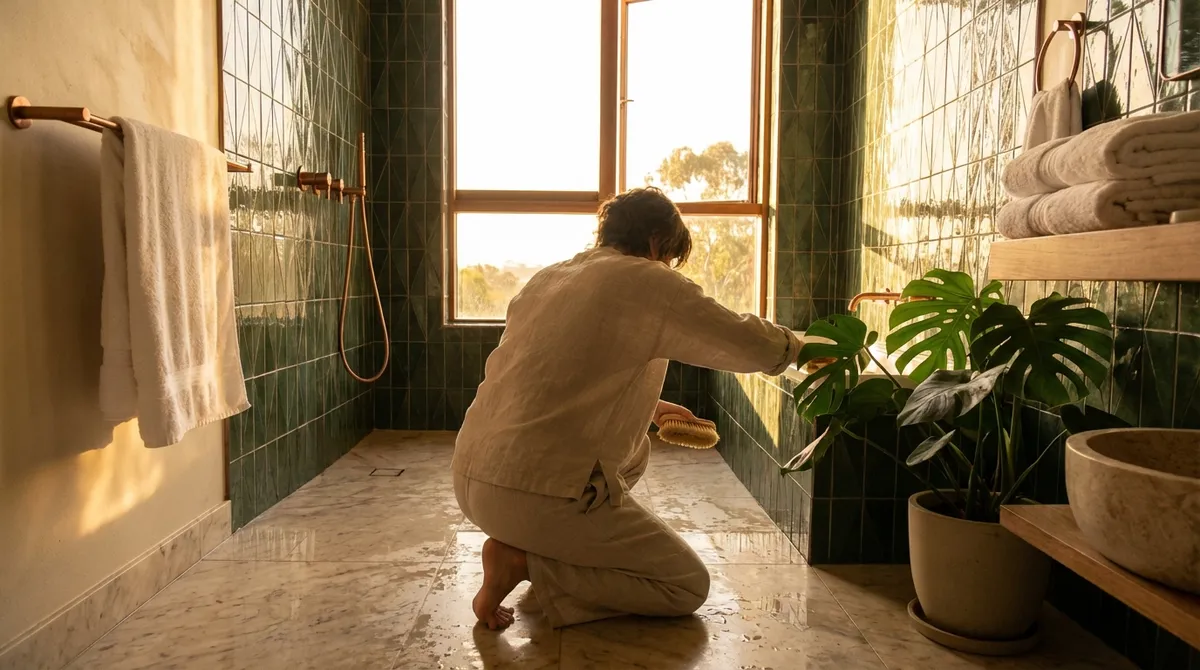
Below are five exclusive, detail-driven insights designed for those who view tile not as background, but as an architectural investment worthy of precision and restraint.
1. The pH Discipline: Curating a Gentle Cleaning “Wardrobe”
Sophisticated tile maintenance begins with understanding pH, not brand names. Ceramic, porcelain, and most natural stones all respond best to cleaners that sit close to neutral on the pH scale—neither aggressively acidic nor harshly alkaline. Acidic cleaners (like vinegar, citrus-based products, or bathroom descalers) can etch natural stone and slowly weaken cementitious grout, while very alkaline degreasers can dull glazes and leave persistent films that attract soil.
Curate a minimal “wardrobe” of products: a pH-neutral cleaner for routine care, a stone-safe option if you have marble or limestone, and a carefully chosen targeted product for soap scum or mineral deposits in wet areas. Store these together with soft microfiber mops and cloths, so the system is as elegant as the surfaces it serves. Over time, this disciplined restraint prevents the dulling, streaking, and premature aging that often come from aggressive over-cleaning rather than from use itself.
2. Grout as a Design Detail: Protecting the Negative Space
Grout is often treated as a technical necessity, but in a refined space it functions as negative space—the visual pause that defines the tile’s geometry. Protecting grout is therefore both a practical and an aesthetic concern. Unsealed or poorly maintained grout absorbs spills, oils, dyes, and everyday soil, gradually shifting from crisp to murky; the tile may be spotless, yet the floor reads as tired.
Begin by confirming whether your grout is sealed and when it was last maintained. Lightly mist water onto a discreet area: if it darkens immediately and the droplet disappears into the joints, it is time to reseal. Use a penetrating sealer suited to your grout type (cement-based, epoxy, or specialty), and apply with a small applicator bottle or foam brush to keep it off tile surfaces. Regular gentle cleaning—rather than sporadic scrubbing with stiff brushes—protects the grout’s edges from abrasion. The result is a cleaner grid, sharper lines, and a floor that registers as intentionally composed, not merely installed.
3. Managing Micro-Debris: The Invisible Enemies of Shine
The dulling of tile often has less to do with stains and more to do with micro-scratches from fine grit. Dust, sand, and minute fragments act like an invisible sandpaper underfoot, particularly on polished porcelain and natural stone. Over months and years, these microscopic abrasions can subtly mute reflections and create a soft haze that no cleaner can fully reverse.
Adopt a low-key, high-frequency approach to dry maintenance. Use a soft, high-quality dust mop or vacuum with a hard-floor setting and brush roll disabled, ideally once per day in high-traffic areas. Place generously sized, low-profile mats at exterior entries—and ensure they are long enough to capture several steps, not merely decorate the threshold. For homes with pets, consider a quick pass with a dry mop in the evening; the cumulative effect of this small act is a surface that retains its original clarity far longer than one subjected to occasional deep-clean marathons.
4. Moisture Management: Quietly Controlling the Environment
Water itself is not the enemy of tile; unmanaged moisture is. In bathrooms, steam rooms, and kitchens, maintaining a stable moisture environment is as important as the tile installation itself. Persistent humidity can darken grout, encourage mildew in corners and transitions, and, over time, stress movement joints and backer boards behind the scenes.
Blend practical controls into the architecture of your routine: run a properly sized, vented exhaust fan for at least 20 minutes after showers; keep shower doors or curtains partially open to allow air circulation; and periodically inspect silicone joints at corners, niches, and along tub edges. On floors, do not allow standing water to linger after mopping—especially on natural stone or wood-look tiles with deeper relief that can trap water and debris. A quick, final pass with a dry microfiber pad quietly shortens drying time and helps preserve both grout integrity and surface luster.
5. Precision Care for High-Touch Zones and Thresholds
Tiles do not wear evenly; they age according to how you live. Entry thresholds, kitchen prep zones, and tight transitions at doorways all experience disproportionate stress. Treating these areas with tailored attention prevents localized wear from undermining the overall impression of refinement.
Start by mapping “pressure points” in your home: the corridor where everyone naturally walks, the exact footprint in front of the sink, the spot where chairs are pulled back from the dining table. Consider discreet, well-designed runners or flat-weave rugs in these zones, with non-staining, tile-safe underlays. Periodically check chair glides, appliance feet, and movable furniture for hardened pads or exposed metal. For shower floors and bath entries, ensure that small movements—like a sliding glass door or a bathmat with an abrasive backing—are not slowly scuffing high points on the tile. This kind of precise, localized care allows the entire surface to read as even and intentional, rather than pristine in some areas and obviously fatigued in others.
Conclusion
Long-lived, luxurious tile surfaces are not the result of obsessive scrubbing, but of quiet, consistent discernment. By respecting pH, treating grout as a design element, controlling micro-debris, managing moisture, and giving extra attention to high-touch zones, you transform maintenance from a chore into an architectural ritual. The reward is a home where every tiled surface—underfoot, underhand, and under scrutiny—reflects the same level of consideration with which it was originally selected and installed.
Sources
- Ceramic Tile Institute of America – Maintenance Guidelines - Technical reports and best practices for cleaning and maintaining ceramic and porcelain tile
- Tile Council of North America (TCNA) – Consumer Resources - Authoritative guidance on grout, sealers, and proper tile care
- Natural Stone Institute – Stone Care & Maintenance - Detailed recommendations for cleaning and preserving natural stone surfaces
- U.S. Environmental Protection Agency – Indoor Air and Moisture - Guidance on controlling moisture and humidity in residential environments
- Consumer Reports – How to Clean Tile Floors - Practical testing and advice on tile-safe cleaning products and methods