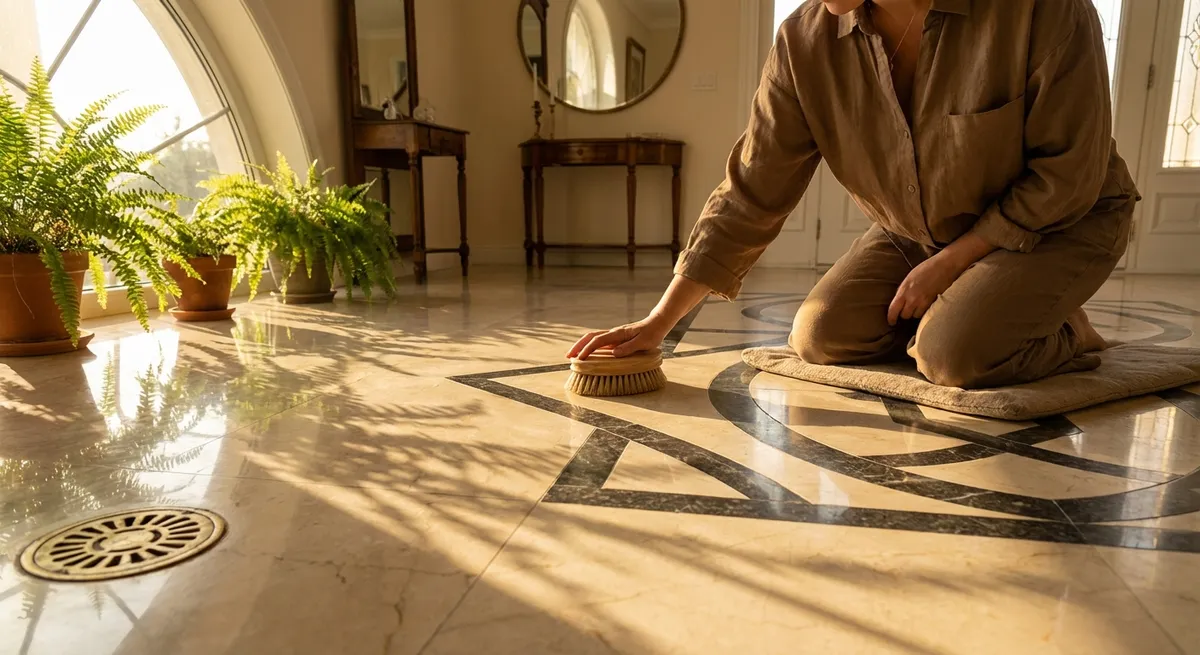
Below, you’ll find a curated set of maintenance insights designed not for rushed weekend cleaning, but for those who value longevity, subtle sheen, and the quiet satisfaction of surfaces that always look composed.
Insight 1: Treat Grout as a Design Material, Not a Byproduct
Most homeowners maintain tile and neglect grout—yet grout lines are the visual framework that defines every tiled surface.
Grout is porous and micro-textured, which makes it both structurally indispensable and highly vulnerable to staining. Instead of treating grout as mere filler, approach it like a design material that deserves its own maintenance strategy. Regularly vacuum grout lines before mopping to prevent abrasive grit from being ground into the joints. Once or twice a year, use a pH-neutral, grout-specific cleaner and a soft-bristle brush, working in small, controlled sections. For premium installations, consider a penetrating grout sealer that preserves the original tone without adding surface sheen—a sophisticated choice that protects while remaining visually silent. By elevating grout to “first-class” status in your routine, you preserve both the clarity of your tile layout and the crispness of every line.
Insight 2: Balance pH Like a Sommelier Curates Pairings
Just as a sommelier carefully pairs wine to food, discerning homeowners should pair cleaners to tile and stone with equal intentionality.
The chemistry of your cleaning solution is as important as the brand label. Acidic cleaners can etch natural stone like marble, limestone, and travertine, dulling the finish and leaving subtle but permanent marks. Strong alkaline cleaners, meanwhile, may degrade certain sealers and damage epoxy or colored grouts over time. A pH-neutral cleaner—preferably one recommended by your tile or stone manufacturer—offers a safe baseline for weekly care. Reserve more active formulas only for targeted stain removal, and always test in an inconspicuous area before proceeding. This measured approach not only preserves finishes, it maintains a consistent sheen and color tone across large surfaces, which is essential in high-visibility spaces like entry halls and open-plan living areas.
Insight 3: Protect High‑Traffic Zones With Invisible “Load Management”
In refined interiors, the most successful protection strategies are often the least noticeable.
Rather than waiting for wear patterns to appear, anticipate where traffic naturally concentrates: the kitchen triangle between sink, cooktop, and refrigerator; the strip just inside exterior doors; the run along a kitchen island; or the corridor from bedroom to bath. Introduce subtle, high-quality rugs or runners with non-staining, tile-safe backing in these paths. Use felt pads under dining chairs and barstools to prevent micro-scratches that can slowly matte a polished surface. In wet zones, such as showers and around freestanding tubs, maintain impeccable ventilation and squeegee walls and floors after use to prevent mineral buildup and mildew in corners. This concept of “load management” allows your tile to absorb daily life without displaying it, preserving an even, unblemished appearance throughout the space.
Insight 4: Clean for Clarity, Not Shine
True luxury in tile maintenance is not about an aggressive, mirror-like gloss—it’s about clarity, uniformity, and restraint.
Over-polishing and wax-based products can create artificial shine, uneven reflection, and residue that attracts dirt. Instead, aim for a finish that respects the original character of your tile—matte should remain matte, honed should retain its soft luster, and polished should feel reflective but not slippery or coated. Use minimal product, well-diluted, and work with two tools: a slightly damp microfiber mop for application, followed by a clean, dry microfiber pad or towel to remove any residual film. In showers and baths, keep glass and tile interfaces immaculate; water spots, soap film, and metal oxidization can detract from even the most precise tile layout. When maintenance is executed with this level of finesse, the eye reads the surface as calm and coherent, not “cleaned”—a subtle but meaningful distinction in a premium interior.
Insight 5: Schedule Maintenance With the Precision of Seasonal Wardrobe Care
Elegant spaces rarely rely on ad hoc upkeep; they follow a quiet but consistent cadence.
Think of your tile maintenance the way you might manage a curated wardrobe: daily habits, weekly rituals, and seasonal appointments. Daily, address standing water and visible spills immediately—especially on natural stone and light grout—to prevent absorption and shadow staining. Weekly, vacuum, dust, and mop with a pH-neutral cleaner, giving special attention to thresholds, corners, and under cabinetry overhangs where grit accumulates. Monthly, inspect grout lines, silicone joints, and transitions (such as where tile meets wood or metal) for hairline cracks, discoloration, or lifting. Biannually or annually, depending on use and material, reapply penetrating sealers to natural stone and unglazed tile per manufacturer guidance. This structured, almost sartorial approach ensures your tile never arrives at a “restoration emergency”—only gentle, periodic refinement.
Conclusion
Exceptional tile work deserves a maintenance philosophy that matches its craftsmanship. When grout is treated as a design element, chemistry is approached with precision, traffic is quietly managed, finishes are preserved rather than altered, and care follows a considered schedule, tiled surfaces cease to be merely durable—they become enduring.
For homeowners who see their environment as a long-term expression of taste, these practices are less about “cleaning” and more about stewardship. The reward is a home where every tiled plane—from shower niche to kitchen floor—retains its composure, season after season.
Sources
- Tile Council of North America (TCNA) – Care & Maintenance Guidelines - Industry-backed recommendations for cleaning and maintaining different types of tile surfaces
- MAPEI – Grout and Tile Maintenance Tips - Technical guidance on cleaning and preserving grout and tile installations
- U.S. General Services Administration – Historic Stone and Tile Maintenance - Professional procedures for long-term care of stone and tile in high-value buildings
- Marble Institute of America (Natural Stone Institute) – Stone Care Recommendations - Best practices for cleaning, sealing, and maintaining natural stone surfaces
- American Ceramic Society – Ceramic Tile Basics and Durability - Background on ceramic tile properties and performance relevant to maintenance decisions