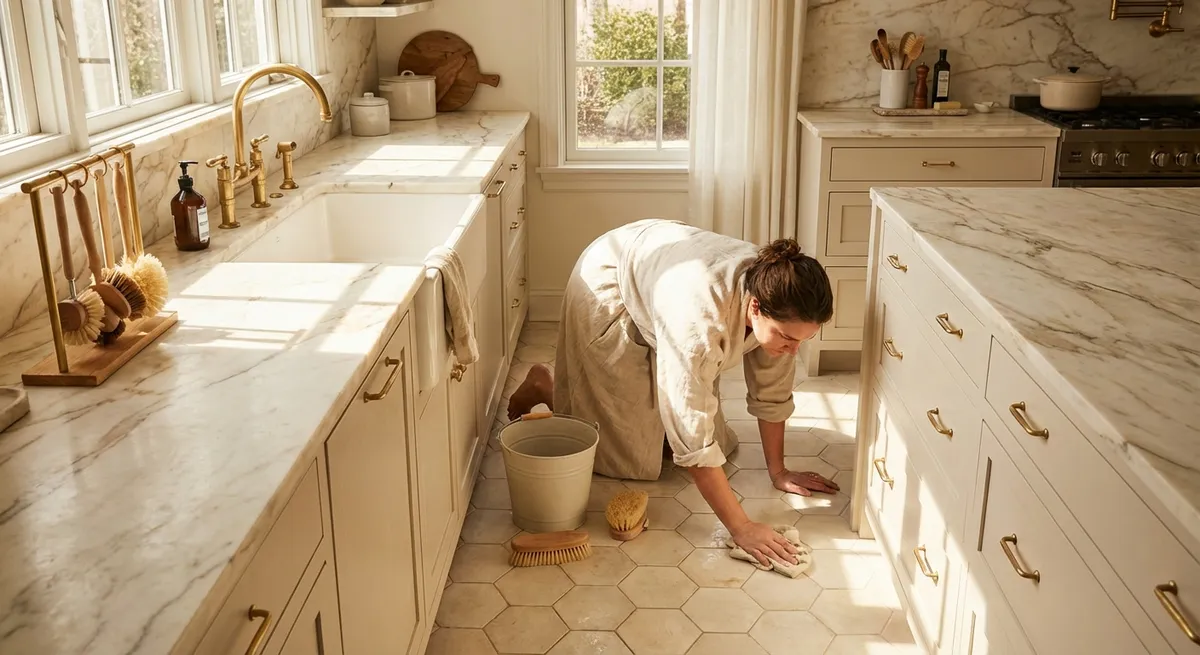
Below are five exclusive, detail‑driven insights designed for those who consider their tile not just a surface, but an investment in the character of their home.
1. Elevating Daily Care: Treat Tile Like Fine Furniture, Not Hard Flooring
Many homeowners assume tile is virtually indestructible and clean accordingly—often with harsh chemicals, abrasive pads, or overly wet mops. The result: gradual dulling, compromised grout, and a slow erosion of the tile’s original depth and clarity.
Begin by re-framing tile as you would fine furniture. Use pH‑neutral cleaners specifically formulated for stone, porcelain, or ceramic, and avoid anything that promises “instant shine” or “deep clean” with aggressive surfactants or acids. For natural stone, acid-based products (including ordinary vinegar or lemon-based cleaners) can etch the surface, leaving permanent, matte rings and spots that even professional polishing may struggle to remove.
Adopt light, frequent care over rare, intense scrubbing. A microfiber dust mop or soft-bristle vacuum attachment (with beater bar turned off) removes grit before it can behave like sandpaper underfoot. Damp mopping with a well‑wrung microfiber pad preserves grout lines and prevents moisture from sitting on the surface. This measured approach respects the tile’s finish, maintains its original luster, and guards against the cumulative damage that reveals itself only after years.
2. Grout as a Design Element: Protecting the “Lines” That Frame Your Tile
In elevated interiors, grout is not merely filler; it is an intentional design line that frames each tile, defines geometry, and even controls the perceived scale of a space. Unfortunately, it is also the most vulnerable element of a tiled surface.
A critical but often overlooked practice is grout sealing—and re‑sealing. Cementitious grout is porous and will readily absorb water, oils, and pigments. High‑traffic kitchens, showers, and entryways benefit from a penetrating, breathable sealer applied according to manufacturer guidelines, often once every 1–3 years depending on use. In busy zones, grouts with built-in stain resistance or epoxy grouts can be a strategic choice, but they still deserve thoughtful care: gentle cleaners and non‑abrasive tools preserve their smooth, refined appearance.
Cleaning grout should never involve metal brushes or stiff, harsh scrub pads, which can erode joints and roughen edges. Instead, opt for a soft nylon brush and a pH‑neutral cleaner. Work in small sections, and avoid flooding joints with water, particularly in older installations where movement or hairline cracks may exist. By treating grout as a visible design asset rather than a structural afterthought, you protect the clean lines and carefully curated patterns that distinguish truly sophisticated tile work.
3. Moisture Management: The Invisible Discipline Behind Immaculate Tile
The true enemy of tile is rarely dirt; it is unmanaged moisture. Even impeccably installed tile can suffer when water is allowed to linger in ways the assembly was never intended to handle. Showers, steam rooms, spa areas, and even kitchen backsplashes require a deliberate moisture strategy if they are to remain pristine.
In wet areas, think beyond surface cleaning. After each shower, a simple squeegee ritual—removing water from walls, glass, and benches—dramatically reduces mineral spots, mildew potential, and long‑term grout staining. Ensuring adequate ventilation, via exhaust fans or operable windows, allows assemblies to dry fully between uses, protecting grout and underlying substrates.
In kitchens, pay attention to splashes around sinks, cooktops, and dishwashers. Immediately wiping water and cooking oils from grout lines prevents slow, almost invisible penetration that can discolor or weaken the joints. On floors, place absorbent but non‑staining mats at exterior doors and sinks to catch water before it can track across the tile.
Moisture management is subtle and nearly invisible to guests—but it is the quiet discipline that lets tile remain crisp, clean-edged, and architecturally sharp for years longer than typical installations.
4. Finishes and Sealers: Honoring the Material Rather Than Masking It
Not every tile should be sealed, and not every glossy product marketed as a “protector” is appropriate. Sophisticated tile maintenance begins with understanding the nature and finish of the material itself.
Natural stones such as marble, limestone, and travertine are often porous and benefit from a penetrating sealer that resides within the stone rather than on top of it. The goal is to enhance stain resistance while preserving the material’s true character—its veining, texture, and subtle movement. A topical sealer that sits on the surface can create an artificial gloss, alter slip resistance, and, in some cases, peel or flake over time.
Many high‑density porcelains and glazed ceramics, by contrast, do not require sealing on the tile surface at all. Their factory finishes are designed to be low‑porosity and relatively resistant to staining. In these cases, any sealing effort is usually best directed at the grout, not the tile face. Before applying any sealer, test a discreet area to confirm that color, sheen, and slip resistance remain acceptable.
Respecting the original intent of the material—rather than trying to force a uniform gloss or “wet look” across all surfaces—results in a far more refined aesthetic. It allows matte, honed, and polished finishes to coexist in a space, each doing exactly what it was chosen to do.
5. Strategic Inspection: Catching Micro-Issues Before They Become Visible Flaws
The most elegant tiled spaces are rarely those that have never experienced problems, but those where issues were identified and addressed before they became visible failures. A quiet, periodic inspection practice is the hallmark of a homeowner who understands tile as a long‑term investment.
Every few months, walk your tiled spaces slowly in good natural light. Listen for hollow sounds underfoot that may suggest de-bonding. Look for hairline cracks in grout, subtle darkening in shower corners, or areas where a once‑crisp joint now appears slightly irregular. On walls and backsplashes, inspect for small gaps at changes of plane (such as where the countertop meets the backsplash or where walls intersect), which may indicate dried or separated caulk.
Addressing these early signs is not merely cosmetic. Re‑caulking movement joints before water intrusion occurs prevents damage behind the tile. Spot‑repairing cracked grout and re‑sealing vulnerable areas slows deterioration and preserves the structural integrity of the installation. In spaces featuring high‑value stone or intricate layouts, consider a periodic professional assessment; a tile specialist can identify subtle shifts or moisture issues invisible to the untrained eye.
By elevating inspection to an intentional ritual—quietly attentive rather than reactive—you maintain not just cleanliness, but composure: surfaces that continue to look newly completed long after the rest of the home has settled, softened, and aged.
Conclusion
Exceptional tile work deserves care that is as considered as its design. When maintenance becomes a series of refined, intentional habits—appropriate cleaners, protected grout, disciplined moisture management, respectful use of sealers, and thoughtful inspection—your tiled surfaces move beyond “well maintained” into something rarer: enduring, quietly luxurious permanence.
These rituals are not about fussiness; they are about alignment with the original craftsmanship and materials. In observing them, you preserve not only the surface sheen of your tile, but the architectural clarity and calm that drew you to it in the first place.
Sources
- U.S. Environmental Protection Agency – Safer Choice: Cleaning Products - Guidance on safer, less harsh cleaning products suitable for home use
- Marmolinda Marble Institute of America / Natural Stone Institute – Stone Care and Maintenance - Best practices for cleaning, sealing, and preserving natural stone surfaces
- The Tile Council of North America (TCNA) – FAQs - Technical information on tile, grout, and recommended installation and maintenance approaches
- Custom Building Products – Grout and Sealant Care - Manufacturer guidance on grout protection, cleaning, and sealing
- MAPEI – Guide to Protecting and Maintaining Tile and Stone - Detailed overview of appropriate products and methods for tile and stone maintenance