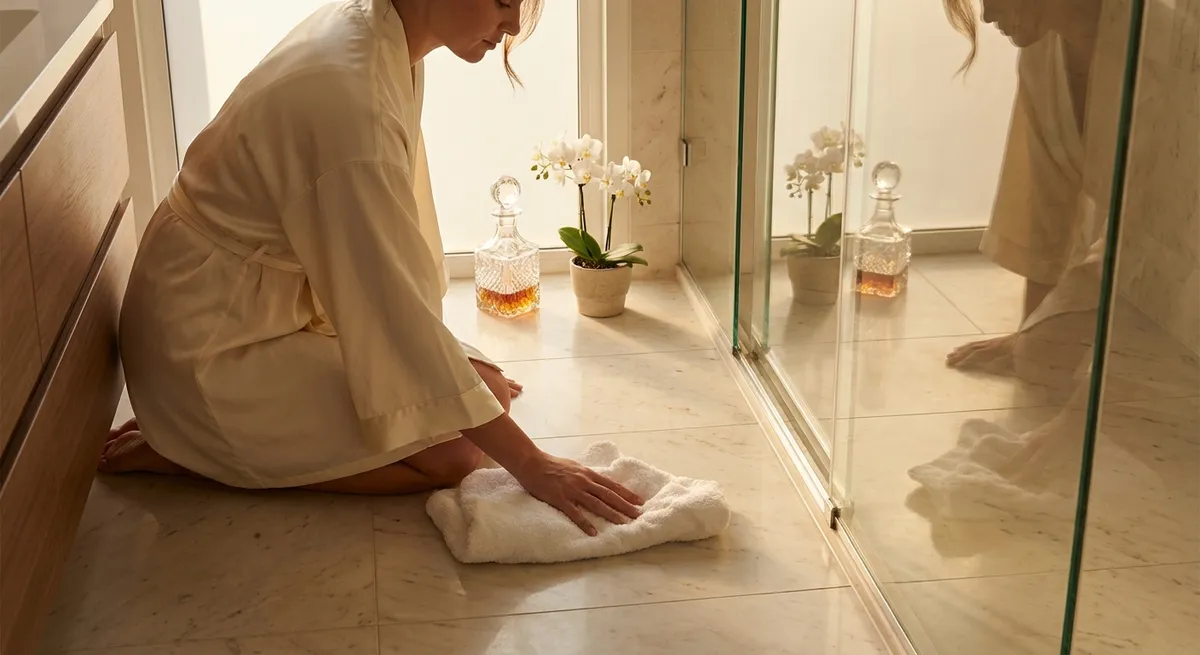
Below, you’ll find a refined approach to tile care, anchored by five exclusive insights that discerning homeowners and design lovers will genuinely appreciate.
Rethinking “Clean”: Designing a Gentle Care Ritual
Most maintenance failures begin with the wrong mindset: treating tile like a hard-wearing utility surface instead of a crafted finish. A refined care ritual does not chase a sterile, over-scrubbed look; it preserves surface integrity, grout structure, and the nuance of the material itself.
Begin by resisting the urge to over-clean. Daily sweeping or vacuuming with a soft brush head is more valuable than aggressive weekly scrubbing. For wet areas, a quick squeegee pass after showers or mopping limits mineral deposits and mold before they can stain grout or etch stone. Choose pH-neutral cleaners designed specifically for tile or natural stone—avoid vinegar, bleach, and citrus-based products on marble, limestone, and other calcareous stone, as they can gradually dull the surface. Think of your maintenance routine like skincare for your home: consistent, gentle, and tailored to the material rather than one harsh, catch-all solution.
Exclusive Insight 1: Treat Grout as an Architectural Element, Not a Gap Filler
Grout is often overlooked, yet it visually frames every tile, controls water movement, and heavily influences how “clean” a space appears over time. Treating grout as a structural and aesthetic component—not a byproduct—will dramatically change your maintenance strategy.
In high-use spaces, a penetrating grout sealer (or color-enhancing sealer if you want deeper, richer tones) should be part of your regular calendar, not an afterthought. Sealing every 1–3 years, depending on traffic and exposure, protects against oils, dyes, and moisture intrusion. When cleaning, use a soft bristle brush along grout lines rather than a generic scouring pad, which can erode joints and create micro-channels that trap more dirt.
For homeowners who appreciate tailored detail, consider grout re-coloring instead of full replacement if the lines have become visually tired. Modern grout stains and colorants can refresh the tone, tighten the look of the grid, and subtly shift the mood of a room—from relaxed and tonal to crisp and architectural—without new tile installation. The result is a surface that feels newly curated, even though the tiles themselves haven’t moved.
Exclusive Insight 2: Moisture Management Is the Most Luxurious “Cleaner”
The most effective tile care strategy in baths, spa-like showers, and entryways is not more chemicals; it’s better moisture control. Water left to linger invites mildew, soap scum, and mineral build-up that eventually dull even the most exquisite tile.
In showers, a 30–60 second habit after each use—squeegeeing walls and glass, then wiping niche shelves and ledges with a microfiber cloth—does more than any weekly “deep clean.” In entries and mudrooms, high-quality floor mats and boot trays at thresholds dramatically reduce sand and grit, which can abrade tile glazes and stone finishes over time.
For steam showers and wet rooms, ensure ventilation is not just present, but properly used. Run the exhaust fan during your shower and for at least 20 minutes afterward. This isn’t just about air quality; it limits moisture migration behind tile, protecting grout, thinset, and backer materials. The ultimate luxury is a tiled space that looks perpetually “just installed,” and that begins with dry surfaces, not stronger detergents.
Exclusive Insight 3: Respect the Finish—Matte, Honed, and Polished Need Different Care
A sophisticated tile scheme usually involves a deliberate choice of finish: polished marble in a powder room, honed limestone in a foyer, or matte porcelain in a minimal shower. Each surface interacts differently with light—and with everyday wear.
Polished stone and high-gloss porcelain amplify fine scratches, streaks, and etching. Use ultra-soft microfiber mops and cloths, avoid abrasive powders, and keep sand and grit off these floors to maintain that mirror-like calm. Honed finishes, while more forgiving of micro-scratches, can be more absorbent and prone to staining; a good penetrating sealer is essential, and spills should be blotted immediately, not wiped back and forth.
Matte and textured tiles, especially those with slip-resistant surfaces, can trap more residue from soaps and cleaners. Here, dilution and thorough rinsing are critical. A recurring mistake is using too much cleaner and allowing a film to build up. That film collects dirt and makes the floor look chronically dull, even when “clean.” Using slightly warmer (not hot) water, low-residue cleaners, and a final rinse pass can preserve the crisp, velvety character of these finishes.
Exclusive Insight 4: Micro-Zoning Your Care: High-Use vs. Low-Use Areas
Luxury maintenance is rarely one-size-fits-all. Treating every tiled surface identically wastes effort in some areas and neglects others. Instead, divide your home into micro-zones, each with its own maintenance cadence and focus.
High-use zones—kitchens, main baths, entries—benefit from frequent light care and periodic targeted interventions. For a kitchen backsplash, for instance, wipe spills quickly and perform a more thorough degreasing only where needed (behind the range, below vent hoods), rather than scrubbing the entire wall. In showers, concentrate deeper cleaning on the lower third of walls, shower floors, and niche bottoms, where water and soap collect most heavily.
Low-use or “quiet” zones—guest baths, formal dining floors, or secondary hallways—often suffer from neglect, but they mainly require dust removal and an occasional check for minor issues: a hairline grout crack, a small area of missing caulk, a loose tile at a transition. Addressing these subtleties early keeps them from maturing into visible damage that demands more intrusive repair. This zone-based mindset gives you a more controlled, intentional relationship with every tiled surface in your home.
Exclusive Insight 5: Preserve Edges and Transitions as the Signature of Quality
In curated interiors, the most telling details often appear where materials meet: tile to wood, tile to carpet, tile to metal trim. These transitions and edges are where luxury either holds or unravels. A flawless tile field can look compromised if an edge is chipped, a metal trim is oxidized, or a transition strip is loose.
Periodically inspect thresholds, stair nosings, curb tops, and corners—anywhere tile is exposed to impact. Minor chips along a sharp corner can often be gently softened or camouflaged using professional-grade repair kits or epoxy color-matched to the tile, preserving the visual line without full replacement. Metal trims (brushed brass, stainless, blackened steel) benefit from appropriate cleaners and, in some cases, specific polishes suited to their alloy and finish.
Flexible caulk at changes of plane (wall-to-floor, wall-to-tub, inside corners) is also crucial. When it cracks or pulls away, moisture can infiltrate behind tile even if the surface still looks intact. Refreshing these lines with a carefully tooled bead of premium, color-matched silicone does more than maintain water tightness—it restores the crisp, tailored frame that makes tilework feel fully resolved and beautifully intentional.
Conclusion
Exceptional tilework is not only about the day it’s installed; it’s about how gracefully it lives. A considered maintenance approach—treating grout as architecture, managing moisture before it becomes damage, respecting the nuances of each finish, tailoring care by zone, and defending edges and transitions—preserves the quiet authority of every tiled surface in your home.
When your tile is maintained with this level of attention, it stops reading as “flooring” or “wall finish” and starts to function as part of the architectural language of the space: calm, composed, and enduringly luxurious.
Sources
- U.S. General Services Administration – Marble, Travertine, and Limestone Cleaning - Technical guidance on proper cleaning methods for natural stone surfaces and the risks of acidic cleaners
- The Tile Council of North America (TCNA) – Grout and Sealant FAQ - Authoritative information on grout performance, sealing, and maintenance best practices
- Crossville Inc. – Porcelain Tile Care and Maintenance - Manufacturer recommendations for cleaning different porcelain tile finishes and preventing residue build-up
- Mapei – Guide to Sealing Natural Stone and Grout - Detailed discussion of sealers, application schedules, and how sealing supports long-term performance
- National Institutes of Health (NIH) – Mold and Moisture in the Home - Explains the importance of moisture control in preventing mold growth, relevant to tiled wet areas and bathrooms