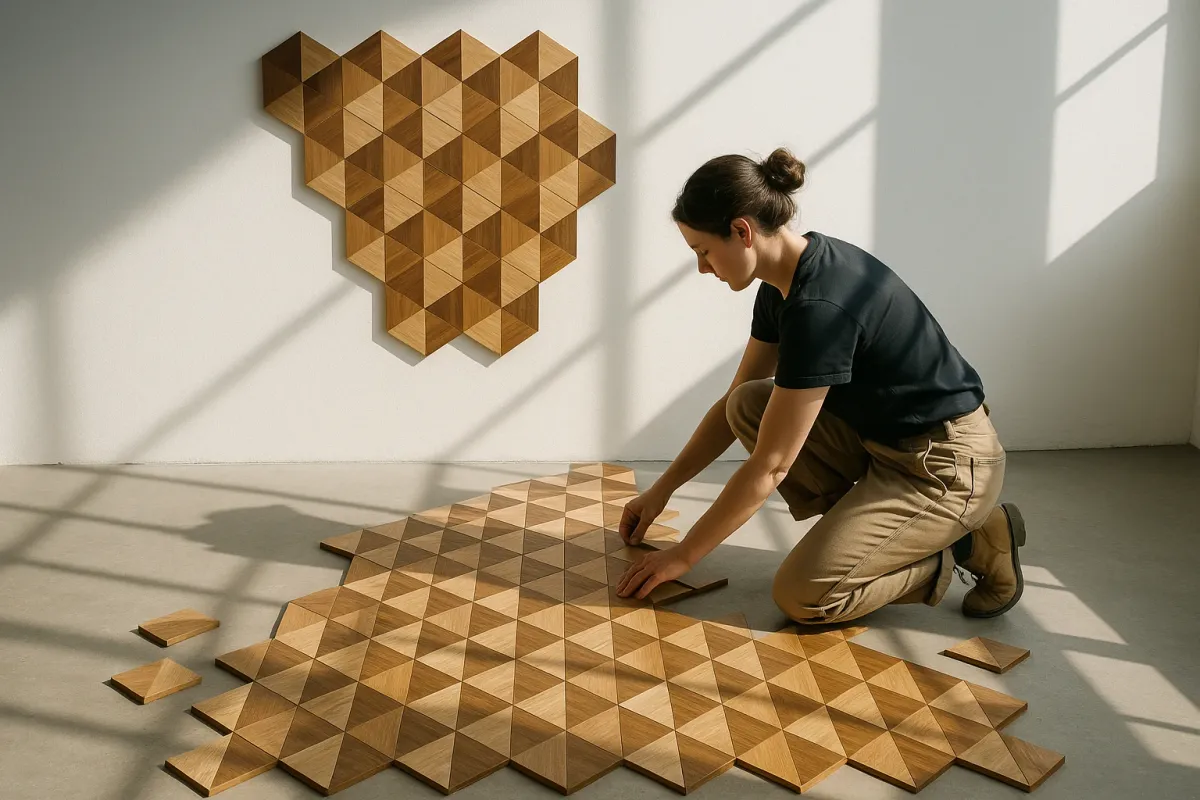
At Tile Pro Tips, we see the same appetite emerging in luxury tile projects. The handcrafted magic people admire in wood—grain, joinery, subtle imperfection—translates exquisitely to stoneware, porcelain, and natural stone when handled with equal intentionality. If woodworkers can turn a raw plank into sculpture, you can turn a tiled surface into a gallery-worthy installation.
Below are five refined, wood-inspired insights for homeowners who want their tile work to feel as curated and collectible as today’s most shared design objects.
1. Treat Your Tile Layout Like Fine Joinery, Not Just Coverage
The most striking wood pieces going viral now aren’t about the material alone—they’re about how each joint is conceived. In high-end tile design, layout is your joinery.
Instead of defaulting to a standard running bond or grid, start by defining visual “seams” the way a cabinetmaker does. Where does your eye naturally want to “land” when you enter the room? Align grout joints to those sightlines. On bathroom walls, consider running tiles full-height without awkward slivers at the ceiling; trim at the base or cut a clean datum line at a deliberate height. In kitchens, let the layout acknowledge architectural elements: center grout lines on range hoods, windows, or pendant groupings so the whole composition feels intentional, not accidental.
Ask your tile setter to mock up a dry layout on-site—just as a woodworker dry-fits joinery before glue-up. Adjust spacing, play with where cuts fall, and decide which surfaces deserve full, uncut tiles. This preplanning separates an adequate install from a quietly luxurious one.
2. Layer Texture Like Carved Timber, Not Flat Wallpaper
Those viral wooden sculptures captivate because of shadow: carved channels, ridges, and facets catching the light. Tile can achieve the same subtle drama when you think beyond a flat surface.
Consider pairing a matte field tile with a softly ribbed or fluted accent in the same tone. On a shower wall, a single vertical panel of textured tile—framed by smooth slabs—can echo the feeling of a hand-carved timber screen. In an entryway, a honed limestone floor set against a slightly more textured porcelain border mimics the visual variation of sapwood and heartwood.
Crucially, keep the palette restrained. Let texture be the story, not competing colors. Modern artisan collections from premium manufacturers now offer “relief” tiles: linear flutes, geometric scoring, or pillowed edges that catch natural light at dawn and dusk. Installed with tight, color-matched grout, they read like a carved surface rather than a tiled one—exactly the kind of quiet richness that photographs beautifully and feels even better in person.
3. Embrace Inlay and Borders As If You Were Designing Marquetry
Many of the woodworking pieces trending now lean on inlay—contrasting species of wood set into one another like marquetry. Tile is uniquely positioned to reinterpret this, especially in luxury spaces where a bespoke floor can anchor the entire design.
Instead of a uniform expanse of marble or porcelain, consider a softly contrasting border set one or two tiles in from the wall, framing the room like a fine rug. In larger open-plan spaces, use a subtle inlay (perhaps a darker stone or a narrow metal profile) to define a dining zone, bar area, or seating group without a single stud wall.
You can go even more tailored: a central “panel” of smaller-format tiles set within a border of larger slabs, or a restrained chevron or herringbone “insert” under a dining table. Think in the language of high-end parquet, translated into porcelain or stone. The key is restraint—two, at most three, materials with elegant tonal harmony. When done well, these details feel more like bespoke cabinetry and less like pattern for pattern’s sake.
4. Choose “Grain” and Veining With the Discipline of a Furniture Maker
What captivates in those viral wood creations is often the grain itself: cathedral patterns bookmatched across panels, or a swirl of burl showcased instead of hidden. Your tile veining—particularly when working with marble, terrazzo-style porcelain, or wood-look planks—deserves the same scrutiny.
For large-format slabs, ask your supplier to let you see (or at least photograph) the specific lots available. If you’re bookmatching a fireplace surround or shower wall, confirm how the veining will mirror or flow. A carefully arranged vein pattern can create a calm, almost monolithic feel; a chaotic mix from different lots reads visually loud and cheap, no matter the price per square foot.
Wood-look porcelain is where the woodworking analogy becomes literal. Avoid overly photographic patterns or obvious repeats: higher-end lines will offer multiple faces with nuanced “grain.” Work with your installer to randomize these across the floor, mimicking how a cabinetmaker would alternate boards for balance. In a premium setting, the goal is to evoke the serenity of well-selected timber, not the artificial repetition of a printed surface.
5. Design For Tactility and Patina, Not Just the Reveal Photo
The most shared woodworking projects this year are not only visually stunning—they invite touch. You imagine running your hand along a chamfered edge or a perfectly oiled surface. Tile can and should evoke the same response.
For primary bathrooms and ensuites, consider honed or satin finishes over high-gloss wherever possible, especially on floors. They feel softer underfoot and reveal light in a more nuanced way, like a well-finished slab of oak. On walls, a very slight irregularity—a hand-molded edge or a subtly undulating surface—adds a crafted quality that machine-perfect tiles can’t match alone.
Think also about how your tile will age. A slightly tumbled limestone in a mudroom will develop micro-softening at edges, analogous to an heirloom farmhouse table acquiring character. In kitchens, opt for high-performance porcelain or quartz-based surfaces where staining is a concern, but don’t be afraid of movement and depth within the material—just as no fine wood table remains flawless, a completely flat, patternless surface can feel sterile in a space meant for living.
Ask yourself, “Will I enjoy touching this?” If the answer is yes, you’re designing for the lived experience, not only for the camera.
Conclusion
The surge of interest in extraordinary woodworking online is more than a passing aesthetic crush—it’s a collective rediscovery of craft, proportion, and intentional detail. Those same principles can elevate tile work from background to centerpiece, turning your floors and walls into the architectural equivalent of a gallery-worthy piece.
By treating layout like joinery, layering texture as a sculptor would, composing borders with marquetry discipline, curating veining like grain, and prioritizing tactility over theatrics, you align your home with the quiet luxury currently defining the most admired spaces.
In a design world where everything can be copied instantly, it’s the projects with craftsman-level thinking—the kind you see in today’s most shared wood creations—that truly stand apart. Your tile work can, and should, belong in that conversation.