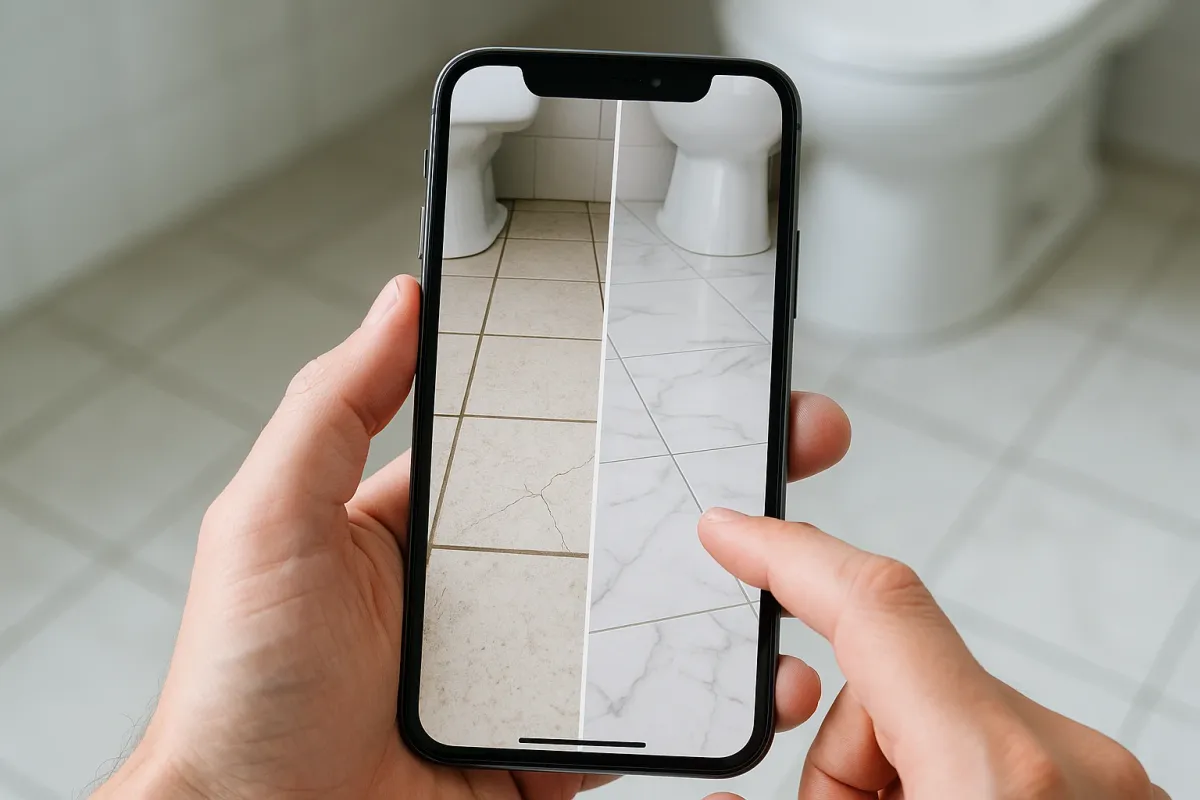
Tile is no different. The most exquisite stone foyer, spa-like shower, or gallery-caliber kitchen floor doesn’t happen because someone “picked a pretty tile.” It happens because every stage—assessment, structure, layout, installation, and finish—is treated as a disciplined transformation, not a quick cosmetic fix. For homeowners who appreciate craft and quiet luxury, the parallels are striking: just as a serious fitness journey respects anatomy and alignment, a truly elevated tile installation respects structure, substrate, and detail.
Below are five exclusive, expert-level insights for homeowners who want their next “before and after” tile project to age like a classic, not like a fading trend post.
1. Treat Your Subfloor Like the “Core Strength” of Your Tile Installation
Just as any serious body transformation starts with core stability rather than flashy exercises, a premium tile installation begins with the unseen: the subfloor. The news cycle may be obsessed with visible results, but tile failures rarely begin at the surface—they begin beneath it.
High-end tile, especially large-format porcelain and natural stone, demands a subfloor that is:
- Structurally sound (joists sized and spaced correctly for tile or stone)
- Flat within tight tolerances (often 1/8" over 10 feet for large-format)
- Properly deflection-rated (stone, for example, typically requires L/720)
A sophisticated contractor will test, not guess. They’ll use straightedges, laser levels, and sometimes even structural calculations before a single tile is set. If your installer is eager to start setting tile but indifferent to what’s under it, that’s the equivalent of loading heavy weights on an unstable spine.
For homeowners, the luxury move is subtle but powerful: be willing to invest in substrate correction, self-leveling underlayment, and additional plywood or uncoupling systems where needed. No one posts a “before and after” of their subfloor—but it’s the quiet strength that protects every visible decision you make.
2. Large-Format Tiles Demand Precision Layouts—Not Just Bigger Budgets
The design world has fully embraced large-format and slab-look tile, mirroring the “leaner, longer, more sculpted” aesthetic seen across today’s visual culture. But while social media makes these seamless surfaces look effortless, in practice they are unforgiving.
Before you approve an installation, insist on a dry layout discussion. A premium installer will:
- Map primary sightlines from entries, hallways, and key seating areas
- Center or align layout to architectural elements (islands, fireplaces, doorways)
- Minimize slivers at perimeters, especially in high-visibility zones
- Discuss grout-joint size relative to tile caliber and rectification
- Substrate prep beyond “good enough”
- Medium-bed or large-and-heavy-tile mortars
- Leveling clips used as an aid (not a crutch)
Watch for how your contractor talks about lippage (height differences between tile edges). With large-format tiles—24"x48", 36"x36", and beyond—industry standards for flatness are strict, and a premium installation will often require:
The most elegant floors aren’t the ones with the most expensive tile; they’re the ones where the geometry feels calm and intentional. You should be able to stand in the main doorway, let your eyes follow the lines, and feel nothing catching—no jarring cuts, no awkward seams, just quiet order.
3. Grout Is the “Skin Finish” of Your Installation—Underestimate It at Your Peril
Just as a body transformation only looks complete with healthy, well-cared-for skin, tile work only reaches luxury status when the grout is treated as a design element, not an afterthought. The current industry trend toward ultra-fine grout joints and tone-on-tone palettes is beautiful—but technically demanding.
Refined homeowners should be part of three key grout conversations:
1. Color as a design tool
Choosing a grout that nearly disappears creates a monolithic, serene surface. Choosing a contrasting grout frames each tile, emphasizing pattern and module. The difference is dramatic, and it should be as deliberate as choosing a wall color.
2. Performance as a lifestyle choice
Ask about epoxy, hybrid, or advanced cementitious grouts. They resist staining and discoloration far better than traditional options and are particularly worth the splurge in kitchens, showers, and high-traffic entries. Much like committing to a long-term wellness routine, you’re investing in how gracefully the surface will age.
3. Joint size as an aesthetic statement
Rectified porcelain can support narrow joints, but only when tile caliber and substrate allow. A 1/16" joint looks sharp in photos—but if it forces non-compliant workmanship or leads to chipped edges and irregular lines, it’s a false economy.
In a truly elevated space, grout reads as intentional: consistent depth, clean lines, no pinholes, no haze. It’s the difference between “new tile” and “architectural finish.”
4. Wet Areas Are Your “Recovery Phase”—Water Management Must Be Engineered
The wellness world increasingly emphasizes recovery—sleep, hydration, and rest—as seriously as the workout itself. In tile, your bathroom and shower should be designed with that same rigor: not only as indulgent retreats, but as high-performance, risk-managed environments.
Modern premium showers are built more like high-end wet rooms than old-fashioned enclosures. Ask your tile contractor and builder detailed questions about:
- Waterproofing system: Is it a sheet membrane, liquid-applied, or foam-board system from a recognized manufacturer (e.g., Schluter, LATICRETE, MAPEI, Wedi)? Are they following the full system—drains, corners, seams—or improvising?
- Flood testing: Are they flood-testing the pan before tile, and for how long? A 24-hour minimum test is a mark of professionalism.
- Slope and transitions: Is the floor correctly pitched to the drain everywhere—especially in linear-drain applications and at door thresholds or curbless entries?
- Movement joints: Are they allowing for expansion/contraction at perimeters, changes of plane, and large expanses of tile?
Think of waterproofing as your installation’s recovery protocol: invisible, unglamorous, but absolutely decisive. A shower that looks like a spa but leaks, molds, or fails structurally is the equivalent of overtraining on no sleep—it may look impressive briefly, but the crash is inevitable.
5. A True Luxury Tile Project Has a “Maintenance Narrative,” Not Just a Punch List
Those “after” photos in today’s viral transformation posts are arresting—but the real question is always: what does month 18 look like? Year five? Ten? The same question separates ordinary tile jobs from timeless ones.
Before you sign off on design decisions, ask your team to walk you through a maintenance narrative:
- Surface selection matched to reality
Polished marble in a family kitchen with young children and red wine? Possible—but only if you are fully informed about etching, sealing, and patina. In many luxury homes, large-format porcelain that mimics stone offers the visual language of opulence with a far more forgiving maintenance profile.
- Sealers and initial protection
Will natural stone, cement tile, or unglazed materials be sealed before and/or after grouting? With what product? High-end installers will specify premium, breathable sealers and often perform an initial protection treatment as part of the project, not as an afterthought.
- Cleaning protocol tailored to the material
You should leave the project with a written, product-specific care guide: what to use, what to avoid, and how often. Acid-based cleaners on cement tile, harsh abrasives on polished porcelain, or steam on some membranes can quietly destroy performance over time.
- Planned patina vs. accidental wear
Some materials—tumbled limestone, encaustic cement, handmade terracotta—are chosen precisely because they develop a gentle patina. The sophisticated approach is to distinguish between desirable aging and premature damage, and to set expectations accordingly.
True luxury isn’t a single, perfect “after” photo; it’s the calm confidence that your tile will remain beautiful, stable, and expressive of your standards long after the algorithms have moved on.
Conclusion
Today’s fascination with transformation—those dramatic “before and after” narratives flooding social media—holds a lesson for anyone investing in tile: the most compelling results are never superficial. They are structural, disciplined, and deeply intentional.
For the discerning homeowner, a tile installation worthy of a luxury address follows the same principles as the most inspiring body transformation stories making headlines now: respect the foundation, honor alignment, invest in invisible systems, and plan for longevity rather than instant gratification. When you do, your floors and walls stop being “finishes” and become architecture—quietly powerful surfaces that will look as composed in ten years as they do on day one.
And that is the kind of transformation worth living with long after the feed has moved on.