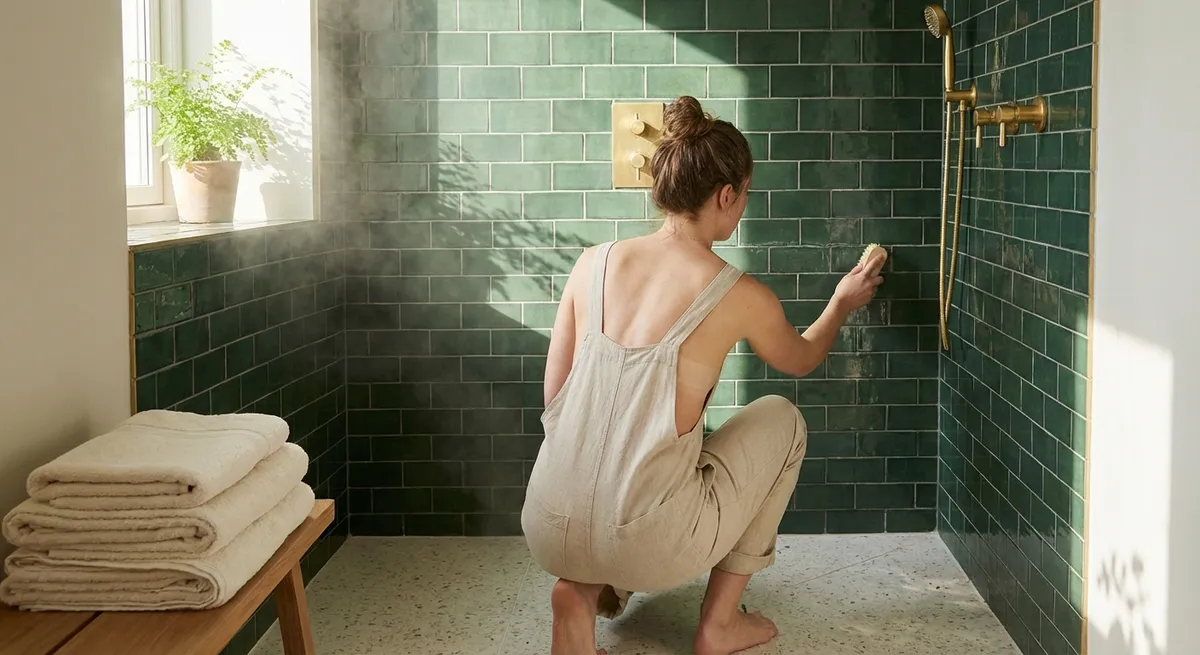
Insight 1: Treat Grout as a Design Material, Not a Construction Byproduct
Most homeowners focus on the tile face and ignore the grout, yet it is the grout that visually frames every surface. As grout ages, it absorbs oils, detergents, hair products, and atmospheric pollutants, subtly shifting its tone and texture. Left unmanaged, the overall composition begins to look fatigued even when the tile itself is pristine.
A sophisticated maintenance approach treats grout like a design material with its own care protocol. Use a pH-neutral cleaner specifically formulated for tile and grout to avoid etching or premature degradation of cementitious joints. Avoid colored detergents in showers and around kitchen backsplashes; over time, dyes can lightly tint porous grout. For high-value spaces, consider an annual or biennial grout sealing schedule—penetrating sealers help resist staining without creating a high-gloss film that cheapens the aesthetic. In zones of intense use, such as the cooking line or entry vestibule, selective touch-up sealing can maintain visual uniformity without the disruption of a full re-seal. The result is grout that stays optically calm, allowing the tile to perform as intended.
Insight 2: Calibrate Cleaning to Tile Type, Not Just to Room Function
Not all tiles respond the same way to moisture, heat, or detergents, yet many homes default to a single “bathroom cleaner” or “floor cleaner” across all surfaces. This one-size-fits-all approach can dull glazes, weaken stone, or leave residues that telegraph streaks under natural light.
Porcelain and most glazed ceramics thrive with pH-neutral cleaners and microfiber pads that lift dirt mechanically rather than relying on aggressive chemistry. Natural stone—marble, limestone, travertine—demands a more exacting regimen: strictly avoid acidic products (including vinegar and citrus-based cleaners), which can etch and permanently matte polished finishes. In kitchens, prioritize degreasers that are non-abrasive and specifically labeled safe for tile and stone; overspray from cooking oils and aerosolized fats can migrate surprisingly far, creating a subtle film that attracts soil.
By calibrating your cleaning method to the actual tile material rather than the room label, you preserve both performance and finish. Over the span of years, this tailored approach is what separates a surface that looks merely “maintained” from one that remains architecturally crisp.
Insight 3: Control Micro-Scratches with Textile Strategy, Not Harsh Chemicals
The most common threat to tile is not dramatic impact, but accumulated micro-scratches—tiny abrasions that soften edges, cloud satin finishes, and create a faintly hazed look in raking light. These are rarely caused by the tile itself and almost always by what moves across it.
Instead of escalating to harsher cleaning agents when floors appear dull, address the root cause: mechanical abrasion. Introduce a layered textile strategy at every exterior threshold: a coarse, outdoor mat to capture grit and an interior mat with a dense weave to capture finer particles. In dining areas, invest in felt or high-quality glides for chair and table legs, replacing them the moment they compress or accumulate grit. For cleaning, switch from stiff brooms to soft-bristled brushes or microfiber dust mops; stiff bristles can push grit along the surface like sandpaper.
This textile-first approach preserves tile finishes without resorting to polishes or “restorative” chemicals that can leave residues. Over time, the surface develops a controlled, even patina rather than sporadic wear paths and cloudy traffic lanes.
Insight 4: Respect Expansion, Temperature, and Time—The Invisible Guardians
The most refined tile installations succeed over decades because their invisible systems—movement joints, underlayment, waterproofing—remain intact. Thoughtful maintenance acknowledges and protects these unseen layers.
In sun-exposed spaces or rooms with underfloor heating, avoid drastic temperature swings. Cranking radiant heat or rapidly chilling a sunroom floor can intensify expansion and contraction, subtly stressing grout and movement joints. When cleaning, do not soak floors with hot water and then abruptly ventilate with cold air; allow the temperature of the substrate to change gradually. Avoid sealing over perimeter movement joints or soft silicone joints with rigid products or paint—these flexible lines are deliberate design elements, not flaws, and they allow the tile field to move without cracking.
In wet areas, periodically inspect and refresh silicone at corners, change-of-plane transitions, and around fixtures. A perfectly set tile installation can still fail visually and functionally if compromised sealant allows water to infiltrate the assembly. By treating temperature, movement, and time as active design constraints—not afterthoughts—you extend the life of the entire assembly, not just its visible surface.
Insight 5: Develop a Seasonal Ritual, Not a Crisis Response
Truly elevated tile maintenance is rhythmic, not reactive. Instead of waiting for stains, haze, or hairline cracks to demand attention, establish a seasonal ritual that integrates observation, light-touch correction, and strategic intervention.
Each season, perform a slow walk-through with intention. View floors and walls at different times of day when natural light shifts—raking light will reveal lippage, film build-up, or early grout deterioration long before these issues become obvious. In kitchens, assess the tile behind cooking zones and dishwashers for subtle discoloration or softening grout; in showers, inspect niches, benches, and corners where water lingers. Address minor issues immediately: localized grout resealing, gentle removal of soap scum with appropriate non-acidic products, or replacing a single compromised silicone joint.
This ceremonial approach reframes maintenance as part of the design experience rather than an interruption to it. Over the years, your tile does not merely “hold up”—it matures, with surfaces that stay disciplined, edges that remain articulated, and a visual calm that quietly signals diligent stewardship.
Conclusion
For the cultivated homeowner, tile is not just a backdrop; it is an architectural instrument that demands thoughtful care. When cleaning protocols are material-specific, when grout is treated as a design element, when temperature and movement are respected, and when observation becomes ritual, maintenance transforms from routine upkeep into an art form. The reward is an interior where every tiled surface—from the most discreet powder room to the most visible entry hall—retains its precision, depth, and quiet authority year after year.
Sources
- The Tile Council of North America (TCNA) – Tile & Stone Care and Maintenance - Authoritative guidelines on appropriate cleaners, sealers, and general maintenance practices for tile and stone
- MAPEI – Guide to Grout Maintenance and Cleaning - Technical recommendations for preserving grout color, performance, and appearance
- Natural Stone Institute – Caring for Natural Stone - Detailed best practices for protecting marble, limestone, and other natural stone surfaces from etching and staining
- Schluter Systems – Movement Joints and Their Importance - Explanation of how movement joints protect tile assemblies from stress, cracking, and delamination
- U.S. General Services Administration – Floor Finishes and Floor Care - Government guidance on flooring maintenance strategies, including abrasion control and cleaning methodology