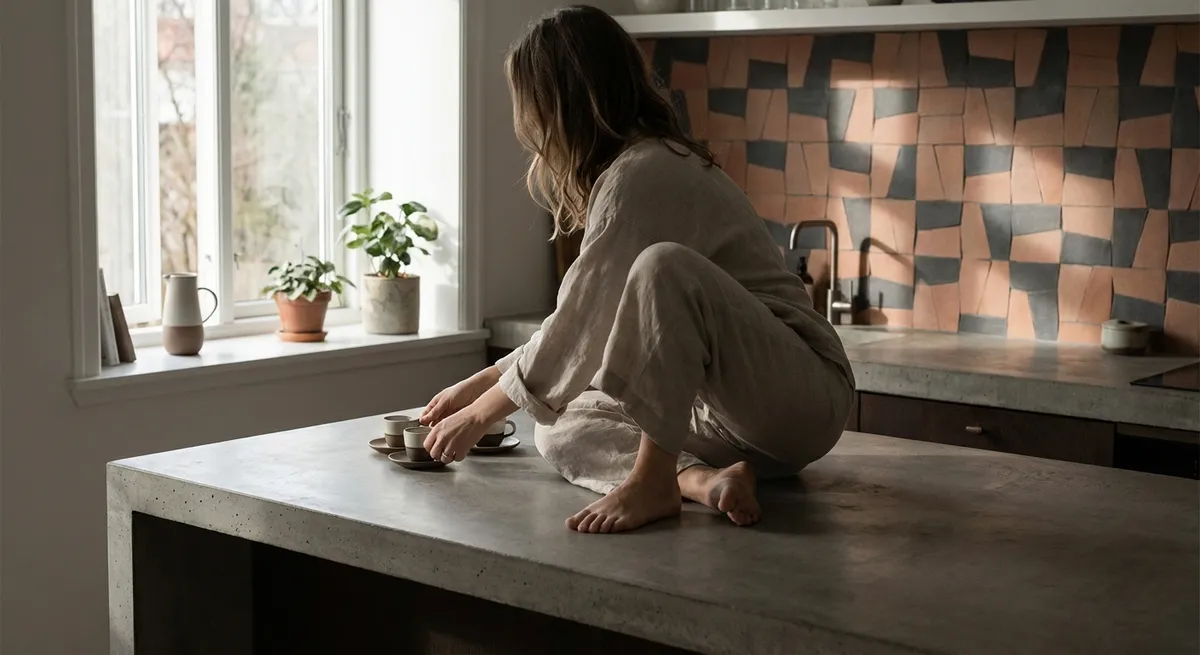
Below, you’ll find five exclusive, design-forward insights that move beyond basic patterns and color choices, guiding you toward tile work that feels curated, bespoke, and deeply considered.
1. Designing with Shadow, Not Just Color
Most tile discussions begin with hue and finish; elevated design begins with light and shadow. The way a tile profile catches daylight or grazed artificial light can be the difference between a flat surface and one that feels quietly architectural.
Subtle relief tiles—fluted, ribbed, beveled, or gently faceted—create shadow lines that change from morning to evening. When paired with wall-wash or grazing lighting, these profiles introduce a soft, sculptural drama without resorting to loud color or pattern. Even a monochrome scheme comes alive when the grout lines, edges, and relief are allowed to draw thin, elegant shadows. Focus first on how light moves through the space during the day, then choose tile formats and textures that “receive” that light gracefully, rather than fighting it.
2. Calibrating Scale Across the Entire Home
Sophisticated tile design is rarely decided room by room; it’s orchestrated across the whole residence. One of the most powerful tools at your disposal is the deliberate calibration of scale—from grand gestures to intimate details.
Consider large-format stone-look porcelain in primary circulation zones to elongate sightlines and create a calm, continuous field underfoot. Transition to mid-scale formats in secondary spaces, and reserve smaller mosaics or refined patterns for moments of intimacy: shower niches, powder room floors, or a bar backsplash. When the eye can read a hierarchy of scale across the home, the result feels curated rather than chaotic. This layered approach also prevents any one area from visually shouting; instead, each room contributes to a coherent architectural narrative.
3. Treating Grout as a Design Material
In refined tile work, grout is never an afterthought. It is a design material with its own color, texture, and presence. The most elevated spaces rely on grout to either sharpen the geometry of the installation or soften it into a seamless plane.
For a crisply architectural look, a gently contrasting grout—one or two shades away from the tile—defines each piece like fine line work in a drawing. For a more gallery-like calm, near-perfect color matching allows the surface to read as a continuous field, particularly powerful when working with large-format tiles or slabs. Grout joint width also plays a critical role: narrower joints feel more tailored and bespoke, especially with rectified porcelain or carefully cut stone. When making selections, evaluate grout samples against the tile in both natural and artificial light; a half-shade shift can change the entire character of the installation.
4. Composing “Tile Thresholds” Between Spaces
Where tile begins and ends is as important as the pattern itself. Transitions are often overlooked, yet they are where true craftsmanship and design sensitivity are most evident. Thoughtful “tile thresholds” can subtly signal a change in function or mood without abrupt visual breaks.
Instead of a hard stop between tile and wood, consider inlay borders that echo architectural lines—door frames, window alignments, or ceiling beams. A border of smaller-format tile framing a larger field can create the feeling of a custom rug underfoot. In bathrooms, allowing floor tile to run slightly under door thresholds or cabinetry bases minimizes visual clutter and feels more tailored. The goal is to choreograph movement between materials so the home feels continuous and intentional, with transitions that are quiet but unmistakably considered.
5. Elevating Utilitarian Zones into Design Statements
Luxury reveals itself most clearly where it isn’t strictly necessary—laundry rooms, mudrooms, secondary baths, or pantry backsplashes. When these “behind-the-scenes” areas receive the same level of tile consideration as a primary bath or feature wall, the home feels holistically elevated.
In a mudroom, for example, a durable porcelain with a honed or textured finish can echo the sophistication of entry flooring while offering practicality under wet shoes. A laundry room backsplash in a petite, hand-glazed tile can pick up the soft color of cabinetry or stone without overwhelming the space. Even a simple utility shower becomes a design moment when the tile layout relates to the room’s proportions—aligning grout lines with key architectural elements, integrating niches seamlessly, and balancing field tile with a single, refined accent. These quiet enhancements communicate a sense of completeness: every corner of the home has been thoughtfully resolved.
Conclusion
Exceptional tile design is less about spectacle and more about orchestration. Light and shadow, scale, grout, thresholds, and secondary spaces all work together to create a home that feels composed rather than merely finished. When each tile decision is tied back to architecture, proportion, and the way you live, the result is not just beautiful surfaces, but a sustained sense of calm, precision, and quiet luxury throughout the home.
Sources
- Ceramic Tile Design Trends – Tile Council of North America (TCNA) - Industry perspectives on current and emerging tile design directions
- Porcelain Tile Selection & Performance – The Tile Council of North America Handbook - Technical overview of porcelain tile characteristics and applications
- Lighting for Architecture – Illuminating Engineering Society (IES) - Resources on how light interacts with architectural surfaces, including walls and floors
- Natural Stone Design & Installation Guide – Natural Stone Institute - Expert guidance on stone use, proportion, and detailing in interiors
- Housing Design and Detail – U.S. Department of Housing and Urban Development - Research and guidelines on residential design, materials, and detailing