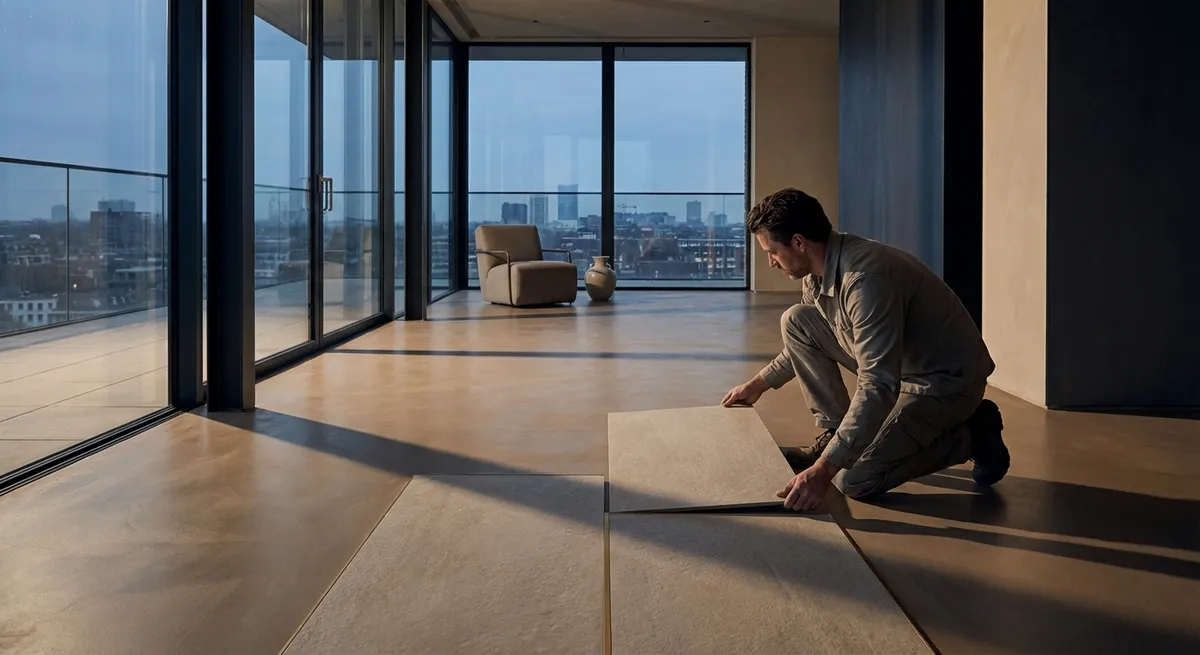
This is where disciplined geometry, strategic planning, and a few elevated decisions separate a standard installation from a space that feels composed, intentional, and enduring. Below are five exclusive insights that discerning homeowners—and the professionals who work with them—can use to elevate every tile project from “well done” to quietly exceptional.
1. Designing the Grid Before Choosing the Tile
Most projects start with samples; the most successful ones start with a floor plan. Instead of leading with color and texture, begin by designing the grid—the invisible logic that will govern every joint, corner, and transition. Lay the room out to scale and overlay a tile grid that respects focal points: the long axis of a hallway, the symmetry of a vanity wall, the sightline from an entryway.
This approach may nudge you toward a slightly different tile size or proportion that better fits the geometry of the room. Large-format tiles can look luxurious, but if they create narrow slivers at the perimeter, the result feels compromised rather than grand. A tile that harmonizes with the room’s dimensions allows cuts to disappear at the edges, with full or nearly full tiles anchoring key vistas.
By designing the grid first, you can also coordinate with built-ins, thresholds, and door swings so grout lines align with cabinetry, island legs, and even shower niches. The tile is no longer an afterthought; it becomes a structural rhythm that quietly organizes the space.
2. Mastering Transitions: Where One Material Yields to Another
The seams between materials are where luxury reveals itself—or unravels. A floor that moves from tile to wood, a shower that meets a painted wall, or a tiled foyer stepping up to carpet: each transition is an opportunity to either break the visual flow or refine it.
Thoughtful homeowners should ask not just, “What trim are we using?” but “What is the story at this threshold?” Flush transitions, where the tile and adjacent surface are perfectly level, feel inherently more custom and calm. This may mean planning subfloor thicknesses, underlayment, and tile selection in concert so there is no awkward step or clumsy metal edge.
Consider minimalist profiles such as recessed transition strips or slender metal trims that match the room’s hardware finishes. In showers, switching from field tile to mosaic at a slope, or framing a transition with a stone border, can create a deliberate visual pause rather than a jarring break. The best transitions feel inevitable, as if each material yields gracefully to the next.
3. Elevating Layout with Light: Aligning Tile to Shadow, Not Just Walls
Tile is experienced through light as much as through touch. Refined installations take into account how natural and artificial light will reveal every plane, edge, and grout joint. Before finalizing a layout, pause in the space at different times of day and observe the way light enters, where shadows fall, and what direction the strongest wash of light follows.
For floors, consider aligning major grout lines with the direction of primary light—such as a long row of windows—so reflections flow harmoniously across the surface. On walls, particularly in showers and kitchen backsplashes, be aware that under-cabinet or overhead lighting will exaggerate any irregularity. This is where the decision between a glossy vs. matte tile becomes more than aesthetic; glossy tiles can show slight lippage and unevenness far more dramatically under raking light.
Ask your tile contractor to dry-lay a small section and illuminate it with the intended lighting, if possible. Any unevenness, pattern imbalance, or awkward cut that appears under strong light can be corrected at the planning stage. The true sophistication lies in a surface that looks composed not only in photographs, but under honest, unforgiving sunlight.
4. Curated Grout Choices: The Subtle Art of Visual Silence
To the untrained eye, grout is a technical necessity. To the design-conscious homeowner, grout is a powerful tool for either amplifying or quieting the pattern of the tile. The wrong grout choice can turn a serene slab-look floor into a visual grid; the right one can make a simple tile read as tailored and bespoke.
Neutral, low-contrast grout blends joints into the tile, ideal when the material itself is the hero—veined marble, textured porcelain, or handmade zellige. Higher contrast grout emphasizes shape and pattern, which can be striking in small doses (think herringbone in a powder room) but exhausting across a large open-plan space. The key is intentionality: decide whether you want to celebrate the geometry or let it recede.
Refined projects also consider grout joint width and profile. Narrow, consistent joints with a slightly concave or flush finish often feel more architectural than wide, deeply raked joints. For areas of intense use—showers, entryways, kitchen floors—upgraded, stain-resistant or epoxy grouts may cost more upfront but preserve the crispness of the installation for years, avoiding that slow slide from “new” to “tired.”
5. Preemptive Detailing: Building in Longevity Where It Matters Most
Exceptional tile work is as much about foresight as finesse. Rather than waiting for problems to appear, elevated installations build in resilience where tiles are most vulnerable: movement joints, edges, wet areas, and areas of heavy traffic.
Ask about decoupling membranes and movement joints, especially over large expanses, radiant heating, or substrates susceptible to slight movement. These invisible layers are what prevent hairline cracks and tenting in otherwise flawless floors. In showers, the quality of the waterproofing system—membrane selection, seam treatment, slope, and drain integration—matters more than any tile on the surface.
Edges and corners benefit from thoughtful reinforcement: stone or porcelain curb tops, properly sloped niches, and gently eased corners that resist chipping. In entries and mudrooms, slightly darker or more textured tile at the transition from exterior to interior can gracefully absorb the inevitable grit and wear, preserving the rest of the floor’s pristine appearance.
By treating detailing as strategic investment rather than overkill, homeowners secure not just a beautiful surface on day one, but a composed, reliable finish that ages with dignity.
Conclusion
Refined tile installation is less about spectacle and more about quiet control—of geometry, transitions, light, grout, and longevity. When homeowners and tile professionals collaborate with these subtleties in mind, the result is a space that feels inherently ordered, calm, and deliberately made.
The tiles themselves may catch the eye, but it is the precision of the grid, the grace of each threshold, and the integrity of the underlying work that create a lasting impression of understated luxury. In the end, exceptional tile work is not simply seen—it is felt, in the way a room holds together with effortless composure.
Sources
- [Porcelain Tile Selection and Installation Guidelines – TCNA Handbook Overview](https://www.tcnatile.com/faqs/72-faqs/187-porcelain-tile-selection-and-installation-guidelines.html) - Technical Ceramic Tile guidelines that inform best practices for tile layout, substrates, and performance
- [ANSI A108/A118/A136.1 Installation Standards – Tile Council of North America](https://www.tcnatile.com/industry-standards/ansi-standards.html) - Authoritative installation standards covering setting materials, grout, and movement joints
- [Best Practices for Large Format Tile Installation – MAPEI](https://www.mapei.com/us/en-us/home-page/realta-mapei/issue-31/large-format-tiles) - Practical insights on layout, lippage control, and substrate prep for large-format tile
- [Residential Kitchen and Bathroom Planning Guidelines – NKBA](https://nkba.org/insights/guides-and-resources/) - Planning principles that influence tile placement, sightlines, and functional detailing in kitchens and baths
- [Moisture Management and Waterproofing in Tiled Showers – Schluter Systems](https://www.schluter.com/schluter-us/en_US/m/installation-guides) - Technical resources on modern waterproofing assemblies and edge detailing for long-lasting tile installations