Below, you’ll find five exclusive, detail-driven insights designed for homeowners who expect their tile surfaces to age gracefully—not merely survive.
1. Curated Cleaning: Matching Your Method to the Material
One of the most common missteps in tile care is treating all surfaces the same. Porcelain, ceramic, natural stone, and encaustic cement may sit side by side in a space, but each demands its own maintenance etiquette.
Porcelain and dense ceramics are relatively forgiving; they tolerate pH-neutral cleaners and gentle scrubbing without complaint. Natural stones—marble, limestone, travertine, slate—are far less tolerant. Acidic agents (including vinegar, citrus-based cleaners, and many bathroom products) can etch the surface, dulling the finish and permanently altering the stone’s texture. Cement and encaustic tiles, with their porous, character-forward surfaces, can stain if subjected to harsh detergents or left unsealed.
A sophisticated approach begins with classification: know precisely which tile type you have, then curate a small, dedicated cleaning kit for each material category. Label bottles, use separate microfiber cloths, and keep an index card or digital note of approved products and dilution ratios. Over time, this material-specific discipline preserves color depth, sheen, and crisp grout lines that distinguish a considered interior from a merely “clean” one.
2. The Rhythm of Care: Light, Frequent Touches Over Occasional Overhaul
Luxury surfaces rarely look pristine because they are deep-cleaned; they look pristine because they are never allowed to become truly dirty. Establishing a gentle maintenance rhythm is more powerful than any “miracle” product.
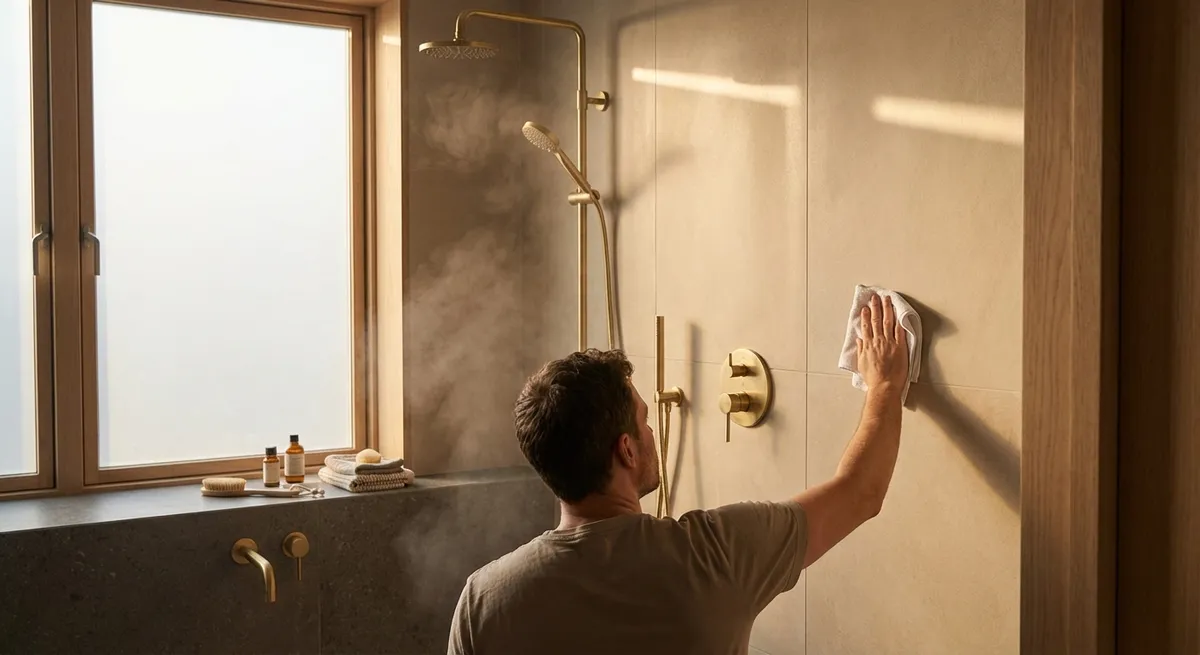
Dry maintenance—vacuuming with a soft-brush attachment or sweeping with a rubber-bristle broom—removes grit before it can abrade glazes or matte finishes. A quick, lightly damp microfiber mop once or twice a week in high-traffic zones prevents soiling from compacting into grout joints. In bathrooms, a simple squeegee routine after showers quietly prevents soap scum and mineral buildup on both tile and grout.
This rhythm should feel almost ceremonial: brief, consistent, and unhurried. Think in terms of moments rather than marathons—two minutes after a shower, five minutes before guests arrive. When maintenance is integrated into the daily flow of living, the tile never reaches the point where aggressive scrubbing or harsh chemicals feel necessary. The result is a surface that looks as though it is simply never anything less than composed.
3. Grout as Design Detail: Protecting the Lines That Define the Room
In a finely executed tile installation, grout is not merely filler; it is the graphic line work that defines pattern, scale, and visual rhythm. Allowing grout to discolor or crumble is, in effect, allowing the architecture of the surface to unravel.
Begin by identifying your grout type—cementitious, epoxy, or urethane—and whether it was sealed at installation. Cement-based grout, especially in light tones, is particularly vulnerable to absorption. A premium, penetrating sealer, properly applied and reapplied on schedule (typically every 1–3 years, depending on use and product), acts like an invisible barrier that preserves both color and texture.
For daily and weekly care, avoid oil-based soaps, which can leave a film that attracts dirt and dulls the lines. Instead, use a pH-neutral cleaner specifically labeled safe for grout, applied sparingly and rinsed thoroughly. When localized staining occurs—beneath a kitchen prep zone, for example—a targeted grout cleaner and a soft nylon brush can address the issue without disturbing surrounding tiles.
Consider grout inspection a regular ritual: run a fingertip lightly along joints while cleaning. If you feel roughness, pinholes, or crumbling, you’ve caught a vulnerability early. Discreet patching and resealing at this stage preserves the crisp grid or seamless lines that give your tile work its quiet precision.
4. Controlled Sheen: Managing Light, Reflection, and Patina
Tile maintenance is as much about managing light as it is about removing soil. The way a surface reflects or diffuses light—its sheen—can either flatter a room or reveal every footprint and water droplet.
High-gloss tiles amplify light and visually enlarge small spaces, but they can be unforgiving of residue. The key here is ultra-thin, even cleaning films: a lightly damp microfiber pad, thoroughly wrung out, followed by a dry buff with a second, clean cloth. This avoids streaking and maintains that glassy, mirror-like quality without visible swirls or dull patches.
Matte and honed finishes demand a different strategy. Their beauty lies in subtlety—the soft, velvety way they catch light. Overuse of “shiny” or wax-based products on these surfaces creates uneven sheen and can even become dangerously slippery. Stick to pH-neutral cleaners, avoid polymers or polishes, and periodically inspect for traffic patterns. In areas where a gentle patina has developed, the goal is to refine rather than erase: lift dirt while respecting the authentic wear that gives the material depth.
In all cases, water quality matters. Hard water can leave mineral films that compromise the clarity of both glossy and matte finishes. If your water is particularly hard, consider using distilled water for final rinses on feature surfaces—showers, statement backsplashes, or entry floors—where clarity of finish is non-negotiable.
5. Preventive Luxury: Thoughtful Protection in High-Impact Zones
The most refined homeowners think of tile not as indestructible armor, but as a luxurious surface that deserves protection—particularly where daily life is most intense.
In kitchens, place high-quality, non-staining mats or runners in front of sinks and cooktops to intercept oils, dyes, and dropped utensils before they ever touch tile or grout. Choose backings that are explicitly labeled as non-reactive with hard surfaces; some rubber or latex mats can discolor certain tiles over time. In dining areas, felt pads under chair and table legs prevent subtle scratching and chipping, especially with large-format porcelain slabs.
Bathrooms benefit enormously from disciplined ventilation. An efficient, properly sized exhaust fan run for at least 15–20 minutes after bathing reduces the moisture load that encourages mildew in grout lines and corners. In showers, niche shelving prevents bottles from sitting directly on ledges where they can leach dyes or etch stone.
For exterior or transitional spaces—patios, mudrooms, entry halls—treat outdoor grit as the enemy. A combination of exterior doormat plus interior rug creates a “double filter” that dramatically reduces abrasive particles tracked across your tile. This single strategy can add years of visual freshness to both tile surface and grout joints.
Ultimately, the most luxurious approach to tile maintenance is anticipatory rather than reactive. It is the quiet satisfaction of knowing that every daily habit—where you place a mat, how you manage steam, the cloth you choose—has been considered in service of surfaces that will remain impeccably poised for years to come.
Conclusion
Exceptional tile work is not preserved by chance; it is upheld by a series of attentive, intelligent choices made over time. When you match cleaning methods to materials, honor a gentle rhythm of care, treat grout as a design feature, manage surface sheen, and protect high-impact zones, tile stops being “something to maintain” and becomes a silent partner in the elegance of your home.
These rituals are subtle and largely invisible to guests, but their effects are unmistakable: surfaces that feel composed, enduring, and quietly luxurious—year after year.
Sources
- The Tile Council of North America (TCNA) – Care and Maintenance Guidelines - Industry-recognized guidance on proper cleaning methods for different tile types and grout.
- M S International (MSI) – Natural Stone Care & Maintenance - Detailed recommendations for cleaning and sealing marble, limestone, travertine, and other stone surfaces.
- Custom Building Products – Tile & Grout Care - Practical information on grout types, sealing schedules, and compatible cleaning solutions.
- U.S. Geological Survey – Hard Water and Water Quality - Explains water hardness and its impact on surfaces, relevant to mineral deposits on tile.
- Mapei – Grout Solutions and Maintenance Tips - Technical insights into grout composition, performance, and long-term care strategies.