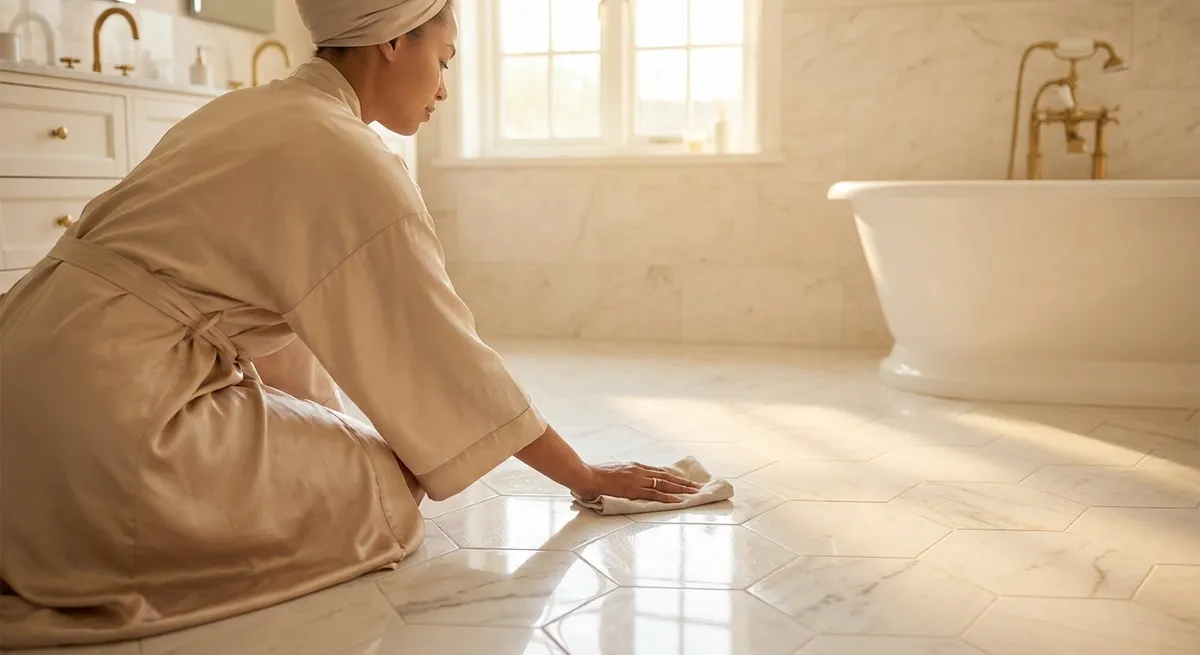
What follows are five exclusive, detail‑driven insights that homeowners and design connoisseurs quietly rely on to keep tile looking impeccable—not only today, but a decade from now.
1. Treat Grout as a Design Finish, Not a Construction Byproduct
Most people maintain the tile and tolerate the grout. In a premium setting, that thinking is inverted: grout is treated like a fine finish, because it is the element most likely to betray age.
Elevated maintenance begins with understanding your grout type—cementitious, epoxy, or urethane—and tailoring care accordingly. Cementitious grout is porous and benefits enormously from a penetrating sealer; epoxy and urethane, while more stain‑resistant, still require gentle pH‑neutral cleaners to preserve color and sheen. Harsh alkaline cleaners, “miracle” whitening powders, and acidic bathroom products can slowly erode or discolor grout, creating a dingy cast even on flawless tile.
For floors and showers, think in terms of protection cycles, not emergencies. A light, pH‑neutral cleaner weekly, followed by a more deliberate grout inspection every three to six months, allows you to address hairline cracking or pinhole voids before moisture intrudes. Sealing cementitious grout every 12–24 months (depending on traffic and cleaners used) creates an invisible barrier that keeps spills from becoming permanent impressions in the room’s character.
The visual result is subtle but profound: grout lines remain crisp, tonal, and disciplined instead of becoming a patchwork of stains and repairs.
2. Build a pH-Neutral “Wardrobe” for Your Surfaces
Luxury tile environments rarely fail because of one catastrophic event; they quietly deteriorate through repetitive exposure to the wrong chemistry. The most refined homes curate cleaning products the way they choose fabrics—by compatibility and long‑term behavior, not by fragrance or marketing claims.
Porcelain, ceramic, and especially natural stone each have their own tolerances. Acidic cleaners, including vinegar‑based “green” solutions, can etch limestone, marble, and some cement tiles, turning a honed surface cloudy and uneven. Strong alkaline degreasers can strip sealers, dull polished glazes, or bleach grout. The result is a surface that never looks quite clean, no matter how aggressively it’s scrubbed.
A sophisticated maintenance approach starts with a pH‑neutral cleaner as the everyday standard. For kitchens, a secondary, slightly alkaline degreaser is used sparingly and rinsed thoroughly, rather than becoming the default. Bathroom descalers are chosen specifically for compatibility with the space’s most sensitive surface—often the stone or decorative tile, not the plumbing fixtures.
By creating a “wardrobe” of a few well‑chosen products and committing to them, you avoid the slow chemical erosion caused by an ever‑changing assortment of harsh cleaners. Your tile ages gracefully, not anxiously.
3. Respect Micro‑Textures: Cleaning for Grip Without Dulling Detail
High‑end tile installations often rely on micro‑textures: the subtle grip on a shower floor mosaic, the structured finish on a terrace porcelain, or the gentle relief of a rectified interior floor. These textures are there for safety, tactility, and light play—but they require a specific maintenance mindset.
Smooth tiles will tolerate the occasional quick mop; structured or matte surfaces will not. Their microscopic peaks and valleys quietly collect soap film, oils, and fine debris that a flat mop simply skims over. Over time, this build‑up darkens grout joints, reduces slip resistance, and gives the illusion of “staining” that is actually layered residue.
The refined approach is twofold: first, regular use of a soft‑bristle brush or an oscillating scrubber head on floors that carry texture, especially in showers and entryways. Second, periodic deep rinsing with warm water and a pH‑neutral cleaner, followed by a thorough removal of residue—either with a microfiber mop or a wet vacuum on larger areas.
The goal is not aggressive scrubbing, but thoughtful agitation that reaches into the micro‑texture without scratching the glaze or stone. Done correctly, the tile regains its original clarity and tactility, and the space feels subtly refreshed rather than merely “wiped down.”
4. Control Transitions: Where Tile Meets the Rest of the House
In a meticulously finished home, the most vulnerable points are often the transitions—where tile meets hardwood, carpet, thresholds, drains, or large glass panels. These edges quietly experience moisture, movement, and cleaning overspray first, and they reveal neglect long before the main surface does.
Premium maintenance involves deliberate protection of these boundary zones. Silicone or appropriate flexible sealants along shower glass channels are inspected for separation or mildew staining and replaced cleanly when they begin to cloud or pull away. Transition strips between tile and wood are vacuumed rather than flooded with water, preventing moisture intrusion under both finishes.
Near exterior doors, tile is shielded with thoughtful entry systems: a high‑quality mat outside to capture grit, and a complementary rug or runner inside to manage residual moisture. This isn’t just about keeping the floor clean; it dramatically reduces micro‑abrasion of the tile surface and premature wear of grout joints at the threshold.
By treating transitions as part of the maintenance plan—not as incidental details—you preserve the sense of continuity that makes a tiled space feel intentionally composed rather than merely functional.
5. Establish Maintenance “Choreography” Aligned with How You Live
The most enduring tile work is cared for according to the way the household actually moves, not according to abstract schedules. This is where sophisticated maintenance becomes almost architectural—choreographing care around traffic patterns, habits, and focal points.
Start by observing which zones truly carry the life of the house: the cooking path between range and sink, the section of shower directly under the water, the landing strip inside the primary entry, the space beside a freestanding tub where water reliably escapes. These “high‑event” areas benefit from more frequent light maintenance and earlier intervention than quieter corners.
In practice, this might mean a quick microfiber wipe of the range surround tile after evening cleanup, while the rest of the kitchen backsplash is addressed weekly. Shower floors might receive a brief, soft‑brush scrub every few days instead of a monthly, aggressive clean. Large‑format living room tile may need only weekly vacuuming and a damp mop, while the entry vestibule is tended to almost daily.
By aligning your efforts with reality, maintenance becomes less about reacting to visible dirt and more about quietly preventing the conditions that age tile prematurely—standing water, accumulated oils, and abrasive grit. The result is a home where every tiled surface appears to be used gently, even when it’s working very hard.
Conclusion
Exceptional tile work is as much about how it is maintained as how it is installed. Grout treated as a finish, chemistry chosen with discernment, textures respected, transitions protected, and routines choreographed to daily life—these are the quiet disciplines that keep tile feeling composed and luxurious over the long term.
When maintenance is executed with this level of refinement, the surfaces in your home stop broadcasting their age and instead whisper continuity: a calm, enduring backdrop to a life well lived.
Sources
- [U.S. Environmental Protection Agency – Safer Choice: Cleaning Products](https://www.epa.gov/saferchoice/products) – Guidance on selecting safer, surface‑appropriate cleaning products and understanding ingredient impacts
- [Tile Council of North America (TCNA) – FAQs and Technical Resources](https://www.tcnatile.com/faqs) – Authoritative information on tile, grout types, and recommended care practices
- [MAPEI – Grout Sealing and Maintenance Guidelines](https://www.mapei.com/us/en-us/home-page/products-and-solutions/solutions/grout-sealers) – Technical insights on grout sealing intervals and product compatibility
- [Bob Vila – How to Clean Grout the Right Way](https://www.bobvila.com/articles/how-to-clean-grout/) – Practical overview of grout‑safe cleaning strategies and what to avoid
- [The Spruce – How to Clean Ceramic and Porcelain Tile Floors](https://www.thespruce.com/how-to-clean-ceramic-tile-floors-1900345) – Consumer‑friendly recommendations on everyday and deep tile cleaning routines