The Hidden Architecture: Why Substrate Sophistication Matters
Before anyone admires a grout line or porcelain finish, the true performance of tile is determined by the surface below. A refined tile installation begins with a substrate that is not just flat, but predictably stable over time. Concrete slabs must be evaluated for moisture transmission, curling, and existing cracks; wood-framed floors demand proper deflection control to prevent hairline grout fractures and tile failure months or years later.
Advanced underlayment systems—such as decoupling membranes, cement backer boards, or foam-core boards—can be strategically selected based on the room’s use, subfloor composition, and tile type. In wet spaces, waterproofing should be fully integrated with the tile assembly, not treated as an afterthought. Homeowners should expect their installer to discuss crack isolation, movement joints, and moisture management as part of the proposal—not only aesthetics. The most luxurious tile finishes are, fundamentally, engineering achievements hiding beneath the surface.
The Art of Alignment: Layout as Interior Architecture
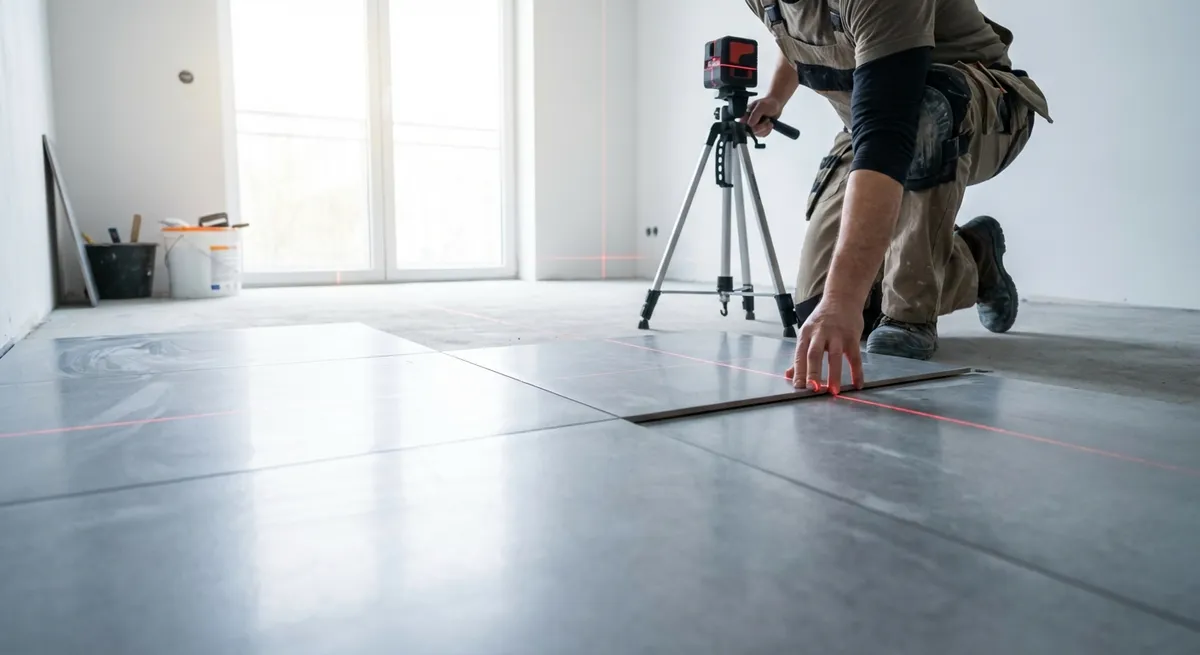
A sophisticated tile layout is far more than a grid—it is an architectural decision that guides how the eye moves through a room. Tile lines should be aligned thoughtfully with major sightlines: doorways, windows, built-in cabinetry, and key architectural axes. Rather than starting in a corner and hoping for the best, a premium installation begins with a dry layout and multiple options for how the pattern will resolve against walls and thresholds.
Balanced cuts are a hallmark of meticulous work. Narrow slivers at walls, shower niches, or around islands can visually cheapen even the most expensive tile; an expert installer will adjust the layout to ensure that cuts are both symmetrical and proportionally generous. In larger spaces, controlling how grout joints align (or deliberately misalign) between rooms can subtly define zones without adding physical barriers. When properly considered, the tile pattern becomes a quiet extension of the home’s architecture rather than a decorative overlay.
Grout as Design Language: Color, Joint, and Texture Control
Grout is often treated as a mere necessity, yet in refined interiors it functions as an essential design tool. The color of grout can either emphasize pattern or dissolve it. A close color match between tile and grout creates a seamless, monolithic surface—perfect for contemporary, minimalist spaces. A contrasting grout, by comparison, will sharpen the geometry and make each tile more pronounced, lending character and rhythm to the floor or wall.
Joint width is equally consequential. Narrow joints (often 1/16" to 1/8") convey precision and luxury but demand exceptionally flat substrates and consistently gauged tile. Larger joints can soften the look of slightly irregular or handmade tiles, emphasizing their artisanal charm. Material selection matters as well: stain-resistant, polymer-modified, or epoxy-based grouts can provide superior durability and color stability, especially in kitchens, spas, and high-traffic areas. In a truly elevated installation, grout is specified as carefully as the tile itself, with clear intent about how it will age and patina over time.
Transitions and Thresholds: The Signature of a Refined Installation
Most tile installations are judged by what happens in the middle of the room, but the most telling details live at the edges. Transitions between tile and adjacent materials—hardwood, carpet, stone, or luxury vinyl—reveal whether the project has been treated as a cohesive interior or a series of unrelated surfaces. A refined installation aims for flush, or nearly flush, transitions, carefully managing build-up with underlayments and setting materials to avoid abrupt height changes.
Threshold pieces, metal profiles, or stone saddles should be chosen to complement both the tile and the architecture. In showers and wet rooms, slopes should be subtle but precise, guiding water invisibly and efficiently without feeling visually “tilted.” Corners and terminations, especially on niches, benches, and window returns, benefit from carefully mitred tiles or slim, high-quality edging profiles instead of bulky trims. These boundary conditions are where craftsmanship and design discipline are most visible—and where luxury is either confirmed or quietly undermined.
Performance by Design: Matching Tile, Space, and Lifestyle
Not every exquisite tile is suited for every space, and understanding the interplay between material performance and daily life is essential. For floors subject to splashes—baths, entries, kitchens—slip resistance ratings should be taken seriously, especially in homes with children, pets, or aging residents. Polished stone or glossy ceramics may be visually striking, but in the wrong context they can compromise both safety and practicality.
Tile body and rating matter as much as appearance. Porcelain, with its low water absorption, is a highly stable choice for high-traffic interiors, radiant-heated floors, and even outdoor applications in suitable climates. Natural stone demands a higher level of maintenance and sealing, rewarding that care with depth and uniqueness that cannot be replicated. Large-format tiles can visually expand a room, but they magnify any substrate irregularities and require advanced setting techniques. A truly elevated installation respects both the material and the way the space will be lived in, ensuring that elegance is not at odds with everyday use.
Conclusion
Exceptional tile work is not an accident; it is the result of careful decisions long before the first tile is set and an unwavering commitment to refined detail at every stage. When homeowners understand the hidden architecture of substrates, the quiet power of layout, the design language of grout, the significance of transitions, and the realities of performance, they become true collaborators in the creation of their spaces. The result is tilework that not only looks exquisite on day one, but continues to feel considered, deliberate, and quietly luxurious for years to come.
Sources
- Tile Council of North America (TCNA) – Installation Guidelines – Authoritative technical guidance on substrate preparation, movement joints, and tile installation standards.
- ANSI A108 / A118 / A136 Standards Overview – TCNA – Details the industry standards that govern professional tile setting materials and methods.
- Schluter Systems – Movement Joints and Transitions – Comprehensive resource on profiles, expansion joints, and edge treatments for sophisticated transitions.
- Custom Building Products – Surface Preparation Guide – Technical references on substrate evaluation, underlayments, and mortar selection.
- The National Institute of Standards and Technology (NIST) – Slip Resistance Research – Background on measuring and understanding slip resistance on walking surfaces, relevant to tile selection in wet or high-traffic areas.