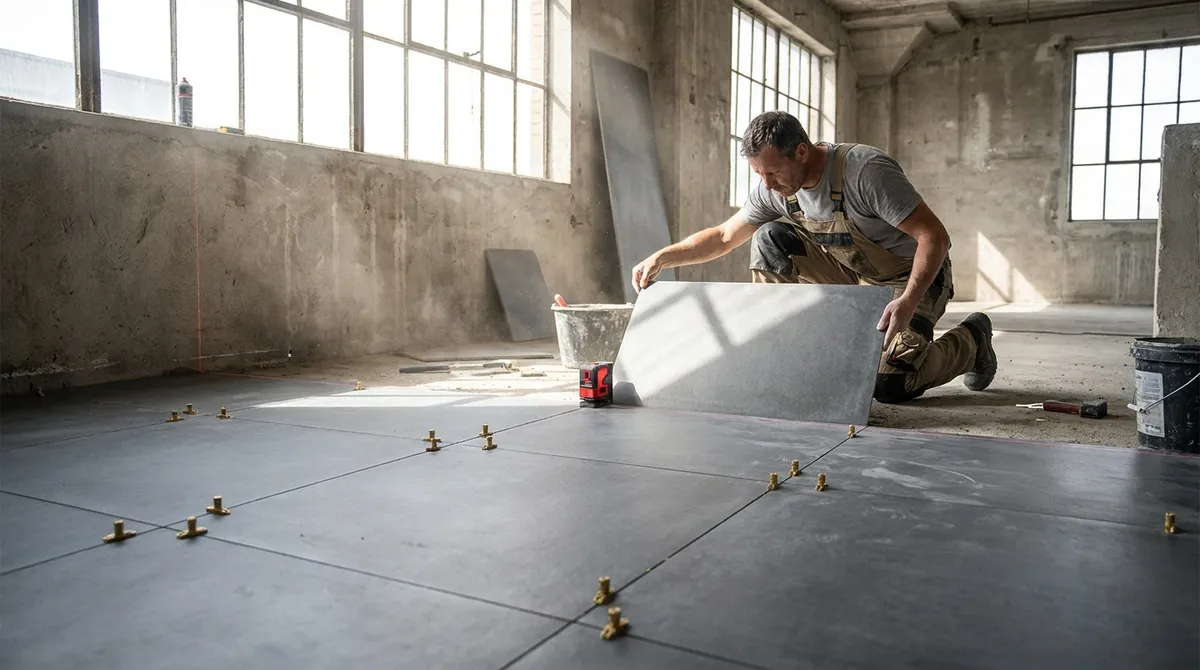
Below are five exclusive, often-overlooked insights that elevate tile installation from competent to exceptional—insights that help you converse with your installer on equal footing and ensure your finished surfaces feel as refined as they look.
Elevation Mastery: Crafting Perfect Transitions Between Rooms
In elevated interiors, tile never feels like a “step up” or “step down” from adjacent flooring—it feels continuous. The true hallmark of a premium installation is how gracefully one surface meets another, both visually and underfoot.
A sophisticated approach begins with a complete elevation plan before a single tile is set. This means mapping not just tile thickness, but also underlayment, membranes, mortars, and any radiant heating or sound-reduction layers. Your goal: a near-flush transition (often within 1–2 mm), so moving from tile to hardwood or carpet feels seamless. This is not something a crew improvises on-site; it requires deliberate subfloor preparation and, in many cases, selective buildup or feathering of surfaces.
Discuss with your installer where transition strips can be minimized or concealed. In premium spaces, metal profiles are specified like jewelry—chosen with intent for finish, height, and visibility. In others, the best transition is the one you never notice at all, achieved simply by immaculate planning of heights and materials from the outset. When executed correctly, the home feels composed as a whole rather than like a collection of separate flooring decisions.
The Geometry of Calm: Layouts That Quiet the Eye
Most homeowners focus on tile pattern; few focus on tile geometry. Yet it is the underlying geometry—how tiles center on focal points, align with architectural features, and terminate at edges—that determines whether a room feels serene or subtly unsettling.
Insist on a dry layout and a conversation about “sight lines”: what you see when you stand in the entry, sit at the dining table, or walk down the hallway. In a refined install, perimeter cuts are intentional and balanced; you don’t end up with a thin sliver of tile hugging one wall while the opposite side looks generous. Instead, cuts are symmetrically distributed, and major tiles are consciously centered on key elements—such as a kitchen island, a shower niche, or a freestanding tub.
For larger-format tiles, the geometry becomes even more critical, as misalignment is impossible to hide. Offset patterns should be carefully calibrated; many premium installations avoid a full 50% stagger with plank tiles to reduce lippage and visual tension, opting instead for a one-third or even random offset guided by the tile manufacturer’s recommendations. The result is a floor that feels visually quiet, almost inevitable, as though it could not have been laid any other way.
Sound, Feel, and Warmth: Engineering Comfort Beneath the Surface
Under a truly luxurious tile floor is an entire performance system—engineered for warmth, silence, and comfort in motion. Most homeowners think tile equals “hard and cold.” In high-end installations, this is a myth.
Heated floors, when correctly integrated into the installation system, transform tile from a visually cool surface to a sensorially inviting one. That integration must be methodical: the electrical or hydronic system, the appropriate thinset, and a compatible uncoupling or crack-isolation membrane all need to be specified as a unified assembly, not pieced together from assorted products. This reduces the risk of tile movement, cracking, or uneven heat distribution over time.
Acoustics are just as important. Especially in multi-story homes or apartments, a properly specified sound-management underlayment dramatically reduces impact noise—footsteps, dropped objects, and chair movement. The luxury here is not silence alone, but the way the room “feels” softer and more composed. When you walk across such a floor, there’s a subtle give, a refinement in the way sound dissipates. It’s the difference between tile that merely looks expensive and tile that genuinely inhabits a premium environment.
Grout as Design Language, Not Afterthought
In lesser installations, grout is chosen at the last minute and treated as a necessary filler. In refined work, grout is a deliberate design language, defining how assertive or quiet the pattern appears, how easily the surface cleans, and how it ages over time.
Color is the first decision, but not the only one. A tone-on-tone grout that closely matches the tile creates a monolithic, gallery-like surface, ideal for clients who want the tile itself to be the star. A softly contrasting grout adds definition and can be particularly effective with patterned cement tiles or smaller mosaics, subtly tracing the geometry without overwhelming it. Dark grout lines on light tiles can be striking but require a commitment to precise layout and joint consistency—every irregularity will show.
Beyond aesthetics, the grout type matters. Epoxy and high-performance cementitious grouts offer superior stain resistance and color stability, particularly in kitchens, showers, and entryways. Their use is more demanding during installation, but they reward you with resilience that reads as quietly luxurious over time: joints that remain clean, uniform, and free from the dingy aging that betrays lesser work. A sophisticated homeowner asks not just, “What color grout?” but, “What grout system, and why?”
Future-Proof Detailing: Building for Graceful Aging and Easy Refinement
A premium installation anticipates not just how the tile will look on day one, but how it will age, settle, and potentially be altered over the next decade or two. This is where the finest installers distinguish themselves: through planning for future access, repair, and even design evolution.
Discuss with your installer whether strategic “access tiles” or removable panels can be discreetly integrated where valves, cleanouts, or mechanical components sit behind or beneath tiled surfaces. In showers and wet rooms, insist on robust waterproofing and correctly sloped planes, so the elegance you see is underwritten by a technical rigor you will never have to think about again. These details don’t photograph well, but they define the long-term integrity of the space.
Consider, too, how the installation will respond if you later change fixtures or adjacent materials. Thoughtful edge detailing, generously sized thresholds, and carefully placed movement joints make it far easier to adapt spaces without invasive demolition. The true luxury is not rigidity, but controlled adaptability: a tile installation that is secure and enduring, yet forgiving enough to accommodate the home’s natural evolution. When your surfaces are built with this foresight, they don’t merely last; they age gracefully and remain compatible with your next chapter of design decisions.
Conclusion
Exceptional tile installation is not a matter of “straight lines and no cracks.” It is a quiet choreography of elevation, geometry, comfort, materials science, and long-term planning. For homeowners who expect their spaces to feel as composed as they look, the difference lies in asking the right questions—and recognizing that the most luxurious details often vanish into the background once they are done correctly.
By engaging your installer on these five deeper dimensions, you shift the conversation from basic trade work to true craftsmanship. The result is a home where every tiled surface—seen and unseen, touched and merely sensed—speaks in the same refined, deliberate language.
Sources
- [TCNA Handbook – Tile Council of North America](https://www.tcnatile.com) – Industry standards and best practices for tile installation methods and assemblies
- [ANSI A108/A118/A136.1 Specifications (via TCNA)](https://www.tcnatile.com/industry-issues/ansi-standards.html) – Authoritative technical standards governing professional tile installation and materials
- [Schluter Systems – Installation Systems & Movement Joints](https://www.schluter.com/schluter-us/en_US/installation-systems) – Detailed guidance on uncoupling membranes, transitions, and movement joints used in high-performance tile assemblies
- [Custom Building Products – Grout Technologies](https://www.custombuildingproducts.com/products/grout.aspx) – Overview of cementitious and epoxy grout options, performance characteristics, and selection considerations
- [U.S. Department of Energy – Radiant Heating Systems](https://www.energy.gov/energysaver/radiant-heating) – Technical background on radiant heating, including underfloor systems often paired with tile surfaces