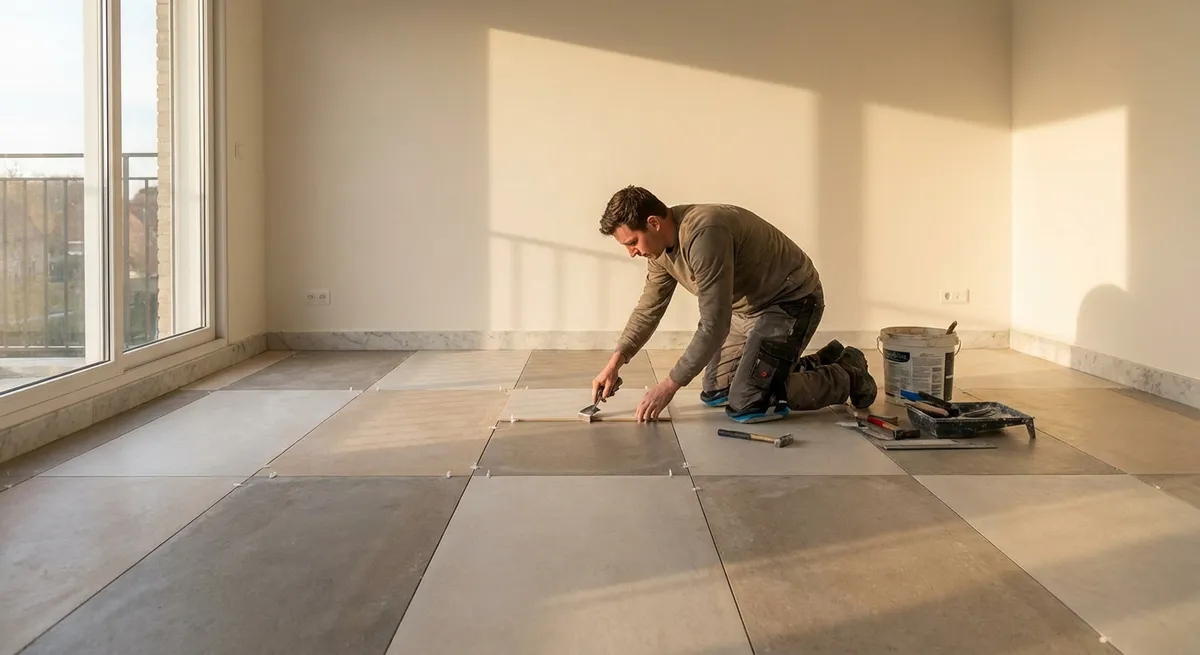
This guide explores the subtleties that separate merely “finished” tile work from work that feels considered, architectural, and enduring. Within it are five exclusive insights that discerning homeowners—and the professionals who serve them—can use to elevate any tile installation from competent to truly remarkable.
The Hidden Architecture Beneath Every Tile
Exceptional tile work begins with a philosophy: the belief that the substrate is architecture, not an afterthought. High-end installations treat the underlayers with the same seriousness as the visible finish.
Premium work starts by reading the structure of the home. Is the subfloor engineered wood, traditional plank, or concrete slab? Each demands a different preparation strategy. Cement backer board, uncoupling membranes, and self-leveling underlayments are not interchangeable; they’re tools to orchestrate stability, flatness, and crack isolation in a way that suits both the building and the tile selection.
For thin, large-format porcelain—especially in grand foyers or long gallery-like corridors—flatness tolerance becomes critical. Even slight undulations in the substrate will telegraph as lippage (uneven tile edges), catching light and shadow in a way that feels careless rather than artisanal. A properly prepared, flattened substrate allows tiles to sit in quiet alignment, enabling clean light reflection and a sense of continuous plane.
The most elevated installations also anticipate future stresses. Expansion joints are not a compromise; they are a form of structural humility. They acknowledge that even the finest materials move, expand, and contract. Integrating movement joints at door thresholds, transitions, and large expanses allows the surface to age gracefully rather than fracture impulsively. In this hidden architecture, restraint is luxury.
The Geometry of Intentional Layout
Refined tile work is never about “just starting in the corner.” It’s about orchestrating the room’s visual geometry with intention. The best installations read like a considered floor plan, not a mechanical grid.
The conversation begins at the most important vantage points: the entry line, the view from a primary seating area, the perspective from a soaking tub, the reveal when a door opens. Tile layout should align with these axes. Centering a room is not always the answer; sometimes the more sophisticated choice is to align with architectural features—fireplaces, window walls, kitchen islands, or a hallway’s long sightline.
Dry layouts and full-scale mockups are the quiet hallmark of serious work. Professional installers will unbox enough tile to preview pattern variation (especially with natural stone or high-variation porcelain) and intentionally distribute tones and veins. Rather than clumping dramatic veining in one corner, they’ll “compose” the field so that movement feels balanced across the space.
Grout lines play a structural role in this geometry. Large-format tiles with narrow joints evoke a monolithic, almost stone-like plane; slightly wider joints can feel more classic and artisanal. The choice should respond to the home’s architectural language: contemporary minimalism, tailored transitional design, or historical revival. When layout respects the architecture, tile stops feeling like a decorative overlay and becomes part of the building’s logic.
Exclusive Insight #1: Calibrated Transitions Are the Mark of Mastery
The most telling detail in any tile installation is the transition—not the field. The handoff between tile and adjacent surfaces is where refinement, or its absence, is unmistakable.
True luxury avoids abrupt height changes. Where tile meets hardwood, polished concrete, or carpet, the transition should feel intentional, not improvised. Premium installations often rely on meticulous subfloor buildup or recessing adjacent materials so the finished surfaces meet in a single, clean plane. The goal is to remove the need for conspicuous reducer strips whenever possible.
When transition profiles are necessary, the sophisticated approach is to treat them as designed elements. Slim, anodized aluminum or stainless profiles (often from systems-based manufacturers) can frame a tile field with gallery-like precision, especially in contemporary interiors. In more traditional settings, carefully scribed stone or wood thresholds can create a graceful, room-to-room handoff that feels bespoke rather than dictated by a catalog.
Vertical transitions are equally important. Where tile meets a baseboard, paneling, or wall cladding, the joint should be deliberate: a fine caulk line matched to grout color, an inset shadow reveal, or a subtly proud tile edge with a suitable trim. Any visible cut at eye-level—especially around door casings, niche edges, or window returns—should read as composed geometry, not simply “where the tile ended.”
Exclusive Insight #2: The Art of Matching Grout to Ambience, Not Just Tile
Grout is often chosen as an afterthought—an off-white for light tile, a gray for everything else. In sophisticated spaces, grout color is treated less as a necessity and more as an instrument for tuning ambience.
To elongate a space or calm a highly patterned tile, grout can closely match the dominant tile tone, visually minimizing joints and allowing the surface to feel expansive and quiet. This is particularly effective for large-format tiles in entry halls and open-plan living spaces, where visual continuity is a hallmark of luxury.
Conversely, a quietly contrasting grout can highlight pattern and proportion. In herringbone, chevron, basketweave, or small-format mosaics, grout becomes a way to “draw” geometry without introducing another material. A slightly warmer or cooler grout tone, relative to the tile, can subtly shift the mood from crisp and gallery-like to softly lived-in.
In high-end kitchens and baths, epoxy or other advanced grout formulations can be selected not just for performance (stain and moisture resistance), but also for color stability over time. Refined work considers how grout will age under sunlight, cleaning routines, and water exposure. The most thoughtful choices preserve the room’s intended tone for years rather than months.
Exclusive Insight #3: Lighting and Tile—A Deliberate Dialogue
Tile is inseparable from light. The finest installations consider how surfaces will behave under morning light, evening ambiance, task illumination, and any directional light sources that might magnify imperfections.
Highly polished stone or gloss tile will reveal every irregularity in the substrate and installation. In spaces with strong, raking light—such as floor-to-ceiling window walls or low afternoon sun—this can be unforgiving. A sophisticated approach pairs the right tile finish with the room’s natural and artificial lighting. Matte, honed, or satin finishes often deliver a more nuanced, velvety reflection in such environments, preserving elegance without highlighting microscopic flaws.
Vertical tile applications—kitchen backsplashes, shower walls, fireplace surrounds—must also contend with under-cabinet lighting, wall sconces, and downlights. The angle and intensity of these sources can exaggerate lippage or uneven grout joints. Premium planning coordinates lighting layout with tile layout, especially when using linear formats or highly reflective glazes.
For homeowners seeking a tailored result, a mockup under planned lighting is invaluable. Viewing a small test installation with actual fixtures, color temperature, and dimming levels reveals how the tile’s color, texture, and sheen will register in real conditions. This is the sort of foresight that defines truly intentional design.
Exclusive Insight #4: Pattern as a Quiet Signature, Not a Shout
Sophisticated tile patterns rarely compete for attention; they reward it. Instead of defaulting to ubiquitous layouts, refined installations use pattern as a subtle signature that ties the home’s architecture and interior language together.
In long corridors or open-plan spaces, a thoughtfully oriented plank tile—running with the line of sight rather than perpendicular to it—can make the space feel both longer and more composed. In grand bathrooms, a diagonal or chevron stone floor can echo the geometry of coffered ceilings, window muntins, or staircase railings elsewhere in the home, creating a barely perceptible but cohesive rhythm.
Inset “rugs” of patterned tile within a calmer field can delineate functional zones—under a dining table, within a dressing area, or at an entry vestibule—without introducing hard thresholds or changes in level. Rather than feeling ornamental, these become architectural gestures that guide movement and define experience.
Even in minimalist interiors, micro-patterns—stacked bond, vertical running bond, rhythmic mosaic placements—can create a tactile, almost textile-like quality. By modulating pattern scale and frequency across rooms, a home can feel curated but never overdesigned. Pattern, when used with restraint, becomes an undercurrent of sophistication.
Exclusive Insight #5: Maintenance Anticipation as a Design Discipline
The most luxurious tile installations are not those that look impeccable on day one, but those designed to remain composed with real living. Anticipating maintenance is a discipline, not a compromise.
Stone selections, especially marbles and limestones, benefit from an honest conversation about etching, staining, and patina. In kitchens and busy baths, homeowners with a preference for immaculate surfaces may find that certain porcelains—crafted to emulate stone with astonishing fidelity—provide the visual richness they crave with far greater resilience. The sophistication lies in understanding your own tolerance for patina and selecting accordingly.
Joint width and grout type are equally strategic. Narrow joints with high-performance grout limit soiling and simplify cleaning, particularly in commercial-grade or high-traffic residential spaces. In showers, well-detailed slopes, correctly positioned drains, and fully waterproofed substrates do more to preserve elegance than any cleaning product. Water should evacuate efficiently, surfaces should dry predictably, and mold-prone micro-ledges should be consciously avoided in the design phase.
Maintenance anticipation extends to access: removable panels, discreetly integrated inspection points, and thoughtful fixture placement ensure that future repairs or upgrades don’t require destructive intervention. The most refined tile work is future-facing—it acknowledges that homes evolve and ensures that their surfaces can evolve with them gracefully.
Conclusion
Luxury in tile installation is not a matter of price per square foot or brand name alone. It resides in the quiet intelligence of the substrate, the intentionality of pattern, the discipline of transitions, the choreography with light, and the foresight of maintenance. These subtleties are often invisible on a floor plan, but they are unmistakable in person.
For homeowners who value refinement, the goal is to think of tile not merely as a decorative finish, but as a permanent part of the home’s architecture. Partnering with professionals who understand and respect these nuances will yield spaces where every surface feels inevitable—nothing jarring, nothing forced, everything quietly aligned.
In such interiors, the tile does not ask to be noticed. It simply upholds the entire room with quiet, enduring confidence.
Sources
- The Tile Council of North America (TCNA) Handbook - Authoritative industry guidelines on substrate preparation, movement joints, and installation standards
- American National Standards Institute – ANSI A108/A118/A136.1 - Technical standards governing professional ceramic and stone tile installation practices
- Schluter Systems – Movement Joints & Transitions - Detailed guidance and product solutions for refined transitions and movement accommodation in tile assemblies
- National Institute of Standards and Technology (NIST) – Thermal Expansion - Background on material movement and thermal expansion, crucial for understanding why advanced tile assemblies must accommodate motion
- University of Massachusetts Amherst – Lighting Design Resources - Educational reference on how lighting characteristics influence surface appearance and perception