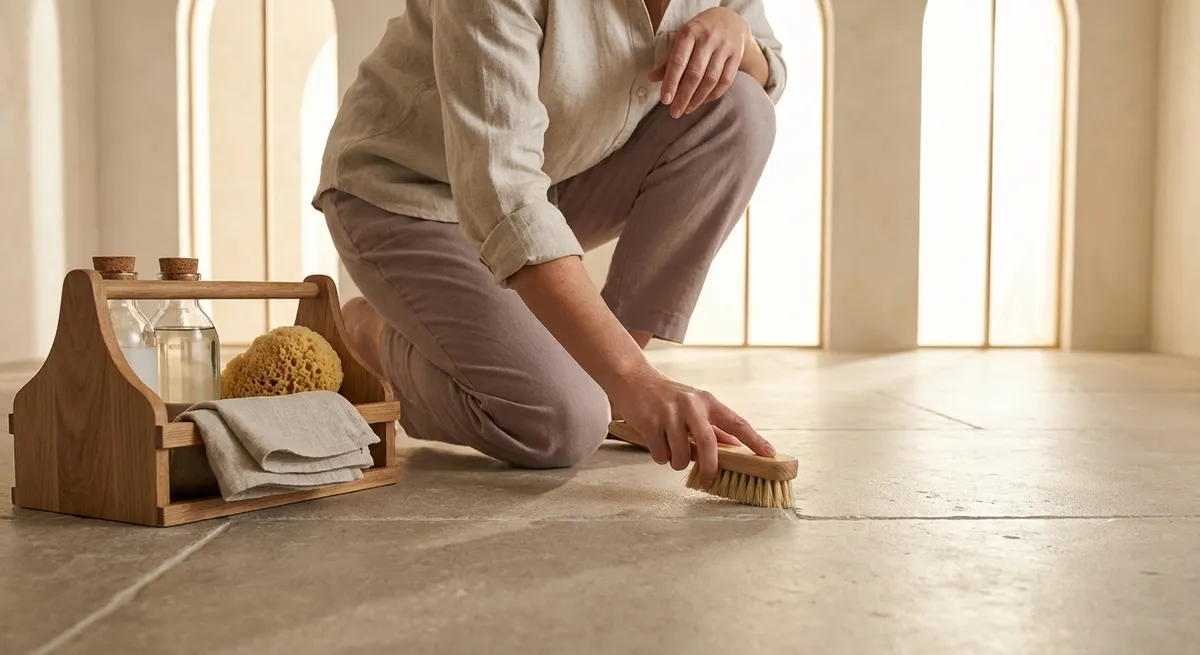
Below, you’ll find five elevated, often-overlooked insights that move beyond generic “mop and go” advice. Each is designed for homeowners who expect their tile to age with grace, not merely survive.
Understanding Tile as a System, Not a Surface
Most maintenance missteps come from treating tile as a single finish rather than a complete, interdependent system. Your tile, grout, substrate, and sealers function together—when one fails, the entire floor or wall is compromised.
Begin by identifying what you truly have: porcelain, ceramic, natural stone, encaustic cement, or glass. A porcelain kitchen floor with epoxy grout behaves very differently from a honed limestone bathroom with cementitious grout. Each material carries specific absorption rates, hardness, and chemical sensitivities.
From there, consider not just the tile, but what lies beneath: underlayment, heating mats, membranes, and waterproofing layers. Subtle issues—slight movement, hydrostatic pressure, or uneven heat—often present first as hairline grout cracks, discolored joints, or unexpected hollow sounds underfoot.
A refined maintenance mindset treats these early signals as invitations to investigate, not cosmetic inconveniences to be ignored or covered. When you understand your installation as a system, your maintenance transitions from reactive cleaning to proactive preservation.
Insight 1: The “pH Discipline” That Protects Finish and Grout
One of the most consequential yet overlooked aspects of tile care is pH discipline—the intentional use of cleaning products whose acidity or alkalinity aligns with your specific surface.
For most porcelain and ceramic tiles, a neutral cleaner (around pH 7) is sufficient for routine care. However, grout, stone, and decorative finishes are another matter. Acidic cleaners (including many “bathroom” and “soap scum” sprays) can etch natural stone, degrade cementitious grout, and dull specialty glazes over time. Conversely, overly alkaline degreasers—used too frequently—can leave films that trap dirt and leave floors looking chronically hazy.
Establish a tiered cleaning approach. For regular upkeep, rely on high-quality, neutral pH cleaners specifically labeled for tile and stone. Reserve task-specific products—like mildly acidic solutions for post-construction haze or alkaline degreasers for heavy kitchen buildup—for occasional, deliberate use, following manufacturer dwell times and thorough rinsing.
The most elegant tile installations do not look “scrubbed”; they look gently preserved, their finishes neither stripped nor coated. Consistent pH discipline is how that restraint is achieved.
Insight 2: Grout as a Design Asset—Not a Sacrificial Layer
Many homeowners unconsciously treat grout as the disposable part of a tile installation—something to be replaced, recolored, or “freshened” only when visibly stained. In sophisticated spaces, grout is curated and protected with the same intentionality as the tile itself.
Begin by examining your grout composition: cementitious, epoxy, or urethane. Cement-based grout is more porous and more vulnerable to staining and moisture, especially in kitchens, showers, and high-traffic entries. If your grout is not already sealed (or is past its effective lifespan), an appropriate penetrating sealer creates a nearly invisible shield, helping repel oils, dyes, and daily grime without plasticizing the surface.
Consider maintenance strategies that respect grout lines rather than attacking them. Harsh scrubbing with rigid brushes can erode joints, especially narrower ones, and open micro-channels that collect more dirt. Instead, use soft- to medium-bristle brushes with targeted, grout-safe cleaners, and always rinse thoroughly to keep detergent residues from attracting new soil.
Crucially, monitor color consistency. Early, localized darkening often signals moisture intrusion, drainage inefficiencies, or a ventilation issue—not just “dirty grout.” Addressing these root causes protects both the grout and the broader installation, ensuring that your grout continues to read as an intentional design choice rather than a maintenance compromise.
Insight 3: Micro‑Routines That Quietly Extend Tile Life
Exquisite tile rarely fails dramatically; it ages subtly through a hundred small abrasions, impacts, and neglected moments. The most effective maintenance strategies are not dramatic overhauls but discreet micro‑routines embedded into everyday life.
At entries, opt for a two-stage mat system: a durable exterior mat to capture grit and an interior mat with a finer weave to intercept smaller particles. This single habit can significantly reduce micro-scratching on polished stone and glossy glazes. In kitchens and dining areas, felt pads under chair legs and movable furniture are non-negotiable, especially on softer stones and high-gloss surfaces.
In wet areas, adopt a “dry first, then clean” routine. After showers or baths, a quick pass with a squeegee or microfiber towel over walls and glass reduces mineral deposits and soap film, which in turn minimizes the need for harsher periodic cleaning. This is particularly important in areas with hard water that tends to leave calcium and magnesium deposits on both tile and grout.
Finally, schedule a quiet quarterly inspection rather than waiting for something to “look bad.” Run your fingertips along transitions, feel for raised edges, check corners for hairline cracks, and note any areas that sound slightly hollow when tapped. These small, regular check-ins prevent minor issues from evolving into structural or aesthetic failures that require intrusive repair.
Insight 4: Light, Sheen, and the Illusion of Clean
In elevated interiors, light is curated as intentionally as color and texture. Yet few homeowners realize how profoundly lighting and sheen choices influence perceived cleanliness—and therefore how they should shape your maintenance practices.
Polished or high-gloss tiles under strong directional lighting—especially from low-angle windows or linear LEDs—reveal every streak, footprint, and cleaning pass. Matte or honed finishes are more forgiving but can still show unevenness when wrong products or tools are used. Tailoring your maintenance to your lighting plan is an advanced but deeply rewarding refinement.
On glossy floors and walls, favor flat-weave microfiber mops and soft, lint-free cloths that minimize streaking. Avoid heavy, soapy solutions that leave a sheen; a light dilution of a quality neutral cleaner is typically sufficient. Change mop water frequently—cloudy water equals a cloudy finish.
For matte and textured tiles, the objective shifts from “mirror clarity” to “uniform depth.” Vacuuming (not just sweeping) becomes essential, as texture tends to capture fine grit. Here, a slightly higher dwell time with the cleaning solution helps loosen embedded soil, followed by careful rinsing to prevent detergent from settling into the texture and dulling it.
If certain areas appear perpetually “dirty” or blotchy despite thorough cleaning, examine the light source before blaming the tile. Sometimes, softening a beam spread, changing bulb temperature, or reducing harsh grazing light can restore a sense of quiet uniformity without increasing maintenance intensity.
Insight 5: Seasonal Strategies for Long-Term Stability
Tile may feel immutable, but the environment around it is constantly shifting. Temperature fluctuations, humidity swings, and seasonal changes in usage patterns exert a quiet, cumulative influence on your installation. Homeowners who manage these shifts intentionally see far fewer issues over the lifetime of their tile.
In colder climates, winter brings two enemies to entry and mudroom tile: de-icing salts and abrasive grit. Whenever possible, specify calcium chloride or less aggressive ice-melt products and place robust mats where outdoor footwear is removed. Clean entry tile more frequently during these months with a slightly more alkaline (tile-appropriate) cleaner to dissolve tracked-in residues, followed by a clean water rinse to prevent a white haze from forming.
In warm and humid seasons, bathrooms and spa-like spaces warrant heightened attention to ventilation. Extended moisture exposure, even without obvious leaks, can fatigue grout, encourage mildew formation in micro-crevices, and compromise sealers prematurely. A properly sized, well-used exhaust fan and a habit of leaving shower doors or curtains partially open post-use are simple, high-impact practices.
For homes with radiant-heat floors, avoid drastic, rapid temperature changes. Gentle, incremental adjustments help the substrate and mortar bed transition without stress, reducing the risk of hairline cracking or hollow spots beneath the tile. This is a refinement often overlooked, yet it pays dividends in the long-term integrity of heated floors.
Treat each change in season as a cue to recalibrate—not overhaul—your approach. A slight shift in product choice, frequency, or focus area is often all that’s required to keep your tile performing exquisitely year-round.
Conclusion
Elevated tile maintenance is less about effort and more about intention. When you view your floors and walls as a carefully engineered system, respect the chemistry of your cleaners, and embed small protective rituals into everyday life, maintenance becomes a quiet act of stewardship rather than a chore.
The reward is subtle but unmistakable: grout that still reads as a design decision years later, finishes that age with dignity instead of distress, and spaces that feel perpetually composed, not perpetually “just scrubbed.” In a well-kept home, exceptional tile work doesn’t simply endure—it matures.
Sources
- University of Tennessee Extension – Care of Ceramic Tile Floors - Covers foundational best practices for cleaning and maintaining ceramic tile surfaces
- U.S. General Services Administration – Historic Tile and Terra Cotta Preservation Brief - Discusses long-term care and preservation strategies for tile in high-value and historic settings
- National Park Service – Preservation Brief 1: Cleaning and Water-Repellent Treatments - Offers guidance on cleaning methods, pH, and protective treatments applicable to masonry and many stone/tile assemblies
- Mapei – Guide to Grout and Sealers - Provides technical insight into grout types, performance characteristics, and protection strategies
- Schluter Systems – Underfloor Heating and Tile Assemblies - Explains how radiant heating interacts with tile systems and why controlled temperature changes matter for long-term stability