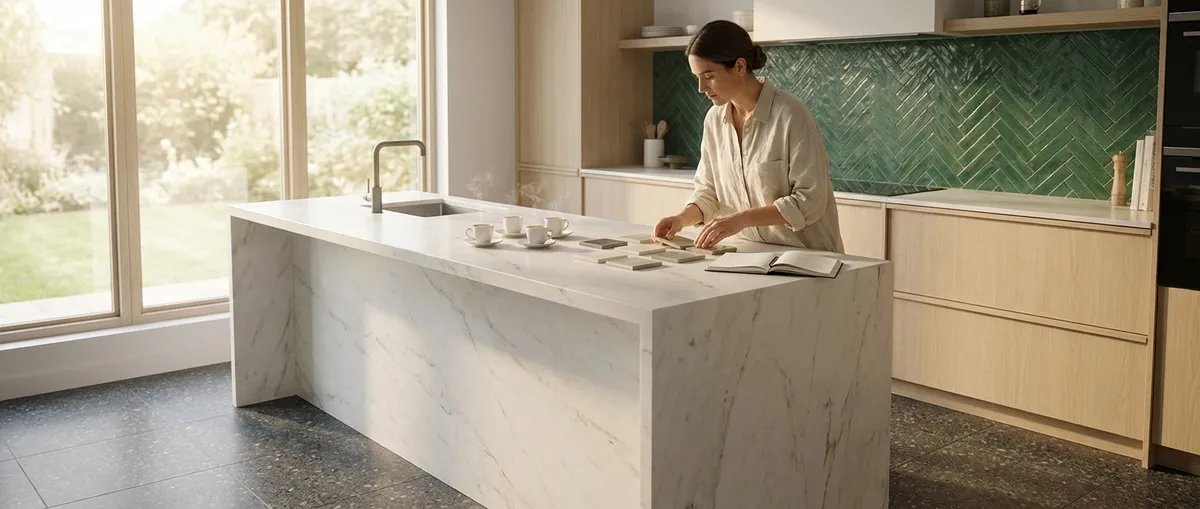
Below are five exclusive, detail-driven insights that elevate tile work from merely attractive to truly considered.
1. Treat Tile as Architecture, Not Decoration
The most sophisticated tile work begins long before pattern or color are chosen. It starts with an architectural mindset: how tile supports the proportions, circulation, and hierarchy of the home.
Consider how tile can:
- Anchor key zones by shifting materials at natural thresholds—kitchen to dining, entry to living—without resorting to walls or bulky transitions.
- Reinforce sightlines by aligning grout joints with door openings, window mullions, or cabinetry reveals, so the eye reads a coherent visual rhythm.
- Control visual weight through format choice: large-format tiles calm expansive spaces, while smaller mosaics can tighten and enrich intimate zones like powder rooms or shower niches.
- Create architectural “pause points” with subtle shifts in tile orientation (e.g., rotating layout at a shower entry or hearth) to mark moments of transition.
When tile is drawn into the architectural grid of the home, every installed piece feels inevitable—nothing appears applied, everything feels composed.
2. Compose With Grout as Deliberately as With Tile
In refined spaces, grout is not an afterthought; it is a design instrument with the power to either sharpen or soften an installation.
A sophisticated approach includes:
- Micro-tonal pairings: Select grout just a half-shade darker or lighter than the tile for a continuous, tailored effect. This diminishes visual noise while preserving the texture and format of the tile.
- Intentional contrast: Use slightly deeper grout on subdued tiles to reveal pattern in a restrained way—especially effective with classic shapes like rectangles or hexagons.
- Thickness discipline: A consistent joint width (often narrower for rectified tiles) reads as more deliberate. Where possible, align grout lines across surfaces—floor to wall, wall to niche—for a custom, furniture-grade feel.
- Functionally beautiful choices: In high-use zones (kitchens, mudrooms, family baths), mid-tone grout shades hide daily wear more gracefully than stark white or very dark tones, prolonging the appearance of pristine installation.
Thinking of grout as part of the palette—rather than a technical requirement—introduces a finely tailored, couture-level finish.
3. Elevate Everyday Rituals With “Tile Moments”
Beyond full floors and walls, the most memorable homes often feature discreet “tile moments”—targeted applications that punctuate daily rituals with quiet luxury.
Consider creating:
- A framed tile plinth beneath a freestanding tub or in a dressing area, subtly inlaid within a larger field of stone or wood to suggest a curated stage.
- An inset tile tray on a vanity or built-in ledge, using a single exquisite material (a handcrafted zellige, a honed marble mosaic) to define a grooming or fragrance vignette.
- A “landing pad” at key touchpoints—for example, a small tile platform at the entry where shoes are removed, or beneath a reading chair—with a pattern or finish that distinguishes it from the broader floor.
- Tile-wrapped niches and recesses in showers, bars, or media walls that extend tile around the interior returns, so every angle feels finished rather than surface-applied.
These focused interventions require minimal square footage but dramatically increase the perceived craftsmanship and intention of the home.
4. Mix Formats, Not Chaos
Layering different tiles in one space can feel indulgent and bespoke—or disjointed and busy. The distinction lies in disciplined constraint.
A refined mix generally follows three quiet rules:
One dominant, two supporting
Select a single primary tile that handles most of the visual work (for example, a large-format porcelain on floors), then introduce up to two supporting players—a smaller format or mosaic, and perhaps a limited accent. If every tile is competing for attention, none of them feel elevated.
Shared DNA across all tiles
Unify the composition through one consistent attribute: color temperature, finish, or material “story.” For instance: warm grey porcelains in varied formats, or a blend of soft white tiles in glossy, matte, and subtly textured finishes. The viewer perceives a family rather than a collage.
Purposeful transitions
Where formats meet—say, a mosaic shower floor and a larger wall tile—allow one element to “frame” the other. Use a full tile or purpose-cut border to mark the transition, rather than ending with thin slivers. This careful edgework is an unmistakable hallmark of premium installation.
The result is a space that feels layered and tailored, yet calm enough to live with over decades.
5. Use Light as a Design Partner, Not a Challenge
In high-end projects, tile is selected not only for its color or pattern, but for how it engages with light throughout the day and evening.
A few advanced strategies:
- Partner gloss and matte finishes in the same hue family to add dimension without introducing additional colors. Gloss tiles subtly catch daylight, while matte surfaces ground the composition and reduce glare.
- Directional textures—ribbed, fluted, or linear relief tiles—can guide light across walls, creating soft shadows that change from morning to evening. Installed carefully, they become a living surface, not a static one.
- Test under real lighting conditions, not just showroom spots. Sample tiles should be viewed in your actual space under natural daylight, ambient lighting, and task lighting; some colors and finishes shift dramatically once installed.
- Reserve reflective surfaces strategically: High-gloss or mirror-like tiles are most compelling when used in measured doses—behind open shelving, in a compact bar, around a fireplace surround—where reflection adds depth without overwhelming.
When you collaborate with light instead of fighting it, tile becomes an atmospheric element, shaping mood as much as it shapes surfaces.
Conclusion
Exceptional tile work is less about spectacle and more about cultivated restraint and exacting detail. By treating tile as architecture, calibrating grout with intention, curating intimate “tile moments,” mixing formats with discipline, and designing alongside light, homeowners can achieve spaces that feel both timeless and distinctly personal.
In such homes, tile does not simply cover surfaces—it composes them, quietly signaling quality to anyone attuned to the details.
Sources
- Ceramic Tile Distributors Association – Design & Trends – Industry insights on current and emerging tile design directions
- Tile Council of North America (TCNA) – Technical Services – Authoritative guidelines on grout joints, formats, and installation considerations
- American Society of Interior Designers (ASID) – Design Trends – Context on broader interior design movements that inform sophisticated tile use
- Mohawk Industries – Understanding Light and Color in Design – Exploration of how light interacts with materials and finishes in interiors
- NC State University – Using Light in Interior Design – Educational resource on how lighting strategies affect surfaces and visual perception