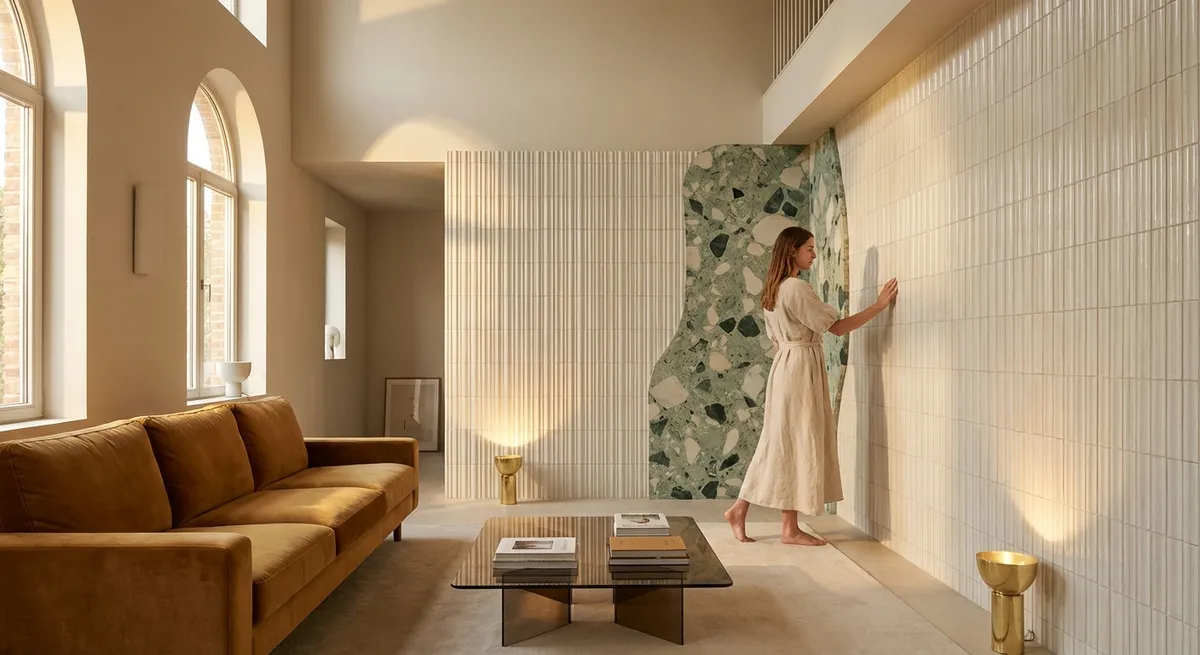
Below are five exclusive, design-forward insights for homeowners who expect more from tile than good looks—those who want rooms that feel composed rather than merely decorated.
1. Designing for Sound: How Tile Shapes the Acoustics of a Room
Most tile discussions fixate on color and pattern; few acknowledge that tile fundamentally alters how a space sounds. Hard, reflective surfaces amplify echo and sharpen footfall—the difference between a serene gallery and a clattering lobby often comes down to material choices and layout.
In open-plan spaces with extensive tile, consider the acoustic “map” of the room. Highly polished porcelain in a long corridor will exaggerate every step, whereas a honed or lightly textured finish softens the sound and feels calmer beneath the ear. Pairing tiled zones with deliberate soft counterparts—plush area rugs, upholstered banquettes, linen drapery—lets you enjoy the practical strengths of tile without a harsh soundscape.
Layout also influences acoustics: continuous, uninterrupted fields of large-format tile can feel audibly “hard,” while framed zones, inlays, or border details visually and psychologically segment the space, which can make large rooms feel less cavernous. The most successful luxury interiors treat tile not just as what you see, but as what you hear when the house is quiet at night.
2. Choreographing Light: Using Tile to Capture, Diffuse, and Redirect Glow
In sophisticated interiors, tile is often chosen for the way it collaborates with light rather than simply for its color. A soft, translucent glaze on handmade wall tile can collect morning light and release it as a gentle shimmer, while a deep, silk-matte porcelain floor can absorb excess glare from expansive windows.
Instead of defaulting to a single finish, imagine your room at different times of day. In a kitchen, a slightly reflective backsplash can bounce task lighting back toward the work surface, subtly brightening the countertop. In a powder room, a satin or crackle-glazed tile behind a sconce will create halos of diffused glow, flattering the face and creating visual depth.
Directional light—like that from a window or concealed LED strip—plays beautifully across three-dimensional or ribbed tiles, emphasizing their relief. By aligning textured tiles with the direction of natural or artificial light, you can intentionally sculpt shadows. This turns an otherwise simple wall into a living surface that changes throughout the day, lending a sense of quiet theater to everyday routines.
3. Visual Weight and Proportion: Balancing Tile with Architecture
In upscale spaces, tile isn’t merely “installed”—it is tailored to the proportions of the room and to the architecture. Each decision about scale and layout carries visual weight. A small-format tile scattered across an expansive floor can look restless; conversely, enormous slabs in a compact powder room can feel almost surreal—either exquisitely bespoke or overbearing, depending on the detailing.
Think in terms of visual mass. Large-format tiles, particularly with minimal veining, create a sense of grounded calm and lend themselves well to rooms where you want a gallery-like backdrop for furniture and art. Smaller formats, such as mosaics or elongated subway tiles, introduce finer visual texture and can “shrink” overly tall walls to a more human scale.
Transitions are equally telling. When floor tiles appear to slip seamlessly under a vanity or a freestanding tub, the architecture reads as lighter and more intentional. Aligning grout joints with key architectural features—door thresholds, window frames, island edges—creates a feeling of order that the eye reads as elevated and deliberate. This is the difference between tile as finish and tile as architecture.
4. Grout as a Design Material, Not an Afterthought
In refined tile work, grout is never an afterthought; it is the quiet negotiator between tiles, controlling both rhythm and legibility. The nuances of grout width, profile, and tone can transform the same tile from classic to contemporary, from statement to whisper.
Tone-on-tone grout (a close match to the tile color) yields a seamless field where form and proportion dominate. This works especially well with large-format stone or stone-look tiles when you want the expanse to read as almost monolithic. In contrast, high-contrast grout turns the layout pattern into a graphic statement—ideal for herringbone, chevron, or intricate mosaics that you want to celebrate rather than conceal.
Joint width is equally crucial. Narrow joints feel modern and tailored, while slightly wider joints can soften rustic or handmade tile, allowing subtle irregularities to feel intentional and charming. For a truly polished look, consider the grout’s surface profile: flush, slightly recessed, or carefully tooled can each cast different shadows and subtly shift the character of the installation. The most elevated spaces treat grout as part of the design language, not simply a filler.
5. Continuity Across Zones: Extending Tile Beyond the Expected
Luxury design often reveals itself in what continues, not in what stops. Tile that flows graciously from one zone to another—floor to wall, interior to exterior, bath floor to shower—signals cohesion and confidence. The goal is not repetition for its own sake, but a sense that every surface is part of a larger, intentional narrative.
In a primary suite, using the same stone-look porcelain from bedroom entry to dressing area to bath creates a serene, uninterrupted foundation, while varying formats (planks underfoot, mosaics in the shower, large rectangles on the walls) keeps the space from feeling monotonous. In living areas, running a single, elegant porcelain from interior to covered terrace, adjusted for slip resistance outdoors, strengthens the connection between house and garden and makes even modest footprints feel expansive.
Subtle shifts in finish can mark thresholds with sophistication: a honed tile in living spaces transitioning to a slightly more textured version in wet areas, or an interior tile that continues outdoors but with a more robust edge detail and appropriate drainage planning. When continuity is handled with this level of finesse, the home reads as a single, coherent composition rather than a series of disconnected rooms.
Conclusion
Exceptional tile design is less about spectacle and more about orchestration—of sound, light, proportion, and continuity. When you begin to think of tile not simply as a decorative surface but as a structural part of your home’s personality, the decisions change: finishes become more nuanced, joints more deliberate, transitions more poetic.
These five insights invite a more elevated way of working with tile—one that respects craftsmanship, honors architecture, and rewards close attention. In rooms where every surface has been considered this carefully, luxury stops being a label and becomes something you can see, feel, and live with every day.
Sources
- Porcelain Tile Institute – Design & Technical Resources – Offers technical guidance and design considerations for ceramic and porcelain tile in residential spaces.
- American Society of Interior Designers (ASID) – Design Trends – Insights on how materials, including tile, influence atmosphere, proportion, and user experience.
- National Institute of Building Sciences – Acoustics Resource Page – Background on how hard surfaces affect sound within built environments.
- University of Minnesota Extension – Lighting in Interior Spaces – Explains how finishes and surfaces interact with natural and artificial light.
- Porcelanosa – Tile Collections & Case Studies – Real-world examples of premium tile applications, including continuity, finishes, and architectural integration.