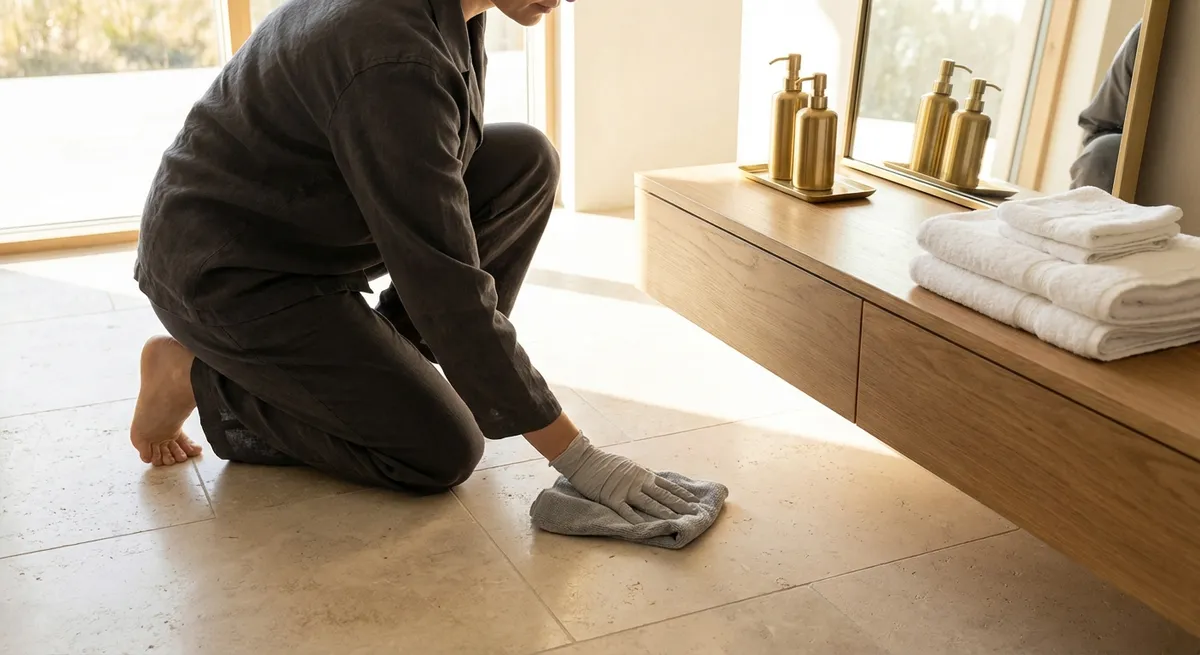
Below are five exclusive, detail-driven maintenance insights that discerning homeowners and design-obsessed renovators can employ to preserve the sophistication of their tiled spaces.
1. Curated Cleaning, Not Generic Cleaning
The simplest way to diminish premium tile is with the wrong cleaner. Many products marketed as “all-purpose” contain acids, harsh alkalis, or abrasive particles that slowly strip finishes, etch natural stone, or haze polished porcelain.
For refined surfaces, maintenance should begin with a material-specific approach:
- Porcelain & ceramic: Use a pH-neutral cleaner formulated for tile, not general household degreasers. These preserve glaze and prevent a dull film from forming on polished or high-sheen tiles.
- Natural stone (marble, limestone, travertine): Absolutely avoid vinegar, citrus-based cleaners, and standard bathroom products. Choose a stone-specific, pH-balanced cleaner to protect against etching and micro-pitting.
- Cement or encaustic tile: Often unsealed or delicately sealed, these absorb staining agents easily. Clean with mild, non-acidic cleaners and avoid aggressive scrubbing that can burnish patterns or wear down pigments.
An elevated practice: Maintain a small, labeled caddy with the correct products for each tiled zone—kitchen, bath, entry, outdoor. This ensures anyone caring for the home reaches for what the surface truly needs, not what happens to be under the sink.
2. Grout as a Design Detail, Not an Afterthought
Tile may be the star, but grout is the frame—and how you maintain it determines whether the installation reads as sharp and tailored or tired and uneven.
A premium maintenance routine treats grout with as much intention as the tile:
- Seal intelligently, not indiscriminately. Cementitious grout typically benefits from penetrating sealers, while many epoxy grouts do not require them. Applying the wrong sealer—or over-sealing—can cause discoloration or tacky residues.
- Spot-clean before deep-cleaning. Rather than attacking the entire floor with harsh cleaners, address local stains with a soft brush and a grout-approved cleaner, working in the direction of the joint to maintain its profile.
- Preserve grout joints at corners and transitions. Hairline cracks where walls meet floors or within shower corners should be addressed with matching silicone or elastomeric caulk, not more rigid grout. This protects the installation from subtle structural shifts and moisture ingress.
For homeowners who value immaculate lines, consider an annual “grout audit”: a quiet inspection of traffic paths, splash zones, and shower corners to catch minor wear before it evolves into a visual or structural distraction.
3. Micro-Maintenance: The Art of Preventing Wear Patterns
Luxury—especially in flooring—is as much about how it ages as how it begins. Over time, friction, grit, and routine activity create subtle wear paths that diminish the uniformity of high-end tile.
Rather than waiting for visible damage, implement discreet micro-maintenance:
- Control the first contact. A well-chosen entry mat—not bulky, but finely woven and non-staining—captures grit before it ever reaches tile. This makes a remarkable difference for polished porcelain or honed limestone.
- Rotate soft furnishings strategically. On large-format or patterned tiles, periodically adjusting rugs and furniture helps avoid permanent light/dark contrasts in high-use zones.
- Use felt and soft glides on all movable pieces. Dining chairs, bar stools, and side tables should never meet tile unmediated. Felt pads should be replaced at the first sign of compression or grit accumulation.
- Dust before you mop. Micro-abrasive wear often comes from small particles dragged across the surface by a wet mop. First remove loose debris with a soft broom or vacuum with a hard-floor head, then damp-mop.
Over a decade, these small gestures are the difference between a floor that feels gently lived-in and one that looks prematurely spent.
4. Moisture Mastery in Wet and Humid Spaces
Bathrooms, steam showers, and spa-like suites ask more from tile than almost any other room in the home. Even flawlessly installed systems can be compromised by poor day-to-day habits.
To keep these spaces performing as elegantly as they look:
- Promote active drying. After use, especially in showers with natural stone or intricate mosaics, gently sweep excess water toward the drain with a squeegee. Follow with a quick towel wipe of glass and high-splash walls to reduce mineral deposits and soap film.
- Respect ventilation as part of the design. A powerful, correctly sized exhaust fan is as important as the tile itself. Run it during bathing and for at least 20–30 minutes afterward to reduce condensation behind and between materials.
- Watch for early distress signals. Slight darkening along grout lines that doesn’t fully dry, recurring mildew in the same corner, or a subtle musty scent usually indicate moisture is lingering where it shouldn’t. Respond early with a professional assessment rather than masking with stronger cleaners.
Luxury wet zones function best when treated like finely tuned spa environments: controlled humidity, thoughtful drainage, and surfaces that are allowed to dry completely between uses.
5. Professional-Level Checkups for Long-Term Calm
The most refined homes treat tile care less as “cleaning” and more as preventive conservation. This means occasionally borrowing practices from museums, hotels, and heritage properties.
Consider creating a quiet, recurring ritual of professional-level checkups:
- Annual surface evaluation. Invite a qualified tile or stone specialist to inspect high-value areas: marble bathrooms, statement kitchen backsplashes, terrazzo or large-format porcelain floors. They can identify early signs of lippage movement, grout failure, or sealer fatigue.
- Scheduled resealing, not guesswork. Instead of reacting when stone suddenly stains, establish a resealing calendar based on usage and material type. Heavy-use kitchen stone may need more frequent attention than a rarely used powder room.
- Documentation for continuity. Maintain a simple record of installation dates, grout types, sealers used, and resealing or repair timelines. This continuity ensures that future work—whether a touch-up or a renovation—respects the original specification and preserves the visual harmony.
By elevating tile maintenance to the level of stewardship, homeowners ensure that surfaces not only remain intact, but mature with the serene, collected character that defines truly enduring interiors.
Conclusion
Exceptional tile work does not stay exceptional by accident. It is sustained by a series of deliberate, almost invisible decisions: using the right cleaners, treating grout as a design element, preventing subtle wear, managing moisture with intention, and embracing professional oversight as part of a long-term plan. When these practices become part of the home’s quiet rhythm, tiled surfaces stop being “finished materials” and become living elements of a curated environment—calm, resilient, and impeccably composed year after year.
Sources
- Natural Stone Institute – Stone Care, Maintenance and Sealing – Guidance on appropriate cleaners, sealing schedules, and best practices for maintaining various natural stone surfaces.
- Tile Council of North America (TCNA) – Frequently Asked Questions – Authoritative information on tile, grout, cleaning, and installation-related performance considerations.
- U.S. General Services Administration – Historic Building Maintenance: Masonry and Tile – Professional-level insight into preserving tile and masonry in significant buildings, with principles applicable to high-end residential care.
- Ceramic Tile Education Foundation (CTEF) – Tile Maintenance Recommendations – Articles addressing best practices for cleaning, grout care, and long-term performance of ceramic and porcelain tile.
- Mayo Clinic – Mold Prevention in Homes – Discussion of moisture control and ventilation strategies that support healthy, mold-resistant wet environments, particularly relevant to tiled baths and showers.