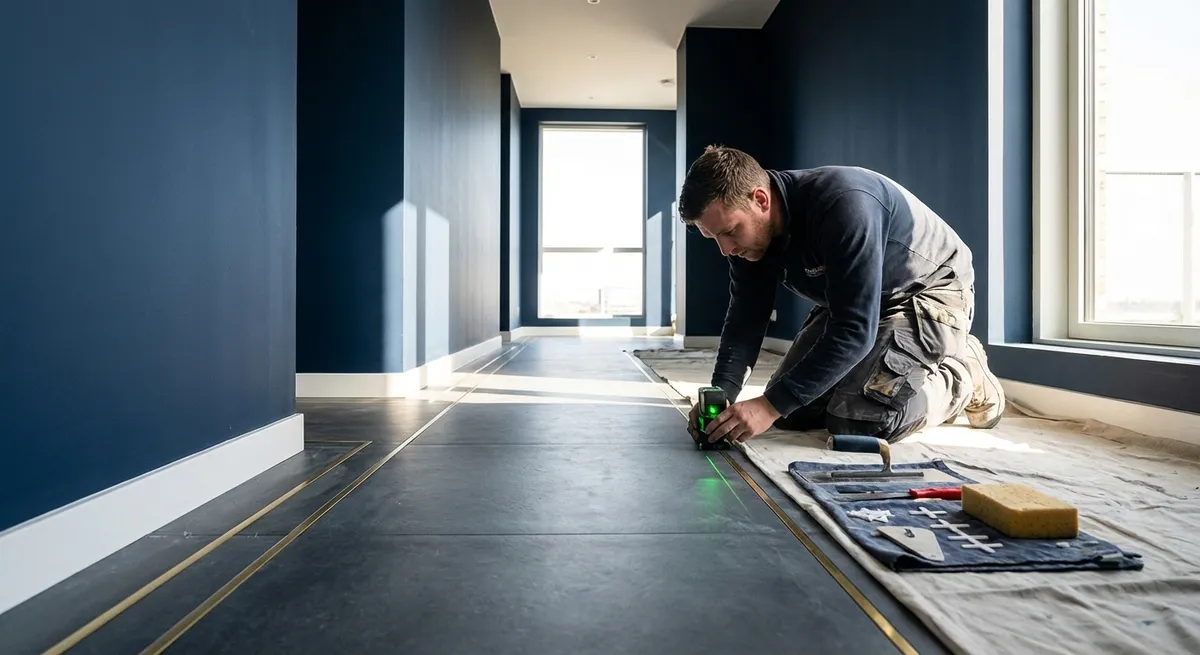
Below, we explore how to orchestrate a tile installation that feels deliberate, quiet, and enduring—complete with five exclusive insights that sophisticated homeowners and design enthusiasts consistently appreciate.
Designing the Layout as a Composition, Not a Grid
A premium tile installation begins long before the first tile meets mortar. It starts on paper, in a design conversation that treats the tile layout like a composition rather than a simple grid.
The most refined spaces privilege “primary sightlines”—the views you encounter when you first enter a room or look from one space into another. In these vistas, full tiles should be featured, while cuts are relegated to less visible edges. This might mean centering a pattern on a freestanding tub, a fireplace, or a key piece of furniture, even if it requires asymmetrical cuts in a concealed corner.
Grout joints are equally compositional. They should align thoughtfully with architectural elements—window mullions, cabinet edges, thresholds, and even ceiling lines—creating a subtle order you feel more than see. Professionals will often dry-lay several courses of tile and adjust starting points by mere millimeters to ensure these alignments are visually harmonious.
This kind of planning transforms tile from building material into a quiet, structural rhythm that underpins the entire room.
Substrates, Tolerances, and the Invisible Architecture Beneath
The most exquisite installations are built on foundations the eye will never see. Substrate preparation—flattening, leveling, reinforcing—is where enduring quality is either secured or compromised.
High-end tile work respects tolerances. Large-format porcelains and stone slabs, in particular, demand surfaces that are almost perfectly flat; even slight variations telegraph as lippage (one tile edge higher than its neighbor) under grazing light. For floors, a self-leveling underlayment may be used; for walls, high-quality cement backer boards or foam boards are painstakingly shimmed and fastened to eliminate waves.
Moisture management is equally critical. In showers and wet areas, a premium install treats waterproofing as a full system, not a patchwork. Liquid or sheet membranes envelope corners, niches, and benches with meticulous overlap and sealing. This is less about code compliance and more about longevity—ensuring the beautiful finish doesn’t mask a slow failure behind the wall.
When interviewing an installer, the most telling questions are not about how quickly the job can be completed, but how they prepare substrates and what tolerances they work to. The answers reveal whether you are hiring a mechanic or a craftsperson.
The Quiet Power of Grout: Color, Joint, and Character
In sophisticated spaces, grout is never an afterthought; it is the connective tissue that can either elevate or dilute the tile’s impact. Choosing the right grout is a design decision and a performance decision in equal measure.
Color, first and foremost, shapes perception. A tonal grout that closely matches the tile yields a serene, monolithic feel—ideal when you want the surface to read as one continuous plane. A subtly contrasting grout can emphasize pattern and module, lending a tailored, architectural precision. Very high contrast, by contrast, tends to feel graphic and can quickly date a space if not handled carefully.
Joint width also affects character. Narrow joints (often 1/16" to 1/8", where appropriate and permitted by tile sizing and standards) register as crisp and contemporary, while wider joints can soften stone or rustic tile and make irregular materials feel intentional rather than flawed.
From a performance standpoint, premium installations increasingly specify high-quality, stain-resistant grouts—often epoxy or advanced cementitious formulas—in kitchens, showers, and high-traffic floors. They maintain their color and resist absorption, preserving the refined effect long after the installation is complete.
Five Exclusive Insights Sophisticated Homeowners Appreciate
The following insights rarely appear in standard how-to guides, yet they routinely shape the outcome of truly elevated tile work:
1. Light Direction Should Dictate Tile Orientation
The orientation of tile should be considered in relation to natural and artificial light. Grazing light from windows, wall sconces, or linear LEDs will exaggerate any imperfections; aligning tiles and cuts away from these light paths can minimize the visual impact of unavoidable deviations. In feature walls and shower niches, consider where the light falls first and compose your tile pattern to flatter that illumination.
2. Plan Thresholds as Deliberate Moments, Not Afterthoughts
Transitions between tiled and non-tiled areas are often resolved with quick, generic solutions that disrupt the visual flow. A more refined approach treats thresholds as intentional design moments: aligning grout joints with wood floor boards, using stone or metal inlays to create a crisp boundary, or mitering tile edges with precision trims. This ensures the transition feels designed, not improvised.
3. Specify Edge Details Before the First Tile Is Ordered
Schluter-style trims, stone saddles, bullnose, and mitred corners are not interchangeable last-minute decisions. Each brings a different aesthetic language—from sculpted and traditional to ultra-minimal. Decide early how you want corners, exposed edges, window returns, and niches to terminate, and confirm that the chosen tile can be fabricated or paired with suitable finishing pieces. This avoids mismatches and “make do” edges that diminish an otherwise beautiful installation.
4. Demand a Mockup for Complex Patterns or Mixed Materials
When combining tiles (matte with polished, porcelain with stone, large format with mosaics), a physical mockup is invaluable. It confirms not just color and texture harmony, but also how grout joints, trims, and transitions will interact. Even a modest on-site mockup—a niche, a portion of a feature wall, or a segment of floor—allows you to adjust layout, grout tone, and pattern scale before committing to the entire space.
5. Evaluate Installers by Their Questions, Not Just Their Portfolio
A refined portfolio is reassuring, but the most capable tile professionals distinguish themselves by the questions they ask. Expect inquiries about joist spacing and deflection for stone floors, about movement joints in large expanses, about waterproofing details at benches and niches, and about your intended lighting plan. This curiosity signals a practitioner who is designing a system around your space, rather than simply installing a product.
Materials as Mood: Matching Tile to the Architecture, Not the Trend
Sophisticated tile selection resists trend-chasing in favor of architectural congruence. The question is not “What’s current?” but “What feels intrinsic to this home?”
In a pre-war apartment, honed stone, mosaic details, and subtly varied glazes can echo the building’s original craftsmanship while still feeling fresh when paired with clean-lined fixtures. In a modern loft, large-format porcelain or oversized terrazzo-look slabs can create uninterrupted planes that complement the volume and scale of the space.
Surface finish is equally important. Polished tiles can feel luminous but unforgiving, showing water spots and micro-scratches; honed or matte finishes often read more quietly luxurious and are kinder in everyday use. Structured finishes bring traction in wet areas but should be placed thoughtfully where barefoot comfort and ease of maintenance remain priorities.
By aligning material language with the architecture and your long-term living patterns, you create a space that feels inevitable rather than “decorated.”
Orchestrating the Installation Process Like a Design Project
A premium result is rarely accidental; it is choreographed. Treating tile installation as a design project—rather than a line item—opens the door to a more considered outcome.
Begin with a clear concept: what emotional quality should the tile impart—calm, monumental, intimate, luminous? Share reference images and priorities with your installer, not just technical specifications. Confirm that drawings or layout sketches will be produced, especially for complex patterns, feature walls, and shower assemblies.
Coordinate schedules so that substrate preparation, waterproofing inspections (where applicable), and dry layouts are given sufficient time. Rushing these phases is where compromises enter. Request progress checks at key milestones: after surface prep, after waterproofing, after the first few rows of tile are set.
This collaborative, paced approach respects both the material and the craft, and it shows in the finished work.
Conclusion
The most compelling tile installations are rarely the loudest; they are the ones that feel quietly resolved from every angle. They honor sightlines, light, and architecture. They rely on hidden layers of preparation and an installer who treats every detail—from substrate to grout joint—as part of a larger composition.
For homeowners who value refinement, the real luxury is not in the price of the tile, but in the intelligence of its installation. When layout, structure, material, and craft are orchestrated with precision, tile ceases to be a mere finish and becomes an integral expression of the home itself.
Sources
- Tile Council of North America (TCNA) Handbook - Industry reference for standards, tolerances, and best practices in tile installation
- American National Standards Institute (ANSI) A108/A118/A136.1 - Technical standards governing ceramic tile installation methods and materials
- Schluter Systems – Waterproofing and Edge Profiles - Detailed information on waterproofing systems, movement joints, and edge finishing solutions
- U.S. Environmental Protection Agency – Moisture Control Guidance - Guidance on moisture management in buildings, relevant to preventing tile system failures
- Porcelain Tile Certification Agency (PTCA) - Information on porcelain tile performance characteristics and standards, helpful when selecting high-quality materials