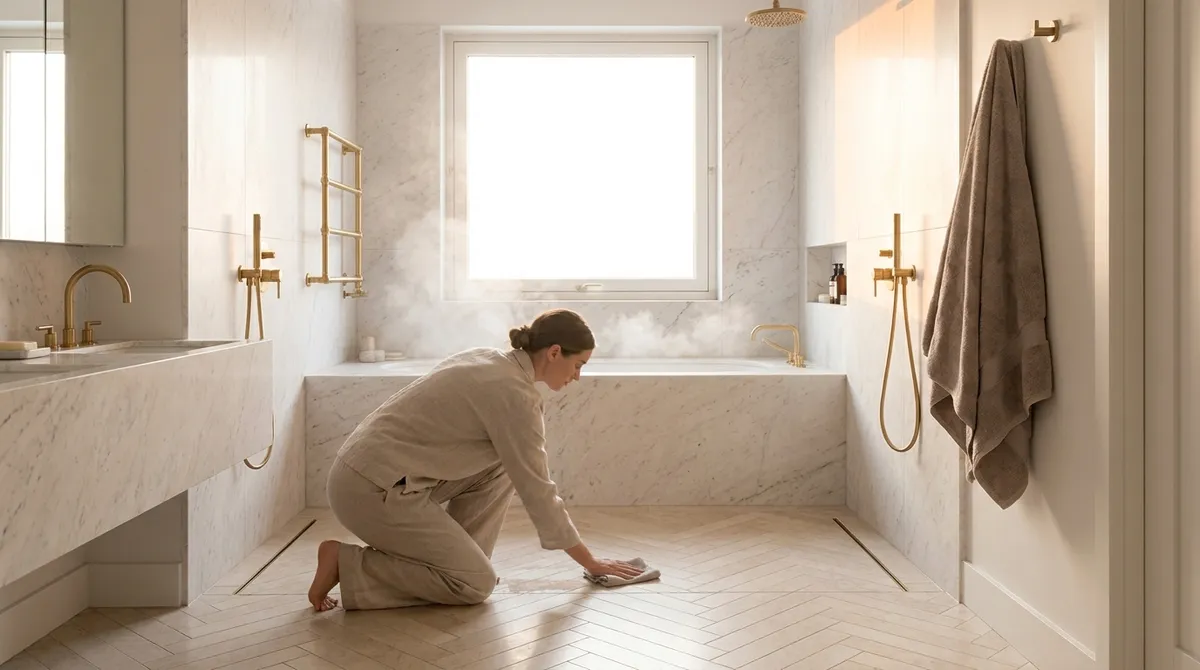
This guide explores a maintenance philosophy built around nuance: five exclusive insights that move beyond basic “clean and seal” advice into the realm of truly elevated tile care. These are the kinds of practices that keep a kitchen floor from ever looking “recently scrubbed” and ensure a shower wall ages into a soft patina rather than visible fatigue.
1. Designing a Maintenance Map Before the First Spill
Sophisticated tile care begins before there is anything to clean. Different zones of the home demand different standards of appearance, and acknowledging this upfront allows you to maintain each surface with intent rather than reaction.
Start by mapping your tiled areas into three categories: high-visibility (entryways, kitchen backsplashes, primary bathrooms), high-wear (kitchen floors, mudrooms, laundry rooms), and low-turnover (guest baths, secondary spaces). From there, set a maintenance cadence: high-visibility areas receive light, frequent care; high-wear zones receive protective strategies; low-turnover spaces get methodical but less frequent attention.
This “maintenance map” allows you to choose cleaning products, tools, and schedules that suit each surface’s functional and aesthetic demands. For example, a hand-glazed zellige backsplash may be part of a weekly microfiber wipe-down with a pH-neutral cleaner, while a matte porcelain kitchen floor might be better served by a daily dry dust mop and a more thorough wet clean only when genuinely needed. The result is not more work, but more precise work—maintenance that anticipates rather than chases imperfection.
2. Building a Discreet Cleaning Arsenal for Different Tile Personalities
An elevated tile installation often combines multiple materials and finishes: honed marble in the shower, porcelain on the floor, ceramic on the walls, perhaps a tumbled stone threshold. Treating them all with the same cleaner is an easy way to dull, etch, or fatigue the finish over time.
Instead, curate a discreet, specialized kit—stored together, but distinctly labeled—that reflects the specific surfaces in your home. At minimum, this should include:
- A true pH-neutral cleaner explicitly marked safe for stone and grout
- A dedicated stone-safe product for any natural stone surfaces
- Non-scratch white pads and high-quality microfiber cloths in separate colors for floors, counters, and walls
- A soft-bristle grout brush that is firm enough to lift soil but not so aggressive that it frays grout edges
Each tile “personality” receives the product that respects its chemistry. Acid-sensitive stones like marble and limestone are protected from etching; matte porcelains are spared from film-forming soaps that attract grime; glossy ceramics maintain their depth of sheen rather than acquiring a hazy overlay. Over time, the difference between a “generically cleaned” surface and a deliberately maintained one is subtle yet unmistakable: edges stay crisp, light behaves correctly, and the tile never looks fatigued.
3. Practicing Micro-Maintenance at the Grout Line
For most observers, a tile installation “ages” first at the grout, not the tile. Grout lines hold shadow, collect soil, and broadcast neglect from across the room. Yet the solution is rarely aggressive scrubbing; true refinement lies in frequent, almost invisible micro-maintenance.
Instead of reserving grout cleaning for major efforts, integrate it into your weekly rhythm in nearly effortless ways. After showering, a quick pass with a squeegee or microfiber towel over corners and horizontal grout lines dramatically reduces mineral buildup and mildew risk. In the kitchen, treating the first faint sign of discoloration near the cooktop with a soft brush and diluted pH-neutral cleaner prevents staining from becoming a structural issue.
This approach respects grout as integral architecture, not sacrificial material. You are not “rescuing” it but quietly maintaining its original geometry and tonality. Ideally, guests should never be able to tell which lines are original and which have been touched up over time—the entire field reads as evenly maintained rather than partially restored.
4. Managing Sheen, Not Just Cleanliness
For the discerning eye, a tiled space feels well-kept not merely because it is clean, but because the way it reflects light remains consistent. Overuse of glossy sealers, “wet-look” treatments, or heavy soaps can create an uneven sheen that cheapens even the finest tile.
Adopt a philosophy of minimal intervention: aim to preserve the factory finish or the intended sealed appearance, not to reinvent it. On floors, this often means choosing low-residue, rinse-free cleaners and using just enough product to lift soil without building film. On walls and backsplashes, it involves wiping dry with microfiber rather than letting water marks and cleaner residue evaporate into a diffuse haze.
For natural stone, a penetrating (invisible) sealer is often preferable to topical, shiny films that sit on the surface and scuff easily. The goal is not more gloss, but more coherence—whether your tile is high-shine marble or velvety matte porcelain, its visual language should be uniform and deliberate. When sheen is managed thoughtfully, the space never looks “recently cleaned”; it simply looks freshly composed.
5. Scheduling Strategic Deep Care Instead of Occasional Overcorrection
Many homeowners live in a cycle of benign neglect punctuated by intense cleaning weekends. Refined tile care inverts that model. Rather than periodic overcorrection, you schedule strategic, narrowly focused deep care that keeps the entire installation in a perpetual state of quiet readiness.
This might mean an annual professional deep clean and reseal for natural stone showers and floors, synchronized with a detailed inspection of caulk joints, drain perimeters, and any hairline grout issues. For porcelain-heavy homes, it could be a seasonal reset in high-traffic areas: machine-assisted grout cleaning and a methodical rebalancing of any areas that show early signs of uneven wear.
Crucially, these are not crisis responses but preventative rituals tied to the life cycle of the materials. Deep cleaning becomes a form of preservation, not correction. Your tile never reaches the point of looking “restored”; it simply never drifts far from its ideal state. That is the hallmark of elevated maintenance: not perfection once a year, but sustained, almost undetectable attention that keeps the space permanently composed.
Conclusion
Exceptional tile work is architecture that invites proximity. It withstands daily life while rewarding every close inspection—the edges, the joints, the way light glides across the surface without interruption. Achieving that level of quiet refinement is less about dramatic interventions and more about the quality of your maintenance decisions.
By mapping your spaces, tailoring your cleaning arsenal, tending grout with micro-attention, managing sheen as carefully as cleanliness, and scheduling intelligent deep care, you elevate tile maintenance from chore to craft. Over time, your home tells a different story—of surfaces that do not merely endure, but mature with grace.
Sources
- U.S. General Services Administration – Marble and Stone Cleaning Guidelines – Detailed federal guidance on proper stone cleaning and maintenance practices
- The Tile Council of North America (TCNA) – Caring for Ceramic Tile & Grout – Industry recommendations for appropriate cleaners and methods for tile and grout
- Natural Stone Institute – Stone Maintenance & Restoration – Best practices for sealing, cleaning, and preserving natural stone surfaces
- Mapei – Guide to Grout Cleaning and Maintenance – Technical guidance on grout care and long-term performance
- University of California, Berkeley – Residential Indoor Environmental Quality – Context on maintaining healthy indoor surfaces and environments