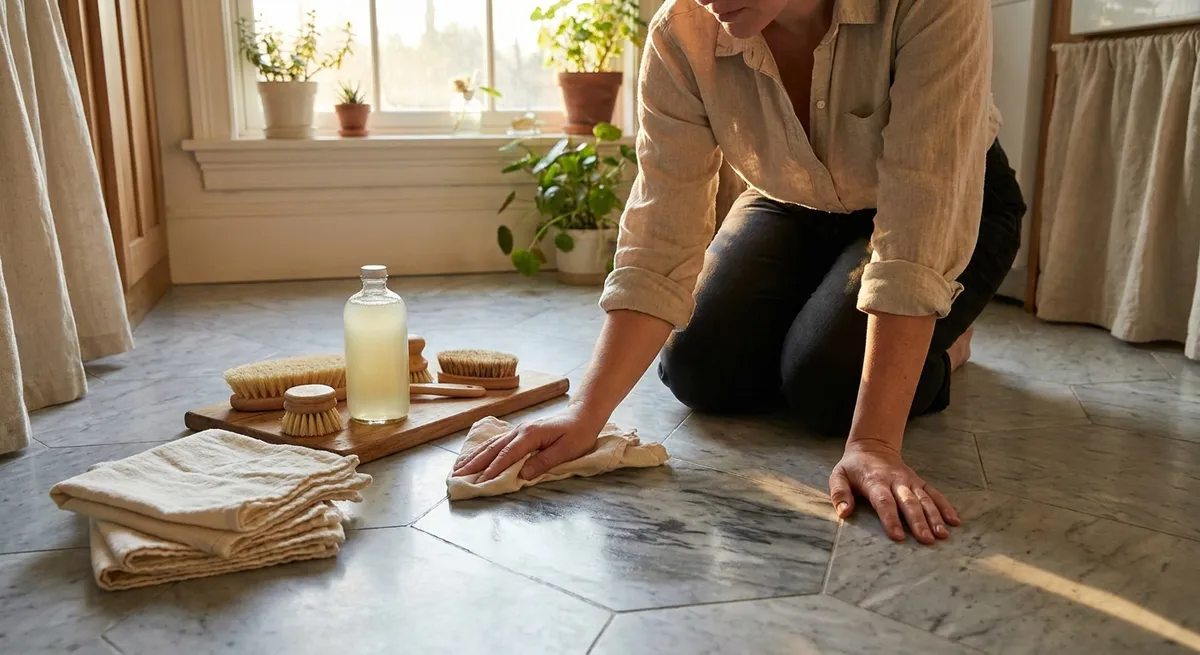
Below, you’ll find five exclusive, detail‑driven maintenance insights that discerning homeowners and design‑conscious renovators rely on to keep tile looking exquisitely composed for years.
Designing a Cleaning Ritual Around Your Grout, Not Your Tile
Most homeowners instinctively focus on the tile face, yet the visual integrity of a tiled space is governed by the grout lines. Grout is porous, often lightly textured, and subtly recessed—an ideal harbor for fine dust, colorants, soap residue, and microscopic grime that flatten the overall look of a space.
Instead of “mopping the floor,” reframe your routine as “curating the grout grid.” Use a soft‑bristle brush or narrow detailing brush to gently trace the lines once a week in high‑traffic zones with a pH‑neutral cleaner. This targeted attention prevents the faint haloing and shadowing that can make even premium tile appear tired. On walls and backsplashes, a microfiber cloth folded into a firm edge works beautifully to follow the grout pattern without scratching delicate glazes.
By making grout the protagonist in your maintenance ritual, the tile itself remains visually crisp and architecturally aligned. The result is not just cleanliness—it’s a polished, gallery‑like precision that feels tailored rather than merely tidy.
The pH Standard: How Sophisticated Surfaces Stay Luminous
Refined tile work deserves an equally refined chemistry. Harsh, highly alkaline or acidic cleaners can etch natural stone, dull specialized glazes, and prematurely age sealers—effects that are often irreversible. The most quietly effective approach is also the most understated: a pH‑neutral cleaner formulated for stone and tile.
Think of your cleaning solution as skincare for the home: gentle enough for regular use, precise enough to protect a complex surface. For natural stone (marble, limestone, travertine), avoid any product containing vinegar, lemon, or other acids, no matter how “natural” the marketing. For porcelain and ceramic, a quality neutral cleaner still matters; it preserves subtle finishes like soft matte, honed, or semi‑polished sheens that differentiate premium tile from commodity surfaces.
A simple litmus test for products: if it promises to “dissolve everything instantly,” it’s not designed for a cultivated interior. The most elegant finishes remain luminous through mild, consistent care—never through aggressive, episodic “rescue” cleaning.
Micro‑Zoning: Tailoring Maintenance to Each Tile’s Lifestyle
Sophisticated maintenance is never one‑size‑fits‑all. The tile in a primary shower, a marble kitchen backsplash, and a honed porcelain entryway live very different lives and should be treated accordingly. Creating micro‑zones for your maintenance plan ensures each surface receives only the attention it truly needs—no more, no less.
In the kitchen, focus on oil, pigment, and acid protection: promptly wipe splatters near the range and sink, and keep a soft cloth within arm’s reach for quick, almost ritualistic touch‑ups while cooking. In baths, prioritize mineral deposit prevention with a brief squeegee or microfiber wipe after use, targeting corners and edges where water lingers. Entryways and mudrooms call for a different strategy: layering defense with high‑quality door mats, regular dry sweeping, and occasional deeper cleans to lift fine grit that can subtly abrade finishes over time.
By acknowledging the “lifestyle” of each tiled zone, you avoid both over‑cleaning (which can degrade sealers and finishes) and under‑cleaning (which allows residue to slowly re‑tone the surface). The home begins to feel curated, not merely maintained.
Sealer as a Finish Layer, Not Just Protection
For many homeowners, sealing is treated as a checkbox item after installation; for those who care about enduring elegance, it is part of the finish itself. A well‑chosen sealer doesn’t simply shield—it controls sheen, deepens color with restraint, and stabilizes the aesthetic over time.
Penetrating sealers are typically the most sophisticated choice for natural stone and cementitious grout, preserving a matte or soft honed look while resisting stains from wine, oil, and cosmetics. Topical sealers, used judiciously, can add a controlled satin or low‑gloss sheen in specific contexts, such as decorative accent tiles away from heavy wear. The key is compatibility: always match the sealer to both the tile material and the intended usage, and respect the manufacturer’s cure times and reapplication intervals.
Treat re‑sealing as you might a scheduled service for a fine automobile—predictable, documented, and never delayed until a visible problem arises. A quiet calendar reminder every 12–24 months (depending on material and use) is often all that separates a surface that ages gracefully from one that requires expensive restoration.
The Art of Invisible Prevention: Pads, Rugs, and Daylight Management
Some of the most effective tile maintenance strategies are the least visible. Thoughtfully chosen protective measures can elevate both the longevity and the perceived luxury of a space, without ever drawing attention to themselves.
Felt pads under dining chairs and barstools, replaced periodically, prevent micro‑scratches on large‑format porcelain and natural stone. In living spaces and hallways, flat‑woven or low‑pile rugs with breathable, non‑staining underlays distribute foot traffic and protect nuanced finishes, especially on honed or lightly textured tiles. In sun‑drenched rooms, managing direct UV exposure with sheer window treatments or smart shades can help reduce uneven fading of adjacent materials and maintain a harmonious visual field between tile, cabinetry, and textiles.
These subtle interventions do more than guard against damage—they preserve the original design intent. The joints stay sharp, the finishes remain consistent from edge to center, and the surface continues to read as one deliberate, composed element rather than a patchwork of aged and newer areas.
Conclusion
Exceptionally maintained tile doesn’t look “well cleaned”; it looks effortlessly resolved, as though it has always belonged there in precisely this condition. By centering your care around grout, refining your cleaner chemistry, tailoring routines to each space, treating sealers as integral finish layers, and practicing invisible prevention, you cultivate not just durability but a calm, enduring refinement.
This is the quiet luxury of tile done properly: a surface that never begs for attention, yet rewards a closer look with impeccable detail and lasting composure.
Sources
- [U.S. Environmental Protection Agency – Safer Choice: Household Cleaners](https://www.epa.gov/saferchoice/products) – Guidance on safer cleaning products and why formulation (including pH) matters
- [Natural Stone Institute – Stone Care, Maintenance and Sealing](https://www.naturalstoneinstitute.org/consumers/care/) – Detailed recommendations for cleaning and sealing marble, limestone, travertine, and other natural stones
- [The Tile Council of North America (TCNA) – Tile Care & Maintenance](https://www.tcnatile.com/faqs/53-cleaning-and-maintenance.html) – Industry‑standard advice on tile and grout cleaning best practices
- [MSI Surfaces – Guide to Sealing Tile & Stone](https://www.msisurfaces.com/blogs/post/2018/07/26/how-why-and-when-to-seal-tile-and-grout.aspx) – Practical overview of when and how to seal tile and grout, including product distinctions
- [Bob Vila – How to Clean Grout the Right Way](https://www.bobvila.com/articles/how-to-clean-grout/) – Consumer‑focused, credible explanation of effective grout‑cleaning techniques and tools