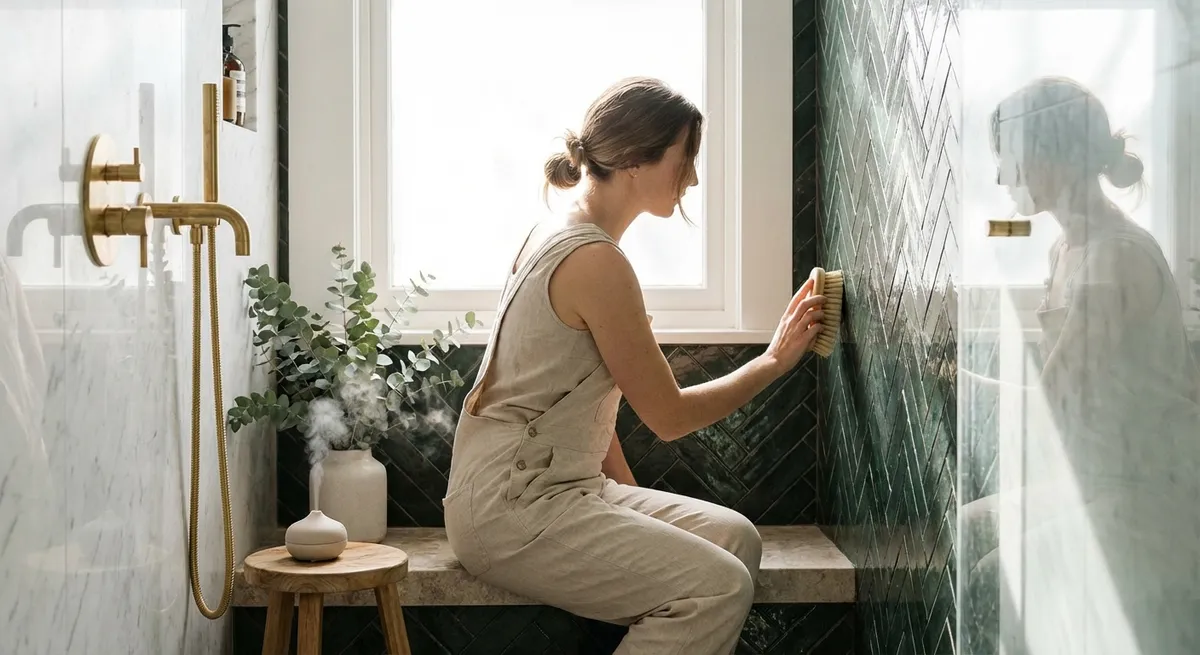
Understanding the Material Beneath the Sheen
Sophisticated maintenance begins with intimate knowledge of what you are maintaining. Porcelain, ceramic, natural stone, and terrazzo each respond differently to moisture, chemistry, and abrasion. A high-gloss porcelain floor may shrug off most spills with ease, while honed limestone can absorb a single glass of red wine into its pores like an ink blot.
Take inventory: identify which surfaces are glazed ceramic, which are unglazed porcelain, which are calcareous stones (marble, limestone, travertine), and which are siliceous stones (granite, quartzite). Each group dictates cleanser pH, suitable sealers, and acceptable tools. Calcareous stones in particular are sensitive to acids—even mild ones like vinegar or lemon—requiring neutral-pH products and gentler pads. Elegance is in this specificity: a home where every tiled surface is treated according to its composition will age in a way that feels intentional, not accidental.
The Daily Ritual: Gentle Interventions, Not Deep Cleans
Premium tile maintenance is less about occasional “rescue missions” and more about consistent, almost ceremonial light care. Dust, grit, and micro-debris act like sandpaper beneath shoes, gradually dulling finishes and scuffing grout edges. A soft microfiber dust mop or vacuum with a hard-floor setting is the baseline ritual, performed daily in high-traffic areas and several times a week elsewhere.
For damp cleaning, choose a well-wrung microfiber mop and a neutral-pH cleaner appropriate to your tile type. Excess water is the enemy of refined grout lines; it drives moisture and contaminants into the joints and underlayment. The goal is a slightly damp pass, not a wet scrub. After mopping, allow for air drying but avoid standing puddles, especially on natural stone or large-format tiles where moisture can telegraph as shadows or contribute to warping in poorly ventilated spaces. The result is not the harsh scent of chemicals, but the quiet clarity of a surface returned to its intended state.
Exclusive Insight #1: Establish “Transition Zones” to Protect Tiled Floors
One of the most underrated strategies in tile preservation is the deliberate creation of “transition zones” between the outdoors and tiled interiors. Rather than depending on a single welcome mat, consider a layered approach: an exterior scraper mat, an interior absorbent runner, and a subtle shoe-change area near key entries.
This design-minded buffer strategy drastically reduces grit, de-icing salts, and fine dust from ever reaching your tile. In snowy or coastal climates, the impact is measurable: grout remains lighter, edges stay crisp, and the microscopic scratching that gradually dulls polished surfaces is significantly reduced. For homes with particularly luxurious stone floors, a discreet bench and low-profile tray for shoes near entrances can feel more like a boutique hotel than a utilitarian necessity, while protecting the floor with almost invisible efficiency.
Exclusive Insight #2: Calibrate Lighting to Reveal, Not Exaggerate, Imperfections
Lighting is often treated as purely aesthetic, but it is also diagnostic. Harsh, low-angle lighting across a tiled floor will magnify every streak, haze, and faint etch, making even a clean surface appear flawed. Conversely, well-calibrated lighting helps you read the surface accurately and maintain it more intelligently.
Use this to your advantage. Periodically inspect floors and walls under strong, raking light—perhaps from a portable LED work light or direct daylight—to identify problem patterns: residue in grout joints, sealer streaking, or areas of uneven wear. Then, adjust your everyday lighting to be more forgiving: indirect sconces, diffused ceiling fixtures, and strategic accent lighting across feature walls. The maintenance benefit is twofold: you can target corrective cleaning where it matters, and you avoid living with lighting that unnecessarily highlights every minor imperfection, which can lead to over-cleaning and premature wear.
Exclusive Insight #3: Time Your Sealing and Re-Sealing to Use, Not Just the Calendar
Sealing stone and grout is often treated as a chore done on a fixed schedule—every one, three, or five years. In finely maintained homes, the timeline is more nuanced. Exposure and function dictate maintenance, not arbitrary anniversaries.
Test rather than assume: place a few drops of water on the surface in a discrete corner. If it beads for several minutes, your sealer is still performing. If it darkens the stone or grout quickly, it is time to re-seal. High-traffic entries, busy kitchen cooking zones, and shower floors may require more frequent attention than a guest bath that sees occasional use. Consider “zoned” sealing, where high-risk areas are refreshed annually and lower-use spaces follow a more extended schedule. The result is better performance, less unnecessary product buildup, and the assurance that vital areas remain truly protected rather than merely presumed to be.
Exclusive Insight #4: Curate a Dedicated Tile Care Kit—Then Standardize Its Use
Elegant outcomes are rarely accidental; they come from systems. Instead of a jumble of generic cleaners, assemble a dedicated tile care kit tailored to your surfaces. At minimum, it should include: a neutral-pH tile cleaner, a stone-safe cleaner (if applicable), a non-scratch white nylon pad, soft microfiber cloths, a narrow grout brush, and any manufacturer-recommended sealers. Label each product clearly with which rooms and surfaces it is intended for.
Then, socialize the system. If you have household staff, a cleaning service, or simply multiple family members, provide simple written guidance and keep the kit stored where it is easily accessed but not casually tampered with. The aim is to prevent the “one bottle for everything” shortcut that leads to acid on marble, oil-based products on porcelain, or abrasive powders on delicate glazes. Over time, the uniformity of care preserves a consistent appearance across spaces, much like a well-run hotel where every tiled surface feels impeccably, predictably maintained.
Exclusive Insight #5: Treat Grout as a Design Element, Not a Cleaning Afterthought
Grout is often the earliest visual indicator of decline in an otherwise luxurious tile installation. Yet with a more intentional approach, grout can remain as visually disciplined as the tile itself. Move beyond simple scrubbing and think in terms of grout management.
First, protect: ensure initial sealing (for cementitious grout) is thorough, including vertical surfaces and corners. Then, clean frequently but lightly; it is easier to remove a faint film weekly than a deep stain seasonally. Use narrow, soft-bristled brushes and avoid aggressive scouring that erodes joints. For particularly prized spaces—such as a primary bath or statement kitchen—consider periodic professional grout evaluation: targeted touch-ups, spot re-grouting, or color-consistent refreshes can revive an installation without the disruption or cost of full replacement. When grout is maintained as meticulously as the tile, the entire surface reads as a unified, architecturally precise plane rather than a mosaic of aging joints.
Balancing Hygiene and Material Longevity
In an era of heightened attention to cleanliness, it is tempting to reach for harsh disinfectants for every task. Tile is resilient, but its ecosystem—glazes, grout, sealers, backing materials—is less forgiving of sustained chemical aggression. Reserve high-strength disinfectants for moments of true need (post-illness, raw meat spills, or specific contamination), and follow manufacturer guidance closely. Rinse thoroughly to prevent residue from building up and dulling the surface.
For routine maintenance, neutral cleaners paired with mechanical action—fiber, water, and time—are sufficient. In wet rooms, ventilation is as critical as any product: a well-timed use of exhaust fans and the practice of briefly drying glass and tile after showers can significantly reduce mildew and mineral buildup. The guiding principle is the same throughout: choose the gentlest method capable of achieving a hygienic, visually pristine result, rather than the strongest chemical available.
Conclusion
Truly elevated tile maintenance is less about battling dirt and more about preserving intent. It protects the original design decisions: the precise grout width, the quiet luster of honed stone, the crisp lines of rectified porcelain, the clarity of a feature wall. By understanding your materials, choreographing transition zones, tuning lighting, calibrating sealing, formalizing your care kit, and treating grout as a deliberate design component, your tile does more than survive—it matures gracefully.
In well-kept homes, tile becomes a record of care as much as a record of taste. Each flawless reflection, each unchanged grout line, each unetched stone surface is evidence of a maintenance philosophy that values subtlety over spectacle. The result is not just cleanliness, but continuity: surfaces that feel as composed years from now as they did on installation day.
Sources
- [Tile Council of North America (TCNA) – Tile Cleaning and Maintenance](https://www.tcnatile.com/faqs/43-cleaning-and-maintenance.html) - Technical guidance on proper tile cleaning methods and product selection
- [Marble Institute of America (Natural Stone Institute) – Caring for Natural Stone](https://www.naturalstoneinstitute.org/consumers/care/care-cleaning/) - Authoritative recommendations for cleaning, sealing, and protecting natural stone surfaces
- [U.S. General Services Administration – Porcelain and Ceramic Tile Maintenance](https://www.gsa.gov/real-estate/design-construction/engineering/masonry/ceramic-and-porcelain-floor-tiles) - Government guidelines for maintaining ceramic and porcelain flooring in high-traffic environments
- [Environmental Protection Agency – Safer Choice: Cleaning Products](https://www.epa.gov/saferchoice) - Information on selecting safer cleaning formulations, relevant when choosing tile-safe, low-impact cleaners
- [MAPEI – Guide to Grout and Grout Maintenance](https://www.mapei.com/us/en-us/home-page/products-and-solutions/products/detail/grout-solutions) - Manufacturer insights into grout types, sealing, and long-term care strategies