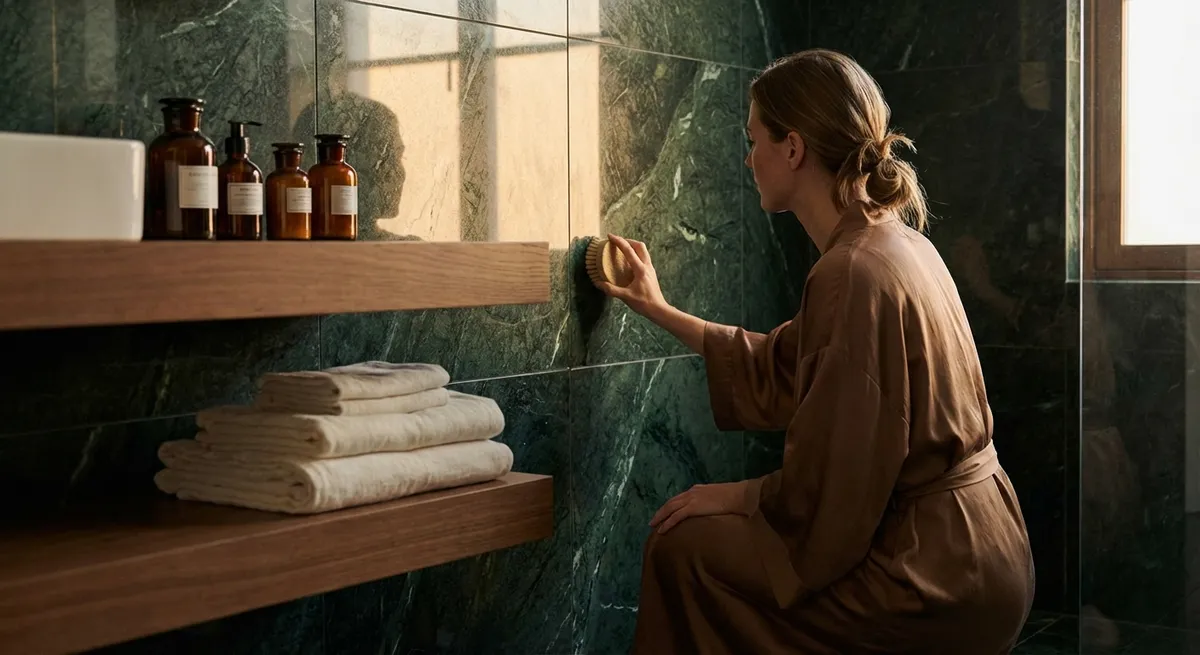
Below are five exclusive, detail-driven insights that discerning homeowners and design enthusiasts can use to preserve that cultivated, just-installed elegance.
Insight 1: Treat Grout as a Design Material, Not a Cleaning Afterthought
Grout is often the first component to betray age, yet it is also the easiest to elevate with disciplined care.
Rather than thinking of grout as “the stuff between the tiles,” regard it as a deliberate design choice—one that demands its own maintenance strategy. Use pH-neutral cleaners specifically formulated for tile and grout, and avoid harsh acids or bleach that strip binders and gradually weaken joints. When cleaning, work in linear passes following the grout pattern, not random scrubbing; this minimizes uneven wear and prevents micro-gouging.
For cementitious grout, a penetrating sealer should be viewed as non-negotiable in kitchens, baths, and high-traffic corridors. Reassess that sealer annually in areas subject to water, steam, or oils. Test discreetly: place a few drops of water on the grout—if it darkens quickly, your sealer is due for renewal. Epoxy grout, while more stain-resistant, still benefits from gentle cleaning rituals to preserve its original, refined matte or satin appearance. When grout is pampered rather than punished, the entire surface reads as intentional, not merely functional.
Insight 2: Calibrate Maintenance to the Tile’s True Composition
Not all “tile” behaves the same, and a generic cleaning approach can quietly compromise premium finishes over time.
Porcelain is dense and less absorbent, but glossy or polished porcelain can micro-scratch under abrasive pads or gritty debris. A soft microfiber mop and frequent dry dusting help preserve clarity and shine. Natural stone—marble, limestone, travertine—demands an entirely different level of respect. Acidic splashes from citrus, vinegar, or wine can etch a polished stone finish in minutes. In these spaces, pH-neutral stone cleaners and immediate blotting (never wiping) of spills protect the surface like a fine leather or wood finish would.
Even within ceramics, artisanal glazes, crackle finishes, and hand-painted tiles invite a gentler touch. That means avoiding steam-cleaning on delicate walls, bypassing “all-purpose” degreasers, and never experimenting with DIY concoctions on visible areas. Knowing the precise composition—and its vulnerabilities—allows you to create a maintenance program worthy of the material’s pedigree.
Insight 3: Manage Micro-Climate to Prevent Subtle, Long-Term Damage
Tile is notoriously durable, but the environment around it can quietly influence longevity and appearance.
In bathrooms and steam-prone wet rooms, sustained high humidity invites mildew into porous grout and behind poorly detailed joints. The solution is not endless scrubbing, but small architectural habits: always using a properly sized exhaust fan, cracking doors after showers, and allowing glass enclosures to air out before closing them fully. These subtle routines protect grout, silicone joints, and even underlayment systems.
In sun-flooded spaces, direct UV over years can soften certain pigments and finishes, particularly on some decorative ceramics and natural stones. Where possible, balance light with sheers, strategic shading, or UV-filtering films—an approach as much about curating the room’s atmosphere as defending the tile. In floor-heating scenarios, observe manufacturer guidelines on temperature ceilings; overdriving heat can dry out grout and stress some stone or large-format assemblies over time. A well-managed micro-climate is a quiet guardian of both beauty and structure.
Insight 4: Elevate Daily Care With Hotel-Level Standards
The most luxurious tile surfaces rarely rely on “deep cleaning days.” Instead, they benefit from elegantly simple, consistent habits that feel more like rituals than chores.
Think of a daily dust-pass as the baseline: a dry microfiber dust mop or soft vacuum head to remove grit that can abrade glazes or polished stone. In kitchens, a quick evening wipe with a diluted pH-neutral cleaner keeps oils from slowly imprinting around ranges and prep zones. In showers, a stylish squeegee kept within reach and used after each use markedly reduces mineral spotting on both tiles and glass.
Weekly, focus not on harsh “reset” cleans but controlled refreshes: lightly agitating grout lines, inspecting corners and transitions, and checking silicone joints for early signs of fatigue. The goal is to stay ahead of visible wear so the space always reads as freshly completed—more akin to a luxury hotel suite turned over daily than a home waiting for a “spring clean.”
Insight 5: Inspect the Edges—Where Luxury is Often Won or Lost
In truly elevated tile installations, the edges and transitions are where meticulous craftsmanship is most apparent—and where maintenance can make or break the effect.
Silicone joints around tubs, shower pans, vanities, and countertops should be reviewed regularly. Look for hairline separations, dullness, or slight discoloration—subtle cues that water could be migrating behind the surface. Replacing a tired bead of silicone before failure is far more discreet than addressing swollen substrates or hidden mold later. Treat this as preventative restoration, not emergency repair.
Pay attention, too, to thresholds and transitions: metal trims, stone saddles, and adjacent wood flooring. Keep metal profiles free of corrosion or cleaning residue, and ensure wood transitions are kept dry to avoid expansion encroaching on grout lines. For wall tiles, inspect corners and niches, where fine cracks or pinholes in grout can invite moisture into the assembly. A few minutes of monthly “edge review” sustains the precise, gallery-like finish that separates routine tile work from truly curated surfaces.
Conclusion
Luxury tile is not defined only at the moment of installation; it is continually redefined by how it is cared for. When grout is treated as design, composition is understood, climate is curated, daily rituals are refined, and edges are vigilantly maintained, tiled spaces move beyond the ordinary. They become quiet statements of discipline and taste—surfaces that suggest a homeowner who values longevity, precision, and the understated pleasure of a room that always feels impeccably kept.
Thoughtful maintenance does more than preserve investment. It preserves intention—ensuring that the quiet confidence of your tile work endures, season after season.
Sources
- U.S. General Services Administration – Marble and Stone Maintenance - Detailed guidance on cleaning and protecting natural stone surfaces, including cautions about acidic cleaners
- Tile Council of North America (TCNA) – Tile Maintenance and Care - Authoritative best practices for routine tile and grout care
- MAPEI – Guide to Selecting and Maintaining Grout - Professional insight on grout types, sealing, and long-term maintenance
- Schluter Systems – Movement Joints and Transitions - Technical information on perimeter joints, transitions, and why edge details matter for durability
- Natural Stone Institute – Caring for Natural Stone - Comprehensive guidance on daily care, sealing, and protection of marble, limestone, and other stones