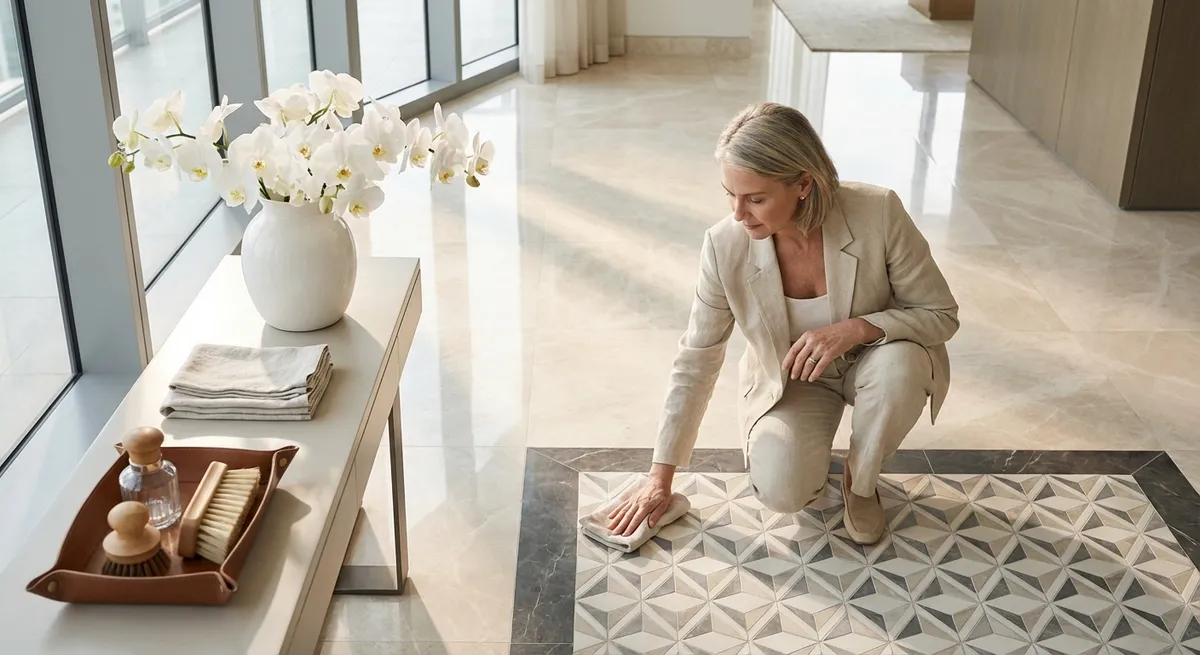
Understanding Your Tile’s True Character
Before any maintenance regimen can be considered refined, it must be specific. Porcelain, ceramic, natural stone, cement, and glass each respond differently to water, cleaning agents, and time. A polished marble foyer demands a completely different philosophy than a textured porcelain kitchen floor, and confusing the two is often where damage begins.
Start by identifying not just the material, but also the finish: honed, polished, tumbled, textured, or glazed. Each finish has its own vulnerabilities—polished marble is susceptible to etching from acids, while textured porcelain can harbor fine debris in its micro-relief patterns. Consult any remaining installation documentation or manufacturer data sheets; these often include recommendations on pH limits, compatible products, and ideal cleaning frequencies. Treat this information as a specification manual for your surfaces, not as optional reading. A thoughtful, material-specific approach transforms “cleaning” into preservation.
Exclusive Insight #1: The pH Discipline—Why Neutral Is the New Luxury
In refined interiors, the most damaging element is rarely visible; it is chemical. Many off-the-shelf cleaners are either too acidic or too alkaline for premium tile and grout, especially when used regularly. Over time, these imbalances can cause grout to soften, finishes to dull, and stone surfaces to etch or develop a subtle, permanent haze.
Adopt what might be called pH discipline: default to a genuinely pH-neutral cleaner designed for tile and stone, and reserve anything stronger for targeted, infrequent interventions. For natural stone, this is non-negotiable. Even household staples like vinegar and lemon-based products—often promoted as “natural cleaners”—are acidic enough to damage marble, limestone, and travertine over time. Create a small “approved cleaning bar” in your home: a curated set of products with their pH clearly labeled and suitability for your exact materials confirmed. In a premium home, this level of selectivity is not indulgent; it is a long-term cost-saving strategy that preserves the architectural finishes you invested in.
Exclusive Insight #2: The Microfiber Standard—Rethinking Everyday Contact
In elegant spaces, the most frequent interaction your tile has is not with guests—it is with your cleaning tools. Brooms with stiff bristles, string mops that push dirty water into grout lines, and abrasive pads can cause micro-scratches, redistribute soil, and wear down sealers long before their time.
Microfiber should be your standard for everyday maintenance. A high-quality microfiber dust mop or flat mop head traps fine grit rather than dragging it across the surface. This is especially important for large-format, high-gloss tiles where micro-abrasions quickly translate to visible dull spots in traffic paths. For walls and vertical surfaces, use soft microfiber cloths instead of standard sponges; the reduced friction and enhanced pickup capacity help prevent streaking and residue. Pair these tools with a two-bucket system—one for clean solution and one for rinse water—to avoid reapplying the very contaminants you are trying to remove. The result is not just cleanliness, but a consistent, refined sheen that feels carefully managed rather than merely wiped down.
Exclusive Insight #3: Strategic Sealing—Timing, Selectivity, and Subtlety
Not every tile needs sealing, and not every surface benefits from the same type of sealer. Glazed ceramic and many porcelains are inherently low-absorption and often do not require sealing on the tile face. Grout, natural stone, and certain cement-based or encaustic tiles, however, can be highly porous and vulnerable to staining. Here, the sophistication lies in strategic, not blanket, sealing.
Start with a water-drop test on grout and stone: if water beads on the surface, the sealer is likely still functional; if it darkens and absorbs quickly, it is time to re-evaluate protection. Opt for a high-quality penetrating (impregnating) sealer that protects below the surface without creating an artificial shine or “plastic” look—especially critical in spaces where the goal is quiet luxury rather than overt gloss. Schedule resealing as a planned maintenance event, not a crisis response after a stain has occurred. For kitchens, consider more frequent inspections around high-use zones such as the cooktop, prep area, and sink, where oil and wine exposure is highest. For bathrooms and showers, prioritize grout and any natural stone niches or benches, where water sits longest.
Exclusive Insight #4: Moisture Management as a Design-Forward Ritual
Water is both ally and adversary to tile. It does not damage fired ceramic or porcelain easily, but grout, natural stone, and substrates can suffer from chronic moisture exposure. In refined homes, the most successful tile maintenance regimes treat moisture management not just as cleaning, but as a design-forward ritual embedded into daily life.
In showers, use a squeegee on walls and glass after each use, but extend this ritual to floors where safe and practical. Removing residual water limits soap scum, mineral buildup, and grout discoloration. For stone, this simple daily gesture can significantly delay the need for deep cleaning or professional restoration. In kitchens, quickly neutralize spills from wine, citrus, vinegar, and oils—especially on stone countertops, backsplashes, and adjacent floors. Think of your response time less as “cleaning up a mess” and more as protecting the visual clarity of your surfaces. In entryways, add a discrete, high-quality mat or rug to capture grit and moisture before they reach your tile. Properly selected, it reads as an intentional design element, not a pragmatic afterthought.
Exclusive Insight #5: Precision Grout Care—The Underestimated Luxury Detail
In the most elegant interiors, the grout lines are often the silent indicator of how carefully the home is maintained. Even when tile remains pristine, dingy or uneven grout can compromise the entire visual field. True refinement lies in treating grout as a design component in its own right, not just the “space between tiles.”
Maintain grout with a two-tiered approach. For regular care, use a soft brush and neutral cleaner to gently agitate lines in high-traffic zones every few weeks, even if they do not appear visibly dirty. This prevents gradual, uneven soiling that eventually requires harsh chemicals or aggressive scrubbing. For older installations or inherited spaces, consider a grout recoloring or staining system that maintains existing joints but refreshes their tone and consistency. Opt for a shade that harmonizes with both the tile and the room’s overall palette; slightly deeper tones often wear more gracefully than perfectly white lines in high-use areas. Once the grout is restored to the desired look, sealing becomes not just protective, but a way of locking in that curated aesthetic for years.
Curating a Maintenance Schedule That Matches Your Lifestyle
The most successful tile maintenance routines are not copied from a manual; they are tailored to how you live. A busy kitchen used daily for cooking will require a very different rhythm than a guest bath that sees weekend use. Rather than setting generic frequencies, determine three tiers: daily habits (light, fast, and ritualized), weekly resets (more thorough but targeted), and seasonal checkups (inspections, resealing, and any corrective work).
Document the specific materials in each space, the products approved for them, and the cadence for attending to them. This can be as simple as a discreet, well-designed binder or a digital note shared with household staff or service providers. When everyone who touches your home understands not just what to do but why, you move from ad hoc cleaning to stewardship—a mindset that preserves both the performance and the understated beauty of your tile.
Conclusion
Exceptional tile work is an investment in permanence, texture, and visual quiet. Its longevity and elegance depend not on dramatic interventions, but on informed, consistent, and precise care. By honoring pH discipline, elevating everyday tools, sealing with intention, managing moisture as a daily ritual, and treating grout as a design detail rather than an afterthought, homeowners can maintain an environment where every tiled surface continues to feel considered, deliberate, and enduringly refined.
Sources
- Natural Stone Institute – Caring For Your Stone - Detailed guidelines on proper cleaning, sealing, and maintenance for natural stone surfaces.
- Tile Council of North America (TCNA) – Tile Maintenance Recommendations - Authoritative recommendations on cleaning and maintaining ceramic and porcelain tile installations.
- MAPEI – Guide to Sealing Grout and Natural Stone - Technical overview of when and how to seal tile, grout, and stone surfaces.
- U.S. General Services Administration – Neutral Cleaner Guidance - Explains the role and advantages of pH-neutral cleaners in protecting building finishes.
- University of Minnesota Extension – Hard Surface Floor Care - Practical, research-based advice on cleaning hard flooring, including the importance of proper tools and product selection.