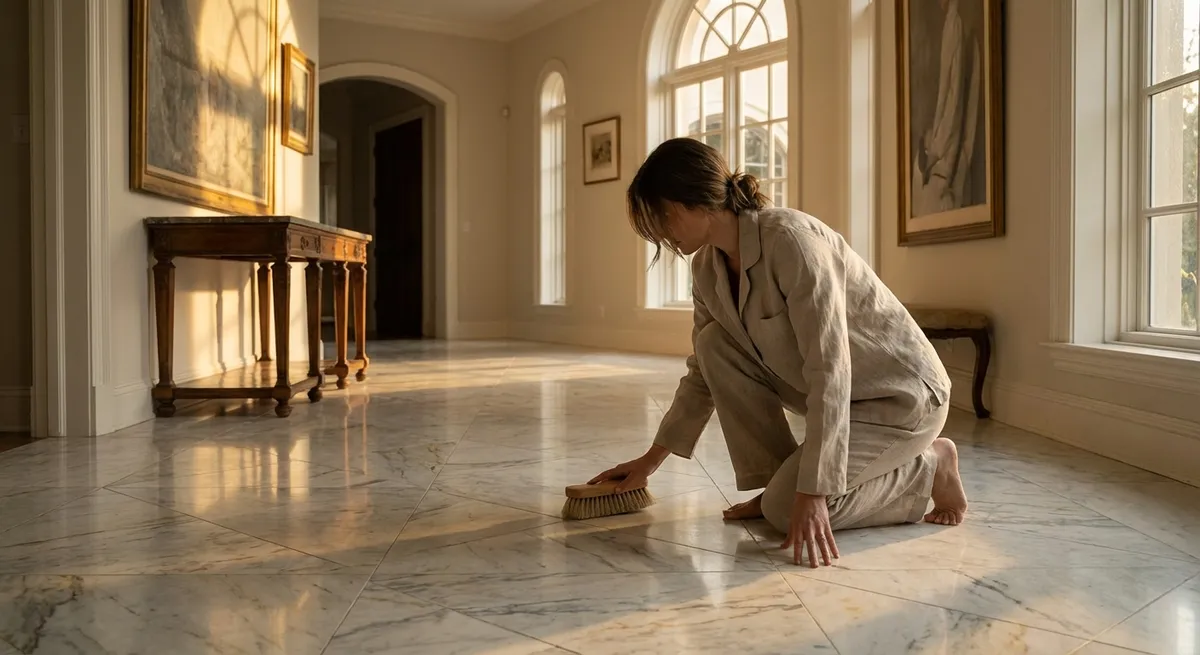
Understanding Your Tile’s “Native State”
Premium tile is not a monolith. Porcelain, marble, limestone, ceramic, terrazzo, and handmade zellige each have a distinct “native state”—a natural porosity, surface texture, and sheen that should guide every maintenance decision.
Before choosing products or methods, document what “correct” looks like: photograph the installation in natural daylight when new, note whether the finish is honed, polished, or textured, and confirm with your installer what sealers (if any) were used. This reference becomes your benchmark for detecting subtle changes over time—micro-etching on marble, early grout discoloration, or shifts in sheen on matte porcelains.
Equally important is understanding what your tile is not designed to tolerate. Acid-sensitive stones should never meet vinegar- or citrus-based cleaners; highly polished porcelains dislike abrasive powders and stiff brushes. Treat your tile as you would a tailored garment: care instructions are not optional; they are part of the investment.
Insight 1: Curated Cleaners, Not Catch-All Solutions
“pH-neutral” has become a popular phrase in cleaning, but that label alone is not enough for sophisticated tile surfaces. The aim is not simply to avoid damage—it is to avoid the slow erosion of refinement: dulled edges, hazed glazes, or flattened textures that occur from years of using generic household products.
For stone and high-end porcelain, select cleaners that specify compatibility with both tile and grout, and avoid products promising “enhancing” or “shine-boosting” effects unless you fully understand how they achieve this. Many of these rely on polymers or waxes that leave microscopic films which trap dirt and distort the tile’s intended finish.
If you have multiple tile types in the home, segment your products accordingly. A single “all-surface” cleaner used everywhere may be convenient, but a curated cleaning cabinet—stone-safe for bathrooms, robust degreaser for kitchen porcelain, gentle routine cleaner for handmade tiles—will prolong the life and visual clarity of each surface. When in doubt, test on an inconspicuous area and compare it to your original reference photos under natural light.
Insight 2: Grout as a Design Asset, Not an Afterthought
Most homeowners notice grout only when it discolors. In sophisticated interiors, grout color and crispness are as integral to the design as the tile itself, and should be maintained with equal care.
Start by treating grout as a micro-surface rather than a gap. Sanded, unsanded, epoxy, and cementitious grouts all behave differently under moisture, cleaning agents, and daily wear. Cementitious grout, for example, is more absorbent and benefits from periodic sealing; epoxy grout is more stain resistant but can still develop surface films if cleaned with the wrong products.
Routine care should prioritize prevention: high-performance doormats near exterior entries, bath mats in wet zones, and consistent ventilation to limit moisture retention. For maintenance cleaning, use soft brushes with narrow heads that target grout lines without abrading the tile edges. Reserve stronger, alkaline-based cleaners for occasional restorative work, and neutralize them thoroughly with clean water afterward to prevent residue.
If discoloration appears localized rather than uniform, treat it like a stain on fine fabric: spot-clean with a tailored method rather than escalating the intensity across the entire floor. When grout finally reaches the point of refresh, recoloring or sealing in a carefully chosen tone can subtly restore the design’s original visual rhythm without invasive work.
Insight 3: Managing Micro-Abrasions Before They Become Visible
Most wear on tile is not catastrophic; it is cumulative. Fine grit carried indoors on shoes, chair legs dragging a few centimeters at a time, or barstools pivoting along a kitchen island—all of these create micro-abrasions. Individually invisible, collectively they recalibrate the surface over time.
Prevention begins at the perimeter. High-quality doormats with layered textures (scraping fibers outside, absorbent fibers inside) remove a surprising amount of grit before it ever touches the tile. Within the space, invest in dense felt glides or textile sliders for chair and table legs; replace them quietly and regularly, the way you would re-sole a pair of fine shoes.
When grit does reach the floor, the first line of defense should be dry maintenance—vacuuming with a soft-brush hard-floor attachment rather than sweeping with stiff bristles that can push particles into grout lines or scratch delicate glazes. Only then should you introduce damp cleaning. Think of mopping as finishing work, not as the primary method of dirt removal.
For high-traffic zones—entry halls, kitchen work aisles, mudrooms—consider a subtle maintenance schedule: more frequent gentle cleaning rather than occasional, overly vigorous “deep cleans.” This lowers the pressure on each session, preserving the tile’s finish while keeping the space visually precise.
Insight 4: Moisture Etiquette in Wet Rooms
In bathrooms, spa areas, and steam showers, the enemy is not water alone but water that lingers. Premium tile and stone can tolerate moisture, but grout, underlayment, and certain natural materials are more vulnerable over time.
Adopt a “dry-down” ritual for wet areas. A simple squeegee or soft microfiber cloth used after showers dramatically reduces mineral deposits, soap film, and the slow bloom of mildew in grout joints and silicone transitions. This isn’t just about cleanliness; it preserves the clarity of glass, the definition of grout lines, and the crisp junctions where tile meets fixtures.
Ventilation is equally crucial. Use properly sized exhaust fans and allow them to run beyond shower time to remove ambient humidity—not only on visible surfaces but within wall assemblies and behind tile. In rooms with natural stone, excess moisture combined with certain cleaning agents can accelerate etching or spalling; a drier environment slows these processes substantially.
Pay particular attention to movement joints and corners. If you see hairline cracking in caulk or slight separation where planes meet, address it promptly. These junctions are your tile assembly’s pressure valves; keeping them intact ensures that moisture does not sneak where it does not belong, preserving both structure and aesthetic finish.
Insight 5: Annual “Condition Audits” Instead of Crisis Repairs
Rather than waiting for something to “go wrong,” treat your tile as you would a fine mechanical watch—deserving of periodic, attentive review. An annual condition audit is less about cleaning and more about quietly assessing performance.
Walk each tiled area in natural light and then again in artificial light. Look for subtle grout shading, uneven sheen patterns, faint etching, hairline cracks, or hollow-sounding tiles when gently tapped. These are early indicators of issues that can often be addressed with minimal intervention if caught early: targeted regrouting, re-sealing, replacing a single compromised tile, or adjusting cleaning methods before visible damage escalates.
During this audit, also review any documentation from your installer: original grout type, sealant specifications, and care recommendations. Many modern sealers, especially on stone and cementitious grout, have defined lifespans. Re-sealing on schedule is far less intrusive than restorative work once staining has fully penetrated.
If you work with a trusted tile professional, consider making this audit a standing appointment, much like seasonal HVAC servicing. A brief, expert review can extend the life of your installation significantly while preserving the quiet luxury and intentionality of the original design.
Conclusion
Exceptional tile installations do more than cover surfaces; they anchor a home’s visual narrative with texture, precision, and longevity. Protecting that investment requires more than casual cleaning—it calls for informed, deliberate care that respects material science, design intent, and the realities of daily life. By curating your cleaners, respecting grout as a design element, managing micro-abrasions, practicing disciplined moisture etiquette, and adopting annual condition audits, you elevate maintenance from routine to ritual. The result is a home where every tiled surface continues to feel composed, intentional, and quietly luxurious, year after year.
Sources
- The Tile Council of North America (TCNA) – Care & Maintenance Guidelines - Technical recommendations for cleaning and maintaining ceramic and porcelain tile
- MAPEI – Grout Care and Maintenance - Professional guidance on protecting and cleaning different grout types
- LATICRETE – Natural Stone & Tile Care - Detailed information on appropriate cleaners, sealers, and maintenance strategies
- National Kitchen & Bath Association (NKBA) – Bathroom Ventilation and Moisture Control - Best practices for managing humidity and moisture in wet rooms
- MSI Surfaces – Natural Stone Care & Maintenance - Practical guidance on preserving marble, limestone, and other stone finishes