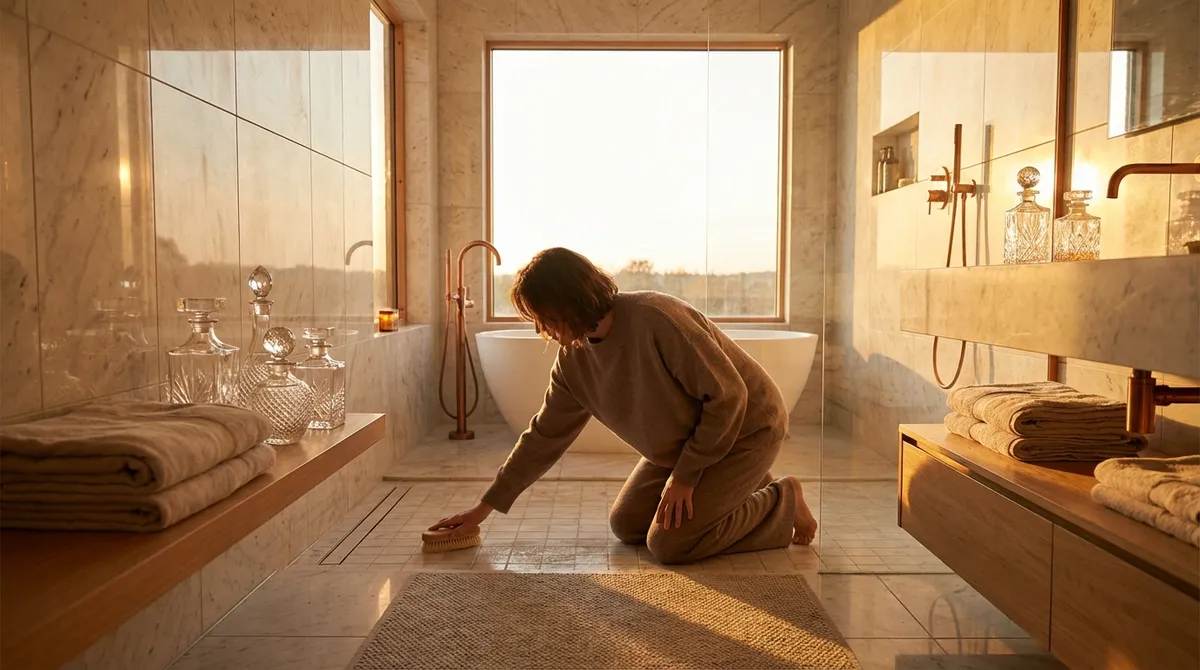
For homeowners who have invested in premium tile, maintenance is less about “cleaning” and more about conservation—protecting depth of color, edge definition, and the subtle, tactile qualities that distinguish fine tile from ordinary surfaces. The following insights move beyond basic care and enter the realm of long-term preservation, where every product, cloth, and motion serves a purpose.
1. Curating a Cleaning Wardrobe That Matches Your Tile’s Personality
Sophisticated tile maintenance starts with matching your cleaning tools and products to the actual character of your tile—its finish, porosity, and texture. High-gloss porcelain, honed marble, tumbled limestone, and handmade zellige each have different thresholds for abrasion, pH, and moisture. Instead of relying on one “universal” floor cleaner, assemble a small, considered kit tailored to your materials: a pH-neutral cleaner for daily care, a stone-safe product if you have natural stone, a microfiber-only mop for high-polish finishes, and gentle scrub pads reserved for textured tiles. Treat this like a wardrobe—every item has a role, and nothing is incidental. Over time, this curation prevents hairline etching, micro-scratches, and dulled gloss that can make even the most beautiful tile feel ordinary.
2. Respecting Grout Lines as Design Elements, Not Just Fillers
In high-end spaces, grout lines are as deliberate as the tile selection itself. Their width, color, and consistency influence how light reads across the surface and whether the floor feels expansive or segmented. Maintenance that overlooks grout quickly erodes that intended effect. Adopt a light-touch, regular routine that includes vacuuming or sweeping with a soft-bristle tool to remove grit before mopping, so abrasive particles don’t get ground into the joints. Twice a year, evaluate how the grout is aging—has it darkened in traffic paths, lightened near windows, or become uneven in sheen? Instead of reaching for harsh “whiteners,” consider a professional-grade grout cleaner designed to maintain color integrity, and reseal only with products suited to your specific grout type. The goal is not “new-looking grout” but grout that ages evenly, in harmony with the tile.
3. Practicing Moisture Discipline in Wet Areas
In bathrooms, entry vestibules, and around cooking zones, the distinction between a pristine installation and a tired one often comes down to moisture control. Water itself is rarely the enemy; it’s what water carries—soap, shampoo, minerals, oil, and fine debris—that causes buildup and staining. A refined approach treats drying as part of the daily routine: a quick squeegee pass on walls and glass, followed by a soft towel or microfiber cloth on tile ledges, niches, and thresholds. On floors, especially with natural stone or textured surfaces, brief ventilation—like leaving a shower door or curtain open—helps surfaces dry quickly and prevents moisture from lingering in grout joints. Over time, this discipline means fewer aggressive deep cleans, less reliance on harsh chemicals, and a surface that remains visually calm rather than patchy or mottled.
4. Controlling Micro-Abrasion Before It Rewrites the Surface
The most subtle form of tile wear is micro-abrasion—the slow, almost invisible scratching from fine grit, sand, and dust that gradually changes how a floor reflects light. You may not notice individual scratches, but you will eventually notice that the floor looks “tired,” even when just cleaned. Preventing this begins at the boundary between outside and inside. Place well-chosen, non-staining mats that suit the aesthetic of your space at every exterior entry, and consider a secondary mat or runner where outdoor shoes are removed. On the tile itself, vacuum with a hard-floor setting before wet cleaning, so you’re not dragging grit across the surface. For high-polish and dark tiles, consider soft felt pads under furniture and routinely check them; a single worn pad can leave a trail of faint marks. This quiet layer of protection keeps the original finish—whether high-gloss or softly honed—intact for years longer.
5. Scheduling Professional-Grade Attention Before It Looks “Necessary”
Luxury tile ages best when care is proactive rather than reactive. Instead of waiting until stains, etching, or dullness become obvious, set a maintenance calendar aligned with the demands of your space. For natural stone, that may mean testing the sealer every 12–18 months with a few droplets of water in an inconspicuous area to see if they darken the surface; if they do, it’s time for resealing. For large-format porcelain or rectified installations, consider an annual or biannual “reset” cleaning with a carefully chosen, professional-grade neutral cleaner to break down invisible films left by everyday products. If polishing, honing, or re-grouting is ever required, treat it less as “repair” and more as conservation—engage specialists who understand your tile’s specific composition and original installation method. Handling these interventions early, when changes are subtle, preserves the installation’s sense of intentional luxury instead of forcing noticeable “after-the-fact” corrections.
Conclusion
Exceptional tile work is a long-term conversation between materials, craftsmanship, and the way you care for them. When maintenance is elevated from chore to ritual—thoughtful tools, disciplined moisture control, protection against micro-abrasion, and scheduled professional oversight—your tile begins to age in a way that feels deliberate rather than accidental. Surfaces stay composed, grout remains dignified, and your home quietly reflects the investment you made in doing things properly from the start.