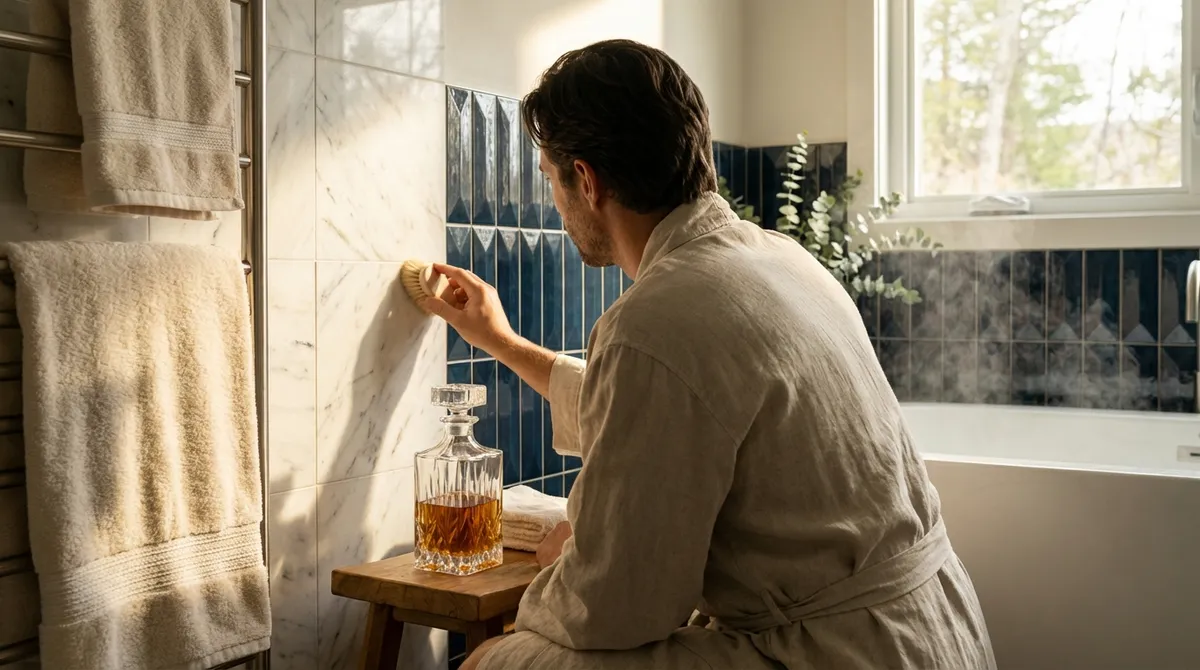
Below, you’ll find five exclusive, detail-driven insights that preserve the integrity, depth, and quiet luxury of your tile for years to come.
Insight 1: Treat Grout as a Design Element, Not a Cleaning Afterthought
Grout is often the first thing to betray a home’s age. Slight discoloration, hairline cracking, or uneven sheen will visually disrupt even the most exquisite tile layout. Treating grout as part of the design—rather than a secondary concern—elevates your entire space.
Start by understanding your grout type. Cementitious grout is more porous and vulnerable to staining, while epoxy grout is denser and more stain-resistant. Both benefit from protection, but the product and frequency differ. A penetrating sealer for cement grout, applied every 1–3 years depending on traffic, quietly prevents moisture, oils, and pigments from settling in. Focus your effort where the eye lingers: along thresholds, in front of vanities, around kitchen islands, and in shower niches.
Regular maintenance should be gentle yet precise. Avoid harsh scrub pads that can erode grout lines and instead use a soft nylon brush with a pH-neutral cleaner designed for tile and stone. Rather than “deep cleaning days,” build micro-rituals: a quick pass over grout in high-traffic zones once a week, or a targeted refresh in the shower while it’s already warm and ventilated. This disciplined subtlety keeps grout uniform, sharp, and quietly immaculate.
Insight 2: Master the Art of pH Balance for Tile Longevity
The quickest way to dull a premium surface is with the wrong chemistry. Many “heavy-duty” cleaners achieve their effect by attacking the material itself. In a refined home, the goal is the opposite: protect the integrity of the finish while removing what doesn’t belong.
Most daily tile maintenance should rely on pH-neutral cleaners—formulas that sit in the middle of the pH scale, neither acidic nor alkaline. They clean soils and light residues without etching glazes, degrading sealers, or stripping finishes. Reserve stronger chemistry only for specific situations: mild acidic cleaners for mineral deposits on certain tiles (never on natural stone like marble, limestone, or travertine), and alkaline formulations for oily residues—always followed by a thorough rinse.
Educated restraint is key. If a product advertises “restores shine,” “foaming power,” or “lime and rust remover,” view it with caution unless it is explicitly labeled safe for your exact tile and grout type. For natural stone, glass, metal inlays, or decorative finishes, always confirm compatibility. When in doubt, test a new product on an inconspicuous corner and inspect it in both natural and artificial light the next day. True luxury is not in using more products—it’s in selecting fewer, better ones with intention.
Insight 3: Elevate Everyday Cleaning Tools to Protect the Finish
One of the most overlooked aspects of tile maintenance is the quality of the tools themselves. Micro-scratches, haze, and premature wear often come not from what you clean with, but from what you clean using. The wrong mop head or vacuum attachment can slowly erode a polished surface that cost thousands to install.
For hard floors, choose vacuums with a dedicated hard-floor setting and soft, non-scratching wheels. Avoid beater bars or stiff bristles on polished porcelain, natural stone, and high-gloss ceramic. For sweeping, a rubber broom or soft-bristle broom captures grit without pushing it across the surface like sandpaper. Follow by vacuuming rather than simply sweeping—removing abrasive dust particles dramatically reduces long-term micro-abrasion.
For mopping, prioritize flat microfiber mop heads over string mops or sponge mops. Microfiber traps debris rather than smearing it, and its low profile allows more control of moisture near grout joints and edges. Keep a small rotation of dedicated microfiber cloths and pads: one set for bathrooms, another for the kitchen, another for entryways. Launder them without fabric softener (which can leave residues) and replace them the moment they show wear. Exceptional tile work deserves tools that respect its precision.
Insight 4: Control Moisture with Intention in Wet Zones
Moisture control is the quiet hero of enduring tiled bathrooms, showers, and spa-like spaces. The goal is not to keep tile dry at all times—that’s unrealistic—but to manage how long moisture lingers on surfaces and within grout and substrates.
In showers, a simple yet transformative habit is to squeegee walls and glass after each use. This isn’t about obsessive behavior; it’s about preventing mineral deposits, soap scum, and moisture from settling. A slim, well-designed squeegee stored discreetly in a niche or behind a door becomes part of the architecture rather than visual clutter. Follow with a soft cloth to catch corners and niches where water collects.
Ventilation is equally essential. Use an appropriately sized and properly vented exhaust fan and let it run for at least 20 minutes after bathing. In steam showers or heavily used primary baths, consider a humidity-sensing fan that activates automatically. For floors near showers and bathtubs, place high-quality, absorbent, non-rubber-backed mats that can be laundered weekly. Rubber or non-breathable backings can trap moisture on grout lines and encourage staining or mildew.
In all wet zones, schedule a quiet quarterly inspection. Run fingertips along grout lines, examine corners where walls meet floors, and check for soft spots, discoloration, or persistent dampness. Addressing a slightly compromised grout line or degraded caulk early can prevent the far more intrusive repairs that come when water reaches substrate layers.
Insight 5: Align Maintenance with the Tile’s Visual Intent
Every tile installation expresses an intent—crisp and architectural, soft and honed, rustic and textured, or glassy and reflective. Maintenance should amplify that original intent, not unintentionally shift it over time.
Polished porcelain and high-gloss ceramic rely on clarity of surface. To preserve this, focus on preventing film buildup: use minimal cleaning solution (more water than product), change mop water frequently, and perform a clean-water rinse pass in key areas such as entryways and kitchens. Never wax or coat these surfaces unless explicitly recommended; topical products can dull the clean, monolithic look the tile was designed to provide.
Matte, honed, or textured tiles, especially in natural stone or concrete-look formats, call for a different strategy. Their beauty lies in depth and soft diffusion of light. Overly aggressive scrubbing or highly alkaline degreasers can strip the subtle variation that gives them warmth. Here, the priority is gentle, consistent cleaning, periodic re-sealing if the material is porous, and prompt attention to colored spills (coffee, wine, oils) before they settle into microscopic texture.
In decorative installations—mosaics, metallic details, or mixed-material inlays—treat the most delicate component as the standard for maintenance. That means if your mosaic includes marble, glass, and metal, defer to the marble’s limitations when selecting products and tools. The most elegant tile spaces age beautifully when every maintenance decision asks a single question: Does this preserve the designer’s original visual intention?
Conclusion
Exceptional tile doesn’t remain exceptional by accident. It’s the result of deliberate choices—balanced chemistry, thoughtful tools, discreet moisture control, attentive grout care, and a maintenance approach that respects the tile’s design intent. These are not harsh routines; they are quiet rituals that become part of how you live with your space.
Over time, these subtle practices do something important: they allow your tile to develop presence without ever looking tired. The layout remains sharp, the surfaces stay true to their original finish, and the room continues to feel composed, considered, and unmistakably elevated.
Sources
- U.S. Environmental Protection Agency – Safer Cleaning Products - Guidance on safer, low-toxicity cleaners and how to interpret product labels
- Tile Council of North America (TCNA) – Tile Care & Maintenance - Industry recommendations for cleaning and maintaining ceramic and porcelain tile
- Mapei – Grout Sealing and Maintenance Guidelines - Technical information on grout sealers and appropriate usage
- Natural Stone Institute – Care & Cleaning of Natural Stone - Best practices and cautions specific to marble, limestone, and other stones
- U.S. Department of Energy – Bathroom Ventilation Basics - Recommendations on proper ventilation and fan operation to control moisture