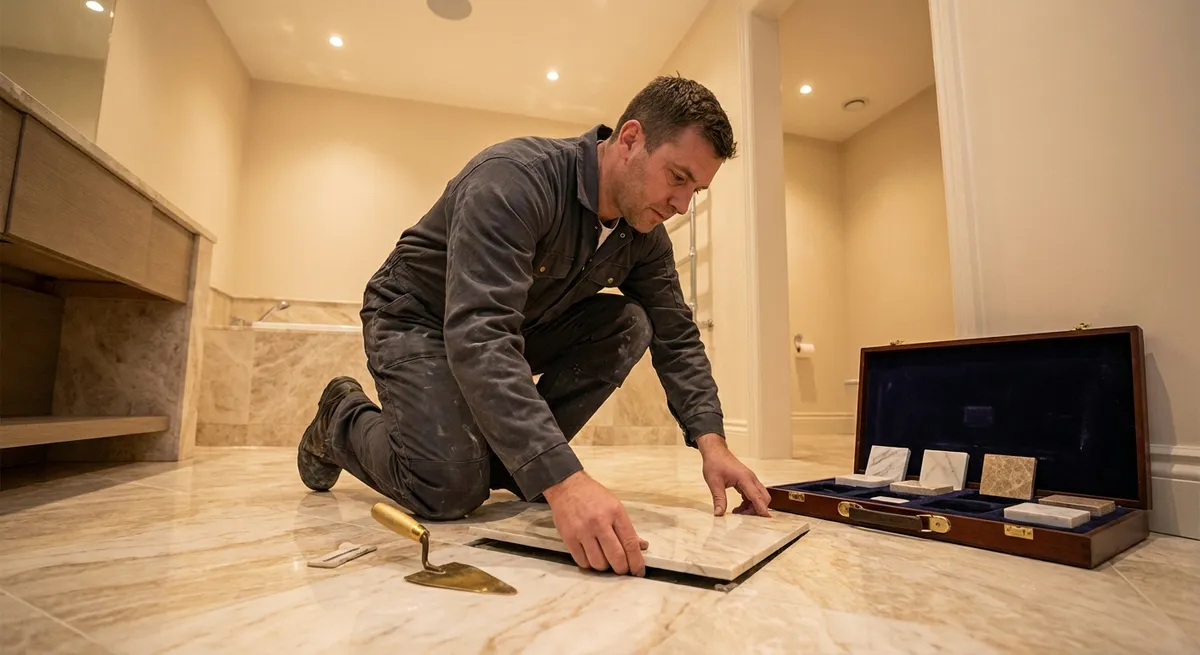
Below are five exclusive, under-discussed insights that sophisticated homeowners and design enthusiasts can use to elevate every tile repair from obvious patchwork to invisible craftsmanship.
Reading the Surface: How Micro-Defects Predict Major Failures
Before any repair is planned, a refined approach begins with observation. High-end tile systems rarely fail without whispering their intentions first.
Look closely at:
- Micro-crazing in grout lines – These faint fractures often indicate subtle structural movement or shrinkage in the substrate. Left unaddressed, they can telegraph upward into the tile itself.
- Localized dullness on polished tiles – A once-uniform sheen that now has a slightly matte zone can signal ongoing moisture exposure beneath, long before tiles begin to hollow or debond.
- Grout discoloration in tight bands or corners – Not all staining is cosmetic. When discoloration tracks along a very specific line or corner, it may be mapping moisture migration or vapor pressure.
- Slight lip-page at thresholds – The tiniest height differences where tile meets wood, stone, or carpet can reveal a substrate that has flexed or settled—a precursor to cracked tiles at these transition points.
Cultivated homeowners treat these surface signals as diagnostic data. A reputable tile professional will use them to determine whether a simple cosmetic repair is appropriate or whether deeper substrate correction, waterproofing reconsideration, or movement joints are required. The aim is not only to heal the visible wound, but also to quiet the underlying disturbance that caused it.
Color, Texture, and Time: Matching Aged Tile With Surgical Precision
Replacing or repairing tile in a lived-in space is far more nuanced than matching a showroom sample. Time, light, and use transform a surface in subtle ways, and sophisticated repair honors that aging rather than erasing it awkwardly.
Consider the following refinements:
- Sun-faded tones: Tile exposed to south- or west-facing light may have softened or warmed in color over the years. A replacement pulled from leftover boxes in storage may appear slightly cooler or more saturated. A skilled installer can mitigate this with strategic placement (e.g., moving new tiles to less conspicuous zones) or by blending several replacement tiles across a broader area rather than isolating the contrast in a single patch.
- Micro-variations in grout: Original grout that has been cleaned, sealed, and aged will rarely match fresh product straight from the bag. A refined repair often calls for delicate custom tinting of new grout, or the use of colorant over a broader grout field to even out transitions.
- Finish evolution: Honed tiles may develop a soft, patinated sheen in traffic lanes, while polished porcelain can gain micro-scratches that subtly diffuse reflection. Instead of installing a single pristine replacement tile into a worn field, an expert may gently adjust the surface of the new tile (via polishing pads or fine abrasives) to harmonize with the established patina.
- Batch and calibration subtleties: Even within the same product line, different manufacturing batches can vary slightly in tone or size. For premium results, homeowners can request the installer verify lot numbers or measure tile calibration with calipers before committing to repairs.
What appears to be “just a chipped tile” is, in refined homes, an invitation to orchestrate color, light, and use-worn character into a renewed yet coherent whole.
Beyond the Crack: When Surgical Repair Beats Full Replacement
The instinct to replace entire sections of tile whenever damage occurs is understandable—but not always sophisticated. In some situations, a carefully executed, ultra-local repair can be more elegant, more original, and less disruptive than wholesale removal.
Thoughtful examples include:
- Epoxy-based infill for minor chips: On natural stone and many porcelains, especially at edges or corners, a high-quality, color-matched epoxy repair can yield a nearly invisible result. This approach is well-suited when tiles are rare, discontinued, or part of a historically significant installation.
- Micro-grout surgery: For unobtrusive hairline cracks, removing and replacing the surrounding grout—combined with introducing a flexible, color-matched joint in strategic locations—can relieve stress and arrest further cracking, all while keeping the original tile intact.
- In-place crack stabilization: In select instances, structural or substrate issues can be resolved from below (for example, reinforcing subfloor from the underside in a crawlspace or basement), preserving the surface tile and then addressing the cosmetic crack with resin fillers or artistic inlays.
- Transition re-engineering: When tiles repeatedly chip at doorway thresholds or where they meet different materials, the most intelligent “repair” may be to redesign the transition itself—introducing a metal profile, stone saddle, or more forgiving movement joint—to prevent recurrence.
The premium mindset asks: What solution allows the original design intent to remain visually sovereign, while technically improving the assembly? Often, that answer lies in delicate refinement rather than aggressive demolition.
Moisture as a Silent Architect: Guarding Wet Areas From Invisible Damage
In luxury baths, steam showers, and spa-like wet zones, moisture is not a nuisance—it is a structural force. Repairing tile here without understanding moisture behavior is inviting future failure dressed as a fresh surface.
A few discreet, elevated practices:
- Respecting vapor, not just liquid water: Steam showers and heavily used bathrooms generate vapor that moves through assemblies in ways liquid water does not. Tile repairs in these areas should prompt questions about vapor barriers, substrate type (e.g., gypsum vs. cement board vs. foam panels), and the continuity of waterproofing behind the tile—not just the cosmetics above.
- Confirming the integrity of waterproofing after removal: Any tile replacement in a wet area is an opportunity—and a risk. Removing an individual tile can damage the underlying membrane. A conscientious installer will test, patch, and sometimes extend the waterproofing before re-tiling, rather than assuming what lies beneath is intact.
- Understanding efflorescence as a symptom: A chalky, white residue on grout or tile is not merely an aesthetic concern. It often signals moisture traveling through a cementitious assembly, dissolving salts and depositing them at the surface. Addressing only the residue without isolating the source of moisture is a cosmetic fix, not a repair.
- Drain geometry and ponding: If tiles near drains or in linear channels repeatedly crack or debond, the underlying issue may be slope and water entrapment. Repair in these cases might involve localized re-sloping around the drain, adjusting weep holes, or even rethinking drain positioning during a broader renovation.
Elegant repair in wet areas is as much about airflow, slope, and membrane continuity as it is about grout lines and surface sheen.
Future-Proofing: Designing for Repair Before You Ever Need It
The most sophisticated tile repairs are those you never see coming—because the original design quietly anticipated them. Homeowners planning new tile installations or significant renovations can make strategic choices that preserve flexibility and minimize disruption when life invariably leaves its mark.
Consider weaving in these forward-thinking details:
- Archival material reserves: Instead of storing a small handful of spare tiles, order and archive a more generous, cataloged reserve—especially for custom, imported, or limited-run materials. Store them in a dry, clearly labeled location with batch numbers noted. This foresight is priceless years later when an exact match becomes rare or impossible.
- Planned “sacrificial” zones: In highest-wear areas—front of kitchen ranges, at kitchen sinks, under bar stools, or at exterior thresholds—consider slightly more modular layouts or decorative fields that can be replaced in small sections without disturbing the surrounding, more permanent surfaces.
- Strategic movement joints: Properly designed and discreetly placed movement joints allow tile assemblies to respond to seasonal or structural shifts without cracking. For a cultivated aesthetic, these joints can be aligned with architectural lines, shadow gaps, or transitions so that they appear intentional rather than technical.
- Documenting the assembly: Photographs of the substrate, waterproofing, and underlayment before tile is installed—along with product data sheets and layout drawings—create a priceless record for future repairs. This discreet archive turns guesswork into precision for any artisan who touches the surface later.
- Consistent specification philosophy: Selecting a cohesive family of materials (tile bodies, grout types, and sealers) throughout the home can streamline future repairs and maintenance. When a product line is consistent, minor substitution or expansion becomes less visually jarring.
True luxury in tile work is not fragility; it is resilience disguised as serenity. Designing with future repair in mind is one of the quietest, smartest investments a discerning homeowner can make.
Conclusion
Tile repair in an elevated home is not merely about returning a surface to its previous state—it is about ensuring that every intervention respects the original vision while subtly upgrading the performance of the entire assembly. By reading early warning signs, honoring patina, favoring precision over overreaction, mastering moisture, and designing with future repair in mind, homeowners can collaborate with artisans to create restorations that are effectively invisible.
In the finest spaces, the most successful tile repairs are not the ones guests admire. They are the ones no one ever notices.
Sources
- Tile Council of North America (TCNA) Handbook - Industry reference for tile installation methods, movement joints, and substrate requirements
- American National Standards Institute (ANSI) A108/A118/A136.1 - Technical standards covering tile installation materials and practices
- Schluter Systems – Waterproofing and Shower Assemblies - Detailed guidance on waterproofing, vapor management, and tile assemblies in wet areas
- Mapei Technical Articles – Efflorescence and Moisture Issues - Explanation of efflorescence, moisture migration, and mitigation strategies
- National Institute of Standards and Technology (NIST) – Moisture in Buildings - Research-based perspective on how moisture behaves in building assemblies and affects finishes like tile