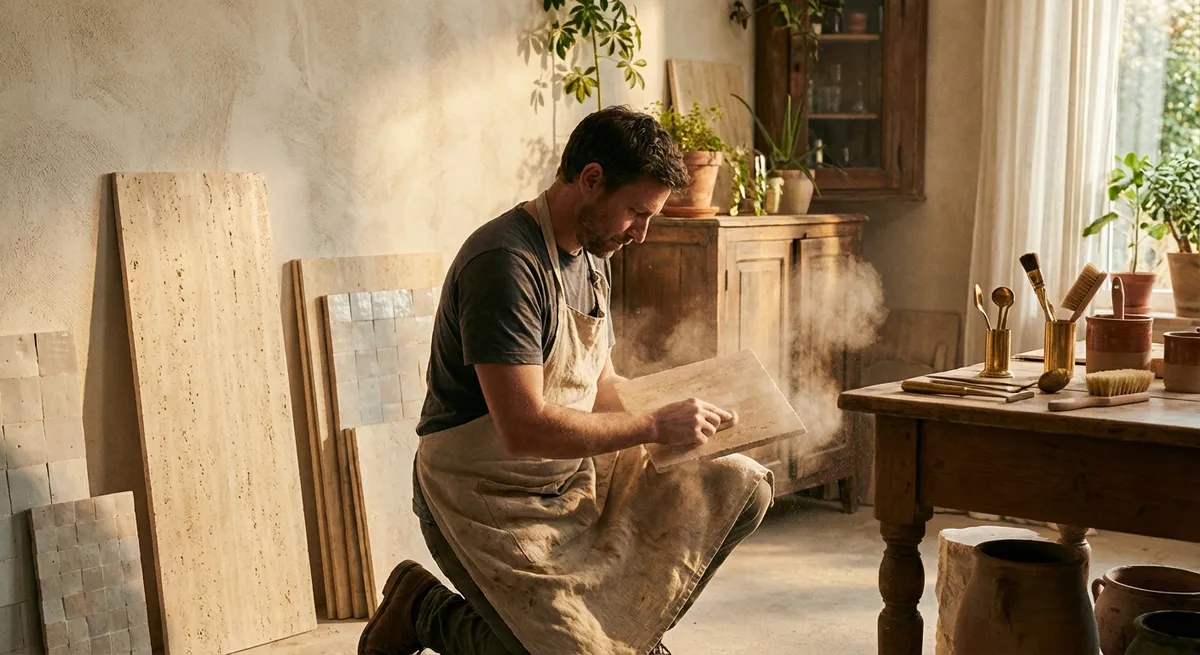
Below are five exclusive, detail-driven insights designed for homeowners who view their tiled surfaces as an investment in lasting refinement rather than a disposable backdrop.
Insight 1: Build a “Dry Clean” Routine Before You Ever Reach for Water
Most tile maintenance mistakes begin with the mop. Water and detergent are often introduced far too early and far too often, creating residues that dull finishes and invite soil to cling to the surface.
Imagine your tile care more like fine garment care: dry methods first, wet methods only when necessary. Start with a soft-bristle broom or high-quality microfiber dust mop to remove grit that can act like sandpaper underfoot, especially on polished porcelain and natural stone. For textured or structured tiles, a vacuum with a hard-floor setting and proper soft wheels prevents dust from settling into relief patterns and grout joints.
By dramatically reducing abrasive debris before it is ground into the surface, you preserve clarity of color, sharpness of edges, and reflective qualities of polished finishes. Water and neutral cleaners then become precision tools, not blunt instruments. The result is tile that maintains its original elegance with noticeably less effort and product over time.
Insight 2: Treat Grout as a Design Element, Not a Maintenance Afterthought
Even in the most elevated interiors, grout is often treated as a necessary inconvenience rather than a critical component of the visual composition. Yet it is grout—not the tile—that will typically show age first.
Begin by understanding the type of grout installed: cementitious, epoxy, or urethane each have different maintenance tolerances. Cementitious grout benefits from a high-quality penetrating sealer that does not alter the appearance but subtly reinforces its resistance to stains and moisture. Epoxy grout, by contrast, is denser and more stain-resistant, but still susceptible to surface films from incorrect cleaning products.
Adopt a “micro-maintenance” mindset for grout: a soft nylon brush and a pH-neutral cleaner used periodically along grout lines prevents gradual discoloration that becomes far more difficult to correct later. In kitchens, treat grout near cooktops and prep zones as you would fabric near a stove—preemptively protected and more frequently refreshed. When grout is maintained as intentionally as the tile itself, the entire installation retains a crisp, tailored look rather than drifting into the visual fatigue of dingy joints.
Insight 3: Curate a Material-Specific Product Cabinet (and Retire Generic Cleaners)
Premium tile surfaces—porcelain, ceramic, marble, limestone, terrazzo—may all coexist in the same residence, but they do not respond uniformly to the same cleaner. The common “all-surface” cleaner or glass spray used throughout the home often contains surfactants, fragrances, or acids that leave films or etch susceptible stone.
Create an edited, material-specific care kit:
- A true pH-neutral cleaner for general tile and sealed natural stone
- A stone-safe product explicitly labeled for marble, limestone, or travertine
- A non-abrasive cream cleaner for stubborn residues on certain porcelains
- A dedicated grout cleaner for periodic targeted care
- White, lint-free microfiber cloths reserved only for hard surfaces
Label each product by room or material type—“Master Bath Marble,” “Kitchen Porcelain,” “Outdoor Porcelain”—to avoid cross-use. This single step dramatically reduces accidental damage, haze, or patchy sheen changes. The effect is subtle but cumulative: surfaces maintain their intended finish—whether honed, polished, or matte—without the visual noise of residues and uneven wear.
Insight 4: Harmonize Indoor and Outdoor Tile Maintenance Across Thresholds
Where tiled terraces, balconies, or patios meet interior tile flooring, maintenance must be treated as a continuous narrative, not two unrelated stories. Sand, soil, and organic matter tracked from exterior tile onto interior surfaces accelerate micro-scratching, especially on darker or polished finishes.
Establish a threshold strategy:
- Use high-quality, well-sized mats both outside and inside entry points adjacent to tile, and clean them regularly rather than waiting until they appear soiled.
- Adjust maintenance frequency seasonally: during wet or snowy months, increase dry cleaning (vacuuming and dust mopping) on interior tile near exterior access points.
- For exterior tiles, use a low-pressure wash with a suitable outdoor cleaner rather than aggressive pressure washing that can roughen surfaces or damage grout and joints.
By thinking in terms of “maintenance zoning”—exterior, transition, interior—you preserve visual continuity between spaces. The interior tile remains pristine, and the outdoor tile maintains its design integrity without the patchy wear that often appears near doorways and heavily used paths.
Insight 5: Monitor Sheen and Color as Early Warning Signals, Not Aesthetic Quirks
Truly refined maintenance is diagnostic as much as it is corrective. Tile and grout will quietly communicate stress long before visible “damage” appears, typically through subtle shifts in sheen and color.
On polished surfaces, areas that begin to appear slightly more matte or “cloudy” than the rest of the floor may indicate residue build-up from incorrect products or micro-scratching from abrasive debris. On matte tiles, localized glossy patches can reveal waxing, over-sealing, or incorrect cleaners. Grout that shifts from crisp, consistent tones to blotchy or slightly darker bands often signals absorption of moisture, oils, or detergents.
Make a habit of inspecting floors and walls under natural light and oblique artificial light—lighting that rakes across the surface rather than directly down. This reveals early changes in reflection and tone. Addressing these anomalies early—switching products, adjusting cleaning tools, or spot-treating—preserves the designer’s intended look and prevents the costly, disruptive deep restorations that come from years of accumulated missteps.
Conclusion
Exceptional tile work is not only installed; it is cultivated. The most sophisticated spaces are those where every material continues to look quietly effortless year after year, without shouting about the maintenance behind it. By privileging dry cleaning over default mopping, elevating grout care, tailoring products to specific materials, aligning interior and exterior strategies, and reading your surfaces for early signals, you create a maintenance culture that honors the investment you have made.
In this approach, tile is no longer a background surface to be occasionally scrubbed, but a carefully maintained architectural asset—one that reflects, quite literally, the quality of your standards.
Sources
- U.S. Environmental Protection Agency – Safer Cleaning Products - Guidance on selecting safer, surface-appropriate cleaning products that minimize damage and residue
- MAPEI – Guide to Grout Types and Maintenance - Technical information on different grout technologies and their maintenance needs
- The Tile Council of North America (TCNA) – Tile Care and Maintenance - Industry-backed recommendations for routine cleaning and long-term care of tile installations
- Marble Institute of America / Natural Stone Institute – Stone Care - Authoritative guidance on appropriate products and methods for marble and other natural stone surfaces
- University of Georgia Extension – Choosing Cleaning Products - Educational overview of how cleaning formulations interact with household surfaces and finishes