Below are five exclusive, detail-driven insights designed for homeowners who expect their tile to look impeccably curated not just on installation day, but for decades.
1. Treat Grout as a Design Element, Not a Cleaning Afterthought
Grout ages faster than tile—and visually, it often “dates” a space first. Yet many maintenance routines effectively ignore it.
Begin by understanding your grout type: sanded, unsanded, epoxy, or premixed. Each responds differently to cleaning agents and sealers. Use a pH-neutral cleaner specifically marked as safe for grout and tile; avoid vinegar and acidic solutions on cementitious grout, which can erode the surface and open microscopic pores that attract more soil.
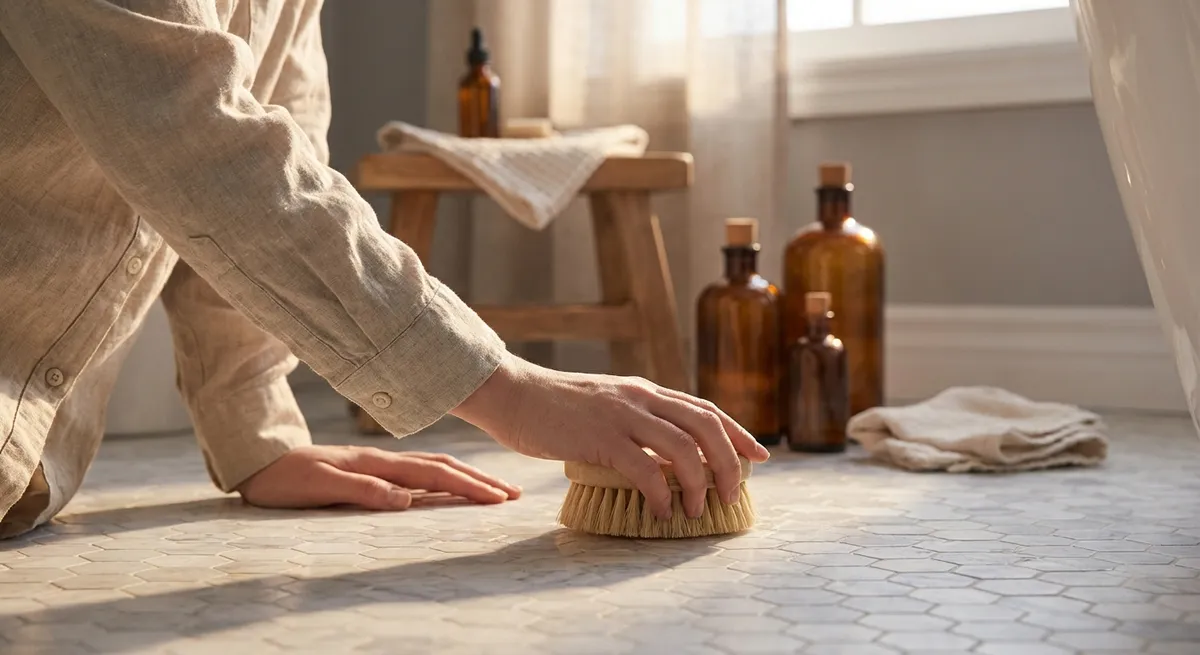
Periodic deep cleaning should focus on the grout lines first, not last. Pre-treat soiled grout with a gel or foam cleaner that clings to vertical lines, allowing dwell time before light agitation with a soft-bristle brush. Think of this as restoring the negative space in a pattern: when grout lines are crisp, the tile immediately reads more intentional and elevated.
Once spotless, a penetrating sealer designed for grout creates an invisible barrier that resists staining while preserving the original color. Reapply on high-traffic floors every 1–2 years and on shower walls every 12–18 months. In practice, that means your grout remains part of the design language—not a visual compromise you learn to ignore.
2. Curate Cleaning Products Like You Curate Finishes
Luxury tile installations are frequently undermined by generic, “one-bottle-does-all” cleaners. Refined surfaces demand a curated cleaning cabinet, much like a curated finish schedule.
For natural stone (marble, travertine, limestone, onyx), a pH-neutral stone-specific cleaner is non-negotiable. Acidic products—especially those marketed as “lime scale removers” or “bathroom brighteners”—can etch the stone, creating a permanent dullness that even professional polishing may not fully remove. For polished porcelain, avoid oil-based soaps, which can leave a film and mute the inherent clarity of the finish.
Microfiber is your silent ally: use it for daily dust removal on floors and for buffing shower walls or kitchen backsplashes after cleaning. Reserve separate cloths for kitchens and baths to avoid cross-contamination of oils, soaps, and residues.
Create a simple hierarchy:
- Daily: Dry dust or microfiber mop, quick wipe-down of counters and vanities.
- Weekly: Damp mop with a pH-neutral cleaner; lightly clean grout lines in zones of use (sink, cooktop, shower floor).
- Seasonal: Reassess sealers, inspect caulk lines, and address subtle changes before they become visible problems.
By treating your maintenance products with the same discernment as your fixtures and fittings, you preserve not only the health of the surface but the sophistication of the overall presentation.
3. Manage Micro-Moisture, Not Just Visible Water
Water is seldom the issue; time and containment are. What separates a casually maintained bath from a meticulously cared-for one is the management of micro-moisture—the thin film of condensation and residual dampness that quietly undermines grout, stone, and metal details.
After each shower, encourage a brief, consistent routine: run the fan for at least 20 minutes, squeegee glass, and sweep excess water off tile floors and shower walls, especially on horizontal ledges and built-in benches. These areas are where moisture lingers longest and where mold and efflorescence first appear.
In steam showers and spa-like baths, consider a small, dedicated microfiber towel for stone and tile surfaces—used only to wick away residual water in corners and around niches. This single habit dramatically reduces soap residue and mineral buildup, preserving the clarity of glazed ceramics and the velvety depth of honed stone.
For kitchens, “micro-moisture” shows up as diluted spills and repeated splashes—around the sink, dishwasher, and cooktop. A swift wipe-down immediately after cooking or clean-up prevents staining in natural stone backsplashes and stops moisture from creeping behind tiles at the counter junction. Over years, this vigilance preserves tight lines, pristine caulking, and the subtle precision that signals a well-maintained, high-end installation.
4. Honor the Finish: Tailored Care for Matte, Honed, and High-Gloss Surfaces
Not all sheen is created equal. Each finish reflects light—and reveals wear—differently, so maintenance must be tailored.
Honed and matte tiles (especially limestone, concrete-look porcelain, and large-format slabs) excel at diffusing light, creating a calm, contemporary aesthetic. However, they tend to highlight oily marks, footprints, and uneven drying. For these surfaces:
- Use low-residue cleaners that do not require rinsing in minimal quantities.
- Mop with lightly damp (not wet) microfiber to avoid streaking and patchy drying.
- In high-traffic areas, rotate entry rugs or runners periodically to prevent uneven wear patterns.
Polished stone and glossy porcelain behave like a mirror—dust, fine grit, and water spots are amplified. Regular dry dusting or vacuuming with a hard-floor attachment prevents micro-scratches that gradually dull the surface. For bathrooms, quickly buff any water spots with a clean, dry microfiber cloth; this is the difference between “recently used” and “effortlessly pristine.”
Where possible, use felt pads under moveable furniture over both matte and polished tile, not only to protect the tile but to avoid subtle drag marks on grout. Think of these steps not as fussiness, but as respecting the intent of the finish: a perfectly controlled interaction between light, texture, and movement.
5. Establish a Gentle “Inspection Ritual” with Each Season
The most sophisticated tile maintenance isn’t reactive; it’s anticipatory. A brief, seasonal inspection routine catches the earliest signs of wear, so that interventions remain discreet and affordable—and your tile never reaches a visibly “tired” stage.
Once per season, walk each tiled area with a quiet, critical eye:
- Grout & Caulk: Look for hairline cracks, slight discoloration, or gaps where fixtures and tile meet. Addressing a one-inch gap in clear silicone now prevents water from migrating behind a shower wall or kitchen backsplash.
- High-Use Zones: At entryways, in front of vanities, sinks, ranges, and laundry machines, inspect for faint dullness or micro-scratches. A targeted deep clean or professional polishing in a single zone is far less disruptive than a whole-room restoration.
- Natural Stone: Drip a micro-drop of water in an inconspicuous area. If it darkens quickly and does not bead, your sealer may be past its prime. Refreshing the sealer before visible staining appears is what keeps stone installations reading as “newly installed” even after a decade.
- Transitions & Edges: Examine where tile meets other materials—wood, metal thresholds, glass panels. Tiny movements here often reveal themselves first; catching chipped edges or loose trim early preserves the clean, uninterrupted lines that define high-end finishes.
Documenting small observations in a simple note (even in a smartphone) transforms maintenance into a conscious ritual rather than a series of emergencies. Over the years, this mindset is what separates spaces that simply endure from those that gracefully retain their original, elevated intent.
Conclusion
Exceptional tile work is an investment in permanence—a deliberate choice to live with surfaces that age with dignity rather than decay. Maintaining that standard isn’t about aggressive scrubbing or constant anxiety; it’s about calm, consistent rituals that honor the material, the finish, and the craftsmanship behind every line and joint.
By elevating grout to a design priority, curating your cleaning products, mastering moisture, respecting each finish, and adopting a quiet inspection ritual, you transform maintenance from a chore into an extension of design itself. The result is a home where tile doesn’t just survive daily life—it frames it, beautifully, for years to come.
Sources
- Natural Stone Institute – Care and Cleaning of Natural Stone – Authoritative guidance on correct cleaners, sealers, and maintenance practices for marble, limestone, and other natural stones.
- MAPEI – Guide to Grout Types and Maintenance – Technical overview of grout types and recommendations for cleaning and protection.
- The Tile Council of North America (TCNA) – Maintenance and Cleaning – Industry-recognized recommendations for routine tile and grout care.
- U.S. Environmental Protection Agency (EPA) – Mold and Moisture – Guidance on moisture control in homes, relevant to tile installations in baths and other damp spaces.
- University of Tennessee Extension – Floor Care and Maintenance – Educational resource on floor maintenance principles, including hard-surface care and proper cleaning techniques.