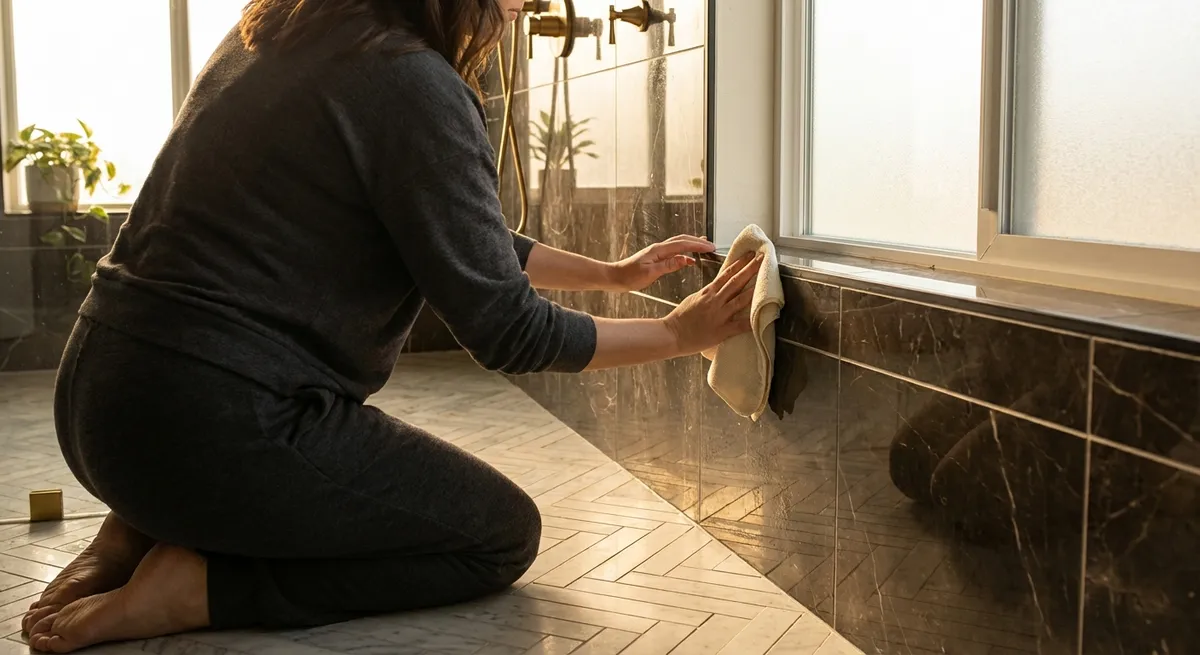
Below, you’ll find five exclusive maintenance insights tailored to homeowners who view their tile not as background, but as part of a larger, enduring design narrative.
1. Treat Grout as a Design Element, Not a Cleaning Afterthought
In sophisticated spaces, grout isn’t merely the filler between tiles—it’s part of the visual architecture. Left unattended, however, it’s also the first place neglect becomes visible.
Routine maintenance should prioritize grout as carefully as the tile itself. Instead of sporadic scrubbing, adopt a low‑intensity, high‑frequency approach: a weekly pass with a pH‑neutral cleaner and a soft nylon brush is often sufficient to prevent gradual discoloration. For high‑end stone or designer porcelain, confirm that your cleaner is both pH‑neutral and free of harsh surfactants; overly aggressive formulas can dull polished edges and strip sealers from grout lines over time.
Once grout has been professionally cleaned or installed, protect it like an investment. A penetrating, high‑quality grout sealer—applied carefully along joints rather than sloshed across the surface—helps prevent stains from coffee, wine, soaps, and cooking oils from setting in. In busy kitchens, re‑evaluating grout seal every 12–18 months keeps joints visually crisp, preserving the graphical precision of your layout and keeping the entire installation reading as “intentional” rather than “tired.”
2. Align Maintenance With Material, Not Just Room Type
Refined tile care begins with acknowledging that the word “tile” covers radically different materials and behaviors. A marble floor and a porcelain slab backsplash may share a color palette but demand distinctly different maintenance philosophies.
Natural stone—marble, limestone, travertine—requires a respect for its mineral structure. Acidic cleaners, vinegar, lemon-based products, or harsh bathroom sprays can etch stone, leaving dull patches that catch the light unevenly and disrupt the surface’s luxurious continuity. For these materials, limit your routine to pH‑neutral stone cleaners, microfiber applicators, and very soft brushes. Where possible, mop with distilled or softened water to prevent mineral deposits that leave fine, chalky films.
Porcelain, on the other hand, is more forgiving but not invincible. Highly polished or honed porcelain can still develop micro‑scratches if cleaned with abrasive pads or gritty powders. Matte or structured surfaces can hold onto residue if cleaned with overly soapy solutions; when soap is not fully rinsed, it leaves a dull haze that flattens color and texture. The refined approach: less detergent, more clean water, and a final rinse pass with a barely damp microfiber mop to restore a clear, luminous surface.
By aligning your routine with the material rather than a generic “bathroom” or “kitchen” label, your maintenance shifts from reactive cleaning to intentional preservation.
3. Practice “Preventive Elegance” With Subtle Protective Measures
Elite hotels and galleries have long understood that the best maintenance is the kind that quietly prevents problems from arising. Homeowners can bring that same mindset into their spaces with discreet, design‑aware protective measures.
In entryways and kitchens, use slim, high‑quality mats with non‑staining backings (avoid cheap rubber that can leach discoloration onto some stones and tiles). Place them not only at exterior doors but at transition points—between a stone foyer and a wood corridor, or between a tiled kitchen and breakfast nook—where grit might be tracked and ground into surfaces.
Install felt pads under stools, dining chairs, and movable islands to prevent micro‑gouging on both tiles and grout joints. For bar stools or chairs that are regularly rotated or dragged, consider low-profile glides designed specifically for hard surfaces to distribute weight more gently. In showers, opt for elevated, non‑metallic caddies or recessed niches instead of metal baskets that can rust or stain grout over time.
Equally important is habit design: encourage family and guests to lift, not drag, heavy items; to address spills as moments of stewardship rather than emergencies; and to avoid placing extremely hot cookware directly on tiled counters, particularly where epoxy grout or sealers may be present. These quiet behaviors extend the life and sharpness of your tile work far more effectively than any “deep clean” ever will.
4. Reserve “Deep Cleaning” for Precision Moments, Not Seasonal Marathons
In refined interiors, “deep cleaning” should feel more like conservation than like a scrub-down. Rather than scheduling punishing seasonal cleanups, introduce precise, targeted interventions when the surface actually calls for it.
First, learn to read your tile. A subtle change in sheen can signal residue buildup; localized darkening in grout may reflect absorption rather than surface dirt. Before reaching for harsher chemicals or tools, start with a controlled test: a small area, a diluted cleaning solution, and a gentle brush. Evaluate after drying; often, a second light pass is safer and more effective than one aggressive one.
For stubborn mineral deposits on shower tiles, consider a professional-grade cleaner specifically labeled safe for your material, and always pre-wet surrounding areas to minimize dwell time on sensitive surfaces. If you have natural stone, consult the manufacturer or a stone care specialist before using descalers; specialized stone-safe formulations exist for this reason.
Occasionally, professional maintenance is not an indulgence but a strategy. Steam cleaning (performed correctly and at appropriate pressures) can rejuvenate grout lines without saturating walls or underlayment. For high-end stone installations, periodic professional honing and resealing can restore a subtle, even glow that no household product can replicate. Viewing these services as part of the lifecycle of a luxury installation—not as crisis responses—keeps your tile work perpetually closer to “showroom” than “salvage.”
5. Document Your Tile’s “Care Profile” for Consistency and Longevity
One of the rarely discussed hallmarks of elevated tile stewardship is documentation. Just as fine garments come with care labels, your surfaces deserve a defined, written care profile—especially in homes where staff, rotating cleaners, or guests might interact with them.
Begin by compiling the key data: tile type (porcelain, ceramic, marble, limestone, etc.), finish (polished, honed, matte, textured), grout type (cementitious, epoxy, urethane), and any sealers used (brand, type, and date of application). Then, create a concise maintenance guide tailored to your installation: approved cleaners (by name), diluted ratios, recommended tools, and specific “never use” items such as abrasive powders, bleach, vinegar, or acidic bathroom sprays where they would be inappropriate.
Keep this care profile in a visible but discrete place—inside a utility cabinet, with house manuals, or shared digitally with anyone responsible for cleaning. This ensures that a well-meaning person does not unknowingly etch stone with an acidic spray or degrade grout with repeated bleach use. Over time, update the profile with sealer reapplication dates, professional service visits, and any product changes.
This simple act of documentation transforms tile maintenance from improvisation into a controlled ritual. The result is not only longer-lasting installations, but also surfaces that age with grace and intention, preserving the quiet luxury that drew you to them in the first place.
Conclusion
Exceptional tile work deserves more than occasional scrubbing; it deserves a considered, almost curatorial approach to maintenance. When grout is treated as a design element, routines are aligned with material, protection is woven discreetly into daily life, deep cleaning is conducted with precision rather than force, and care is documented with the same seriousness as the installation itself, tile moves from “finished surface” to “enduring asset.”
The reward is subtle yet unmistakable: floors that remain crisp at the joints, walls that hold their depth of tone and finish, and rooms that continue to feel freshly composed years after installation. In a well-kept home, tile doesn’t simply look clean—it reads as intentionally, continuously refined.
Sources
- Natural Stone Institute – Stone Care, Maintenance and Sealing - Guidance on appropriate cleaners, sealers, and ongoing care for natural stone installations
- Tile Council of North America (TCNA) – Maintenance of Ceramic and Porcelain Tile - Authoritative recommendations on proper cleaning methods and products for different tile types
- U.S. General Services Administration – Historic Tile and Terrazzo Maintenance - Professional-level insights into preserving and maintaining tiled surfaces in high-value buildings
- Schluter Systems – Grout and Joint Protection Guidelines - Technical information on grout performance, protection, and long-term durability
- Laticrete – Grout Care and Maintenance - Detailed recommendations on cleaning, sealing, and maintaining various grout types