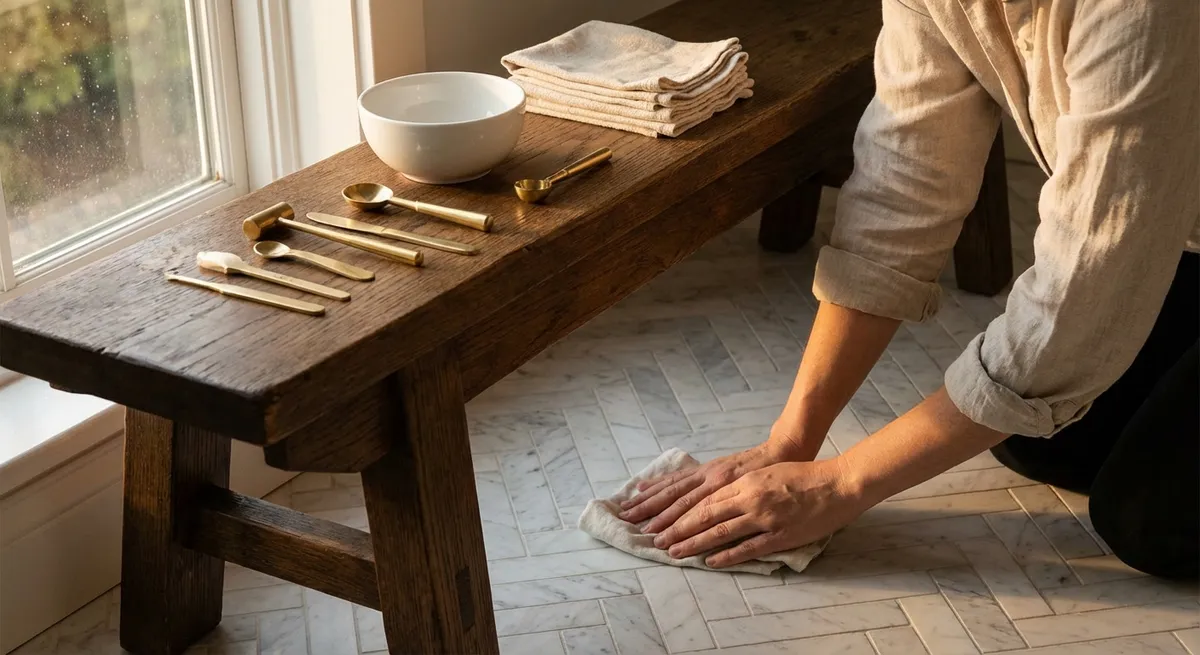
What follows are five exclusive, practitioner-level insights: small, disciplined rituals that separate simply “clean” tile from surfaces that feel quietly exquisite day after day.
1. Curate a “Tile Wardrobe” of Cleaners, Not a Single All‑Purpose Solution
Refined tile care begins with restraint. The impulse to deploy one powerful product for every surface is precisely what compromises grout, etching, and sealer performance over time.
For most homes, a sophisticated tile “wardrobe” includes three deliberately chosen categories:
- Daily neutral cleaner (pH around 7) for routine washing of both tile and sealed grout lines. This preserves finishes and avoids the cumulative damage caused by harsh agents.
- Periodic deep cleaner formulated specifically for your material—porcelain, ceramic, natural stone, or cement. Stone, in particular, demands stone-safe products without acids, bleach, or abrasive agents.
- Spot-specific stain removers or poultices tailored to the issue: oil, rust, organic stains, or soap scum. These are used surgically, not spread casually over the entire floor.
The most refined spaces often rely on less chemical, more method: microfiber mops with tightly wrung cloths, two-bucket systems (wash and rinse), and measured dilution. The result is not only a more polished appearance, but also dramatically extended life for sealers, grout, and any honed or polished finishes. Your cleaners should be chosen with the same discernment you bring to faucets, fixtures, and textiles—everything in quiet harmony with the material it serves.
2. Maintain Grout as a Design Element, Not an Afterthought
In sophisticated interiors, grout is not “the stuff between tiles”—it is a deliberate visual line that either recedes or accentuates the layout. Treating it as a structural afterthought is how otherwise beautiful tile installations begin to look tired and uneven.
Two advanced habits protect grout as a design asset:
First, a sealing strategy with intention.
Most sanded and unsanded cementitious grouts benefit from penetrating sealers, but the application is often rushed. An elevated approach means:
- Allowing proper cure time before sealing (often 72 hours or more, as recommended by the manufacturer).
- Applying thin, controlled coats with a small brush or applicator bottle, specifically targeting grout joints rather than flooding the tile.
- Timing a light second coat on high-traffic areas a day later, rather than simply redoing the entire floor.
Second, scheduled micro-maintenance instead of emergency rescue.
Rather than waiting for the eye to detect discoloration, create a quarterly ritual. Inspect grout under good light (morning or late afternoon side light is ideal) and address:
- Emerging hairline cracks before they widen.
- Slight color shifts at entryways with tailored grout cleaners or steam (for appropriate tile types).
- Early-stage staining near cooktops and vanities with targeted stain removers, not generic scrub pads.
The difference is subtle yet profound: grout lines remain crisp, unified, and purposeful, maintaining the original design intent rather than constantly reminding you of where the household works the hardest.
3. Control Micro‑Scratches: The Invisible Threat to a Luxurious Finish
Many homeowners associate “damage” with chips or cracks, but the true enemy of a refined tile floor is far more discreet: the slow accumulation of micro-scratches and surface burnishing that dulls the finish and disrupts how light plays across the surface.
A more elevated maintenance strategy focuses on minimizing abrasion before it happens:
- Establish layered entry protection. A single front door mat is rarely enough. Use a scraper mat outdoors to catch grit, then a high-quality, dense-fiber mat indoors. This dual system dramatically reduces the sand and micro-debris that behave like fine sandpaper under shoes.
- Upgrade chair and furniture glides. Felt pads should not be an afterthought add-on; they are part of the tile “hardware.” Choose high-density felt (not thin stick-ons that compress in a week) and inspect quarterly, replacing any that are dirty or compressed.
- Reconsider cleaning tools. Stiff-bristle brushes, scouring powders, and aggressive pads abrade surfaces faster than daily foot traffic. For general maintenance, rely on soft microfiber, non-scratch pads rated for your tile type, and vacuum attachments with soft bristles.
For polished porcelain or stone, this intentional abrasion control is essential. Instead of a gradual, uneven matte haze appearing in the most frequently walked paths, you preserve an even, controlled sheen that feels deliberate, not tired. The most luxurious floors rarely look “brand new”—they look continuously, quietly cared for.
4. Let Moisture Management Do the Heavy Lifting
Water itself is seldom the enemy; it is what water allows—soap, minerals, and mildew—to linger on surfaces that ultimately undermines even the finest tile work. In elevated bathrooms and spa-like spaces, the most effective maintenance strategies are actually moisture strategies.
Two discreet habits have an outsized impact:
Daily drying rituals.
A simple, well-placed squeegee and a plush, dedicated tile towel can change the entire trajectory of a shower’s lifespan:
- Squeegee walls and glass immediately after use, then quickly address corners and niches with a towel to remove residual moisture.
- Focus especially on grout intersections, horizontal ledges, and the pan perimeter—precisely where mildew and soap build-up tend to start.
Airflow as a maintenance tool.
Mechanical ventilation is non-negotiable in a high-end tile bathroom, but refinement means using it intentionally:
- Run the exhaust fan during the shower and for at least 20–30 minutes after, to reduce humidity before it can condense on cool tile surfaces.
- Keep shower doors or curtains slightly open after use to allow air to circulate into corners and recesses.
By prioritizing drying rather than ever-stronger cleaning products, you avoid the arms race of harsher chemicals, stubborn build-up, and eventual grout degradation. The space will not only look fresher; it will smell cleaner, feel healthier, and reward the original investment in superior materials and installation.
5. Schedule Professional‑Level “Resets” Before Damage Appears
The most impeccably maintained tile spaces rarely require dramatic restoration because their owners think in terms of periodic resets rather than one-time rescues. This is where truly elevated maintenance begins to resemble the care of fine furniture or tailored clothing.
A refined “reset” plan might include:
- Annual or biennial deep cleaning by a tile or stone professional, especially for natural stone, textured porcelain, or heavily used kitchens and entries. They can extract embedded soil from grout, remove early-stage soap films, and rebalance sheen.
- Scheduled re-sealing based on use, not guesswork. High-traffic kitchen and entry grout may need re-sealing every 1–2 years; low-traffic guest baths, far less often. For natural stone, the schedule should be guided by water-drop tests and manufacturer recommendations, not arbitrary dates.
- Regular visual audits. Once or twice a year, examine your tile at low, side-lighting angles. This reveals slight lippage changes, micro-cracks, early staining, or hollow-sounding tiles. Addressing these issues early often means elegant, localized repairs instead of comprehensive intervention later.
Think of these resets as spa treatments for your floors and walls—a recalibration that returns the installation to its intended visual balance. When executed consistently, they keep your tile feeling considered and composed, rather than merely “holding up” under use.
Conclusion
Exceptional tile work is never just about the tile. It’s about the quiet choreography of daily habits, product choices, and periodic interventions that respect both the craft and the investment behind every installation.
By curating a thoughtful cleaner wardrobe, treating grout as a design element, protecting surfaces from invisible abrasion, managing moisture with intention, and embracing scheduled professional resets, you transform maintenance from a chore into a subtle act of stewardship. The reward is not flashy; it’s more compelling than that—a sense of enduring calm, order, and refinement underfoot that distinguishes a merely finished space from a truly cultivated one.
Sources
- U.S. Environmental Protection Agency – Safer Choice: Choosing Safer Household Cleaners - Guidance on selecting less harsh cleaning products that are appropriate for routine home maintenance.
- Tile Council of North America (TCNA) – Cleaning and Maintenance Guidelines - Industry recommendations for appropriate tile and grout care, including cleaner selection and general practices.
- Natural Stone Institute – Care and Cleaning of Natural Stone - Detailed, stone-specific instructions on cleaners, sealing, and long-term maintenance for marble, granite, and other natural stones.
- U.S. Department of Energy – Ventilation and Air Quality - Explains the importance of proper ventilation and exhaust fan use in controlling moisture indoors, particularly in bathrooms.
- Martha Stewart – How to Clean Grout for a Sparkling Tile Floor - Practical overview of grout-cleaning methods and stain treatment aligned with careful, design-conscious interiors.