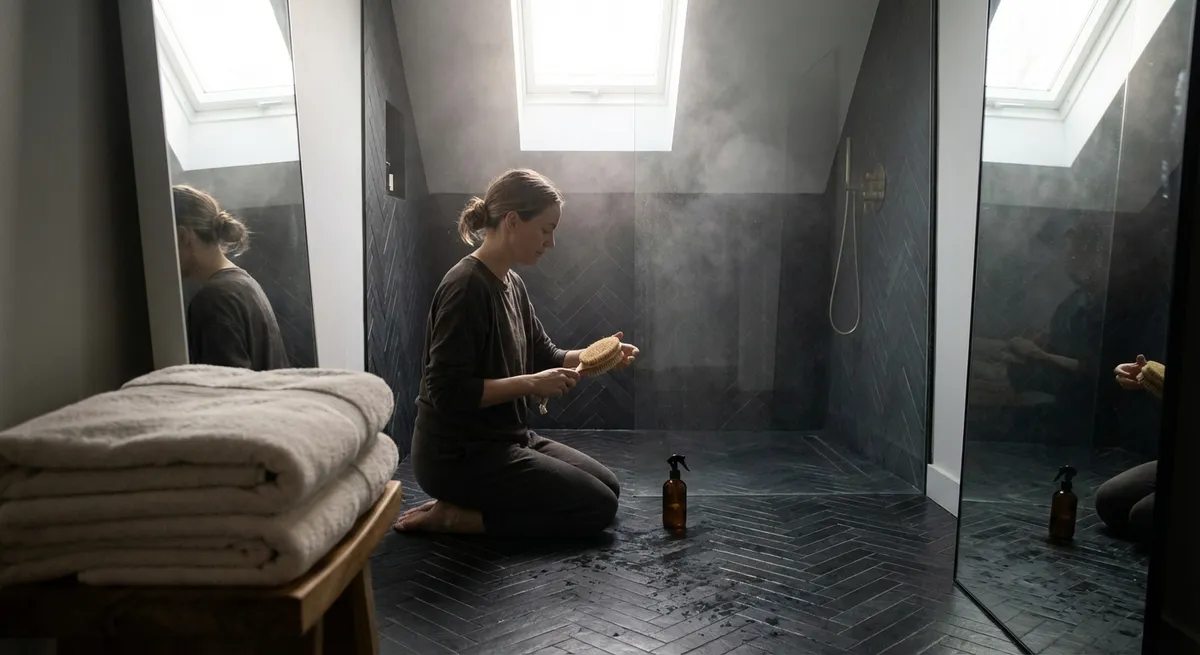
True tile maintenance is an art of observation and restraint. It’s knowing when to intervene, when to leave well enough alone, and how to anticipate problems long before they become visible. The following five insights go beyond basic cleaning advice, offering a more elevated, curator-level approach to caring for your tile so it looks considered—not merely maintained—for years to come.
Treat Grout as a Design Element, Not a Afterthought
In many homes, grout is an invisible workhorse—noticed only when it stains or cracks. In a premium setting, grout is part of the composition, as critical to the visual rhythm of the floor or wall as the tile itself. Maintaining this design element begins with understanding its vulnerability: grout is porous, slightly textured, and often lighter than the tile, making it the first place everyday life leaves a mark. Regularly vacuuming or sweeping before mopping prevents abrasive particles from being ground into grout lines, which leads to premature dulling and embedded discoloration.
Invest in periodic grout-specific cleaning, not just overall floor washing. A pH-neutral cleaner paired with a soft-bristled brush allows you to address lines without scuffing tile faces or weakening the joints. For high-traffic areas, an annual or biannual professional-level grout refresh can restore sharp contrast and definition, almost like re-framing a piece of art. Finally, consider maintaining a small touch-up kit with the original grout or a color-matched equivalent—addressing hairline voids or pinholes early keeps the grout lines visually continuous and structurally sound, preserving that tailored, intentional look.
Respect the Finish: Honed, Polished, and Textured Surfaces Need Different Care
Not all tile surfaces age gracefully in the same way. Honed stone, polished porcelain, and textured or structured tiles each respond differently to cleaning agents, light, and traffic. Honed finishes favor a soft-matte elegance that diffuses light; overly aggressive cleaners or abrasive pads can create shiny “hot spots” that break this visual calm. For these surfaces, prioritize non-acidic, pH-neutral products and microfiber tools that clean without burnishing. Periodically step back and look across the surface at a low angle—this reveals uneven wear or cleaning patterns that may not be visible from above.
Polished tiles, on the other hand, act almost like mirrors. They reveal streaks, product residue, and even the pattern of your mop strokes. For these spaces, less is more: minimal product, clean water, and well-rinsed, high-quality microfiber pads help to maintain clarity and reflection. Textured or structured tiles—such as outdoor-inspired ceramics or anti-slip shower floors—capture more debris in their micro-relief. Instead of scrubbing harder, clean more intelligently: use a soft brush in multiple directions and slightly warmer water to release embedded particles, and always finish with a thorough rinse to prevent detergents from settling into texture and dulling the intended depth.
Build a Seasonal “Tile Audit” Into Your Home Routine
Luxury tile rarely fails overnight; it telegraphs its needs in quiet, subtle ways. Making a seasonal tile audit part of your home care rhythm transforms maintenance from crisis management into gentle, proactive stewardship. Once each season, move beyond a quick glance and spend ten deliberate minutes in each tiled space with intent: look for hairline cracks at corners, faint darkening around grout joints, fine scratches near thresholds, and any change in the way the surface reflects light.
Check transitions between materials—tile to wood, tile to carpet, tile to metal thresholds—where small movements can stress grout or caulk lines. In wet zones, inspect for early signs of moisture migration: slightly discolored grout, soft or missing caulk in corners, or a persistent dampness after use. Document what you see with quick photos; subtle changes over time become far easier to detect when you can compare seasons. By treating this as a calm, recurring ritual rather than a chore, you not only catch issues early but also cultivate a deeper familiarity with your surfaces, much like a collector who knows every nuance of a beloved piece.
Protect High-Value Areas With Invisible Habits, Not Obvious Hardware
In refined interiors, visible “protection”—bulky mats, clunky door trays, or plastic guards—often undermines the very elegance the tile was chosen to enhance. Instead, think in terms of invisible habits and discreet safeguards. At entryways, specify slim, well-made rugs with high-quality backings that won’t mark the tile and are proportioned to the space, so they feel intentional rather than provisional. Rotate or flip them periodically to distribute wear and prevent subtle shading differences on surrounding tile.
Where chairs, barstools, or dining tables rest on tile, skip generic felt pads that compress and collect grit; opt for high-density, furniture-grade glides suited to tile and replace them on a set schedule, not just when they fail. In kitchens, establish a “drop zone” for heavy cookware away from tiled corners or exposed edges—teaching yourself and guests where to place items, not merely where not to. In showers and baths, consider streamlined corner shelves or ledges designed into the original layout so bottles don’t perpetually sit in pooled water on the floor tile, causing long-term spotting or etching. The most luxurious tile care is often barely visible—felt in how well the surface ages, rather than seen in obvious defensive accessories.
Curate Your Cleaning Products Like You Curate Your Finishes
A sophisticated tile installation deserves an equally curated approach to the products used on it. Many off-the-shelf cleaners are designed for speed, not longevity, and can gradually strip sealers, cloud polished surfaces, or leave residues that attract more dirt than they remove. Build a compact, intentional kit rather than a crowded cabinet: a trusted pH-neutral cleaner suitable for tile and stone, a dedicated grout cleaner, a soft-bristle brush, and high-quality microfiber tools are usually all that’s needed for routine care.
If your home includes natural stone—marble, limestone, travertine—treat it as a specific material category with its own rules. Avoid anything labeled as lime scale remover, vinegar-based, or “extra strength degreaser” on these surfaces, even if they promise a fast shine. Instead, speak with your tile installer or supplier and record exactly which sealers and products they recommend for your particular tile and grout combinations. Store this information with your home documents, just as you would appliance manuals or paint colors. When you or a housekeeper reach for a cleaner, you’re no longer guessing; you are following a tailored regimen aligned with the investment you’ve made in your finishes.
Conclusion
Elegant tile work is not maintained by chance—it is preserved through quiet, thoughtful routines that respect both the material and the design intent behind it. By treating grout as part of the composition, tailoring care to each finish, conducting seasonal audits, relying on subtle protective habits, and curating your cleaning products with intention, you elevate tile care from basic upkeep to an ongoing act of refinement.
In doing so, your floors and walls don’t simply remain “in good condition.” They continue to express the same calm luxury and considered detail that made you choose them in the first place—every day, underfoot and in plain sight.