Below, you’ll find five exclusive, elevated insights—subtle but powerful shifts in how you care for tile—that extend the life, elegance, and performance of your surfaces.
1. Read Your Tile Like a Material Map, Not a Monolithic Surface
Most homeowners treat a tiled surface as a single entity. In reality, a tile installation is a tapestry of distinct materials—tile body, glaze or surface treatment, grout, underlayment, and sometimes sealers—each with its own maintenance needs.
Start by “mapping” the materials in your space. Is your floor a dense porcelain with epoxy grout, or a handmade ceramic with cementitious grout? Is your bathroom wall tile glazed or unglazed? Does your kitchen floor include natural stone inlays or borders that require different care than the field tile?
This mapping serves two purposes. First, it refines your product choices—cleaners, pads, sealers—so each material receives what it actually needs instead of a one-size-fits-all approach that risks damage. Second, it enables targeted prevention: a honed marble inlay, for example, might warrant a slightly different cleaning cadence or protective rug placement than the surrounding porcelain. When you understand your installation as a system rather than a single surface, your maintenance becomes more surgical, less brute force—and the results show.
2. Elevate “Clean” to “Controlled Micro-Abrasion Management”
Most tile failure in refined interiors is not dramatic—it’s incremental. Micro-scratches from grit, overly aggressive pads, and harsh cleaners slowly dull glazes, erode sealers, and open invisible pathways for staining. The goal is no longer simply “getting it clean”; it is controlling micro-abrasion.
Think in three layers:
- Dry defense first. Use high-quality entry mats and regular vacuuming (with a soft floor head) to lift abrasive grit before it’s ground into the surface. This single habit can significantly extend the life of gloss glazes and polished stone.
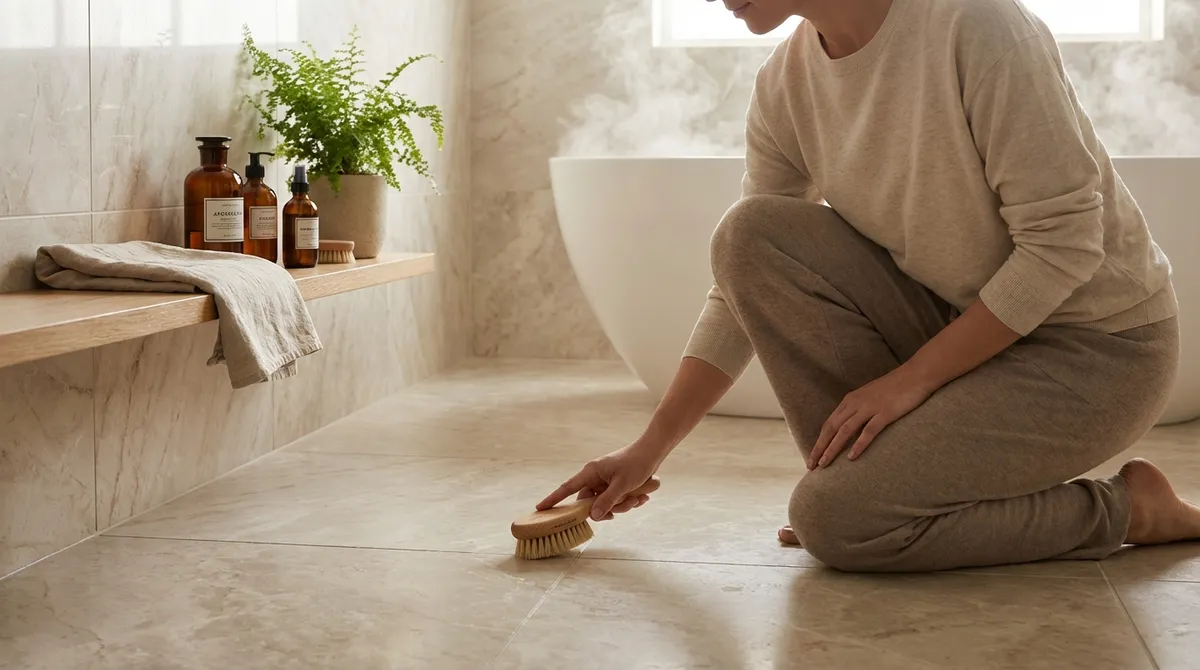
- Soft tools, low friction. Replace stiff-bristle brushes and abrasive pads with microfiber mops, soft bristle brushes, and non-scratch scrubbing tools. Reserve more aggressive pads only for specific, localized issues, never general cleaning.
- pH-awareness as a rule, not a suggestion. Daily and weekly care should rely on neutral pH cleaners appropriate for your tile type. Acids and alkalis have their place—removing mineral deposits or stripping residues—but must be used selectively and precisely, especially around natural stone and cement-based grout.
Adopting a micro-abrasion mindset turns cleaning into a conservation practice, protecting both the tangible structure and the intangible sense of “newness” that refined homes strive to preserve.
3. Design a Maintenance Calendar that Mirrors Your Home’s Rhythm
High-end tile work deserves something more elegant than sporadic, crisis-based maintenance. The most successful homeowners treat tile care like a well-orchestrated schedule, quietly integrated into their lifestyle rather than added as an afterthought.
Consider a tiered cadence:
- Daily: Light touch—spot-clean spills immediately (especially on stone and light grout), quick microfiber pass in traffic zones, a soft towel in showers to minimize water spots and soap residue.
- Weekly: A neutral pH clean of floors and heavily used walls (kitchen backsplashes, shower walls), plus a quick visual inspection of corners, transitions, and expansion joints for early signs of stress.
- Quarterly: A more deliberate examination—check grout lines for hairline cracks, inspect caulked joints for separation or discoloration, assess any sealers (especially on stone) for water repellency, and adjust door mats or furniture pads as needed.
- Annually or Biannually: Engage a professional for deeper-level maintenance where appropriate: steam-cleaning grout, carefully re-sealing stone, or addressing localized staining with professional-grade products and equipment.
This calendar is not rigid; it’s responsive. A busy kitchen with children and pets will call for a different tempo than a seldom-used powder room. The sophistication lies in aligning care not with arbitrary rules, but with how the space is genuinely lived in.
4. Treat Grout and Joints as the Architectural “Soft Tissue”
In considered interiors, the eye is often drawn to the tile itself—its color, finish, format. Yet the longevity of that tile is frequently determined by the least glamorous component: the grout and expansion joints. Grout is the “soft tissue” of your installation, and how you maintain it directly influences structural stability and hygiene.
Begin by learning which type of grout you have: cementitious, epoxy, or a modern hybrid. Cement-based grouts are more porous and responsive to sealers, while epoxy grouts prioritize stain and chemical resistance but require different cleaning tolerances. Tailor your regimen accordingly.
Visually monitor joints where planes meet—wall-to-floor, wall-to-wall, and tile-to-tub. Tiny gaps or hardened, cracked caulk may seem minor, but they are often the first signal of movement, moisture intrusion, or substrate stress. Replacing a failing caulk joint promptly, or addressing localized grout cracking, costs little compared to rectifying water penetration behind tile.
Think of grout and flexible joints as your early-warning system. When maintained with the same intentionality you apply to visible finishes, they quietly safeguard the installation’s integrity, comfort, and cleanliness.
5. Align Products and Techniques with the Design Intent, Not Just the Material
Luxury tile installations are often driven by a deliberate aesthetic intent: a matte, gallery-like floor that diffuses light; a high-gloss wall that mirrors candlelight; or a subtly textured stone that feels organic underfoot. Maintenance that ignores this design intent can slowly reshape the space into something it was never meant to be.
A few understated but impactful strategies:
- Respect sheen. Glossy tiles benefit from streak-free, low-residue cleaners and tools that do not introduce fine swirls or haze. Matte tiles, by contrast, may reveal residues more readily if cleaners are not well-rinsed or are overly concentrated.
- Honor patina versus purity. Some homeowners welcome soft patina on certain stones; others desire a consistently crisp, “gallery clean” effect. Decide your preference in advance and choose maintenance products accordingly—solvent-based sealers, aggressive stain removers, or strong alkalines can all shift a surface’s character over time.
- Protect edges and transitions. Bullnoses, miters, and decorative trims are especially vulnerable to chips and abrasions that compromise the installation’s sense of precision. Use felt pads on movable furniture, ensure door sweeps are properly adjusted, and avoid dragging objects across thresholds and transitions.
- Trial before commitment. For any new maintenance product or technique, test in a discreet corner. Observe not only cleanliness, but whether the finish, sheen, or tactile quality has shifted in a way that works against the room’s design language.
By aligning your care regimen with the original design vision, you’re not merely maintaining tile—you’re preserving the space’s emotional and visual coherence.
Conclusion
Exquisite tile installations are not sustained by chance; they are protected by quiet, intelligent rituals. When you understand your surfaces as a system of distinct materials, manage micro-abrasion thoughtfully, choreograph a maintenance rhythm, respect the “soft tissue” of grout and joints, and honor the design intent in every product choice, your tile stops aging and starts evolving.
In the most refined homes, tile does something rare: it looks better in its tenth year than in its first—seasoned, deliberate, and impeccably cared for. That transformation is not magic. It is maintenance, elevated to an art.
Sources
- Ceramic Tile Education Foundation – Tile Maintenance Guidelines – Professional insights on proper care and product selection for tile and grout
- MAPEI – Grout Types and Care – Technical information on different grout technologies and their maintenance needs
- U.S. General Services Administration – Historic Ceramic and Stone Tile Maintenance – Federal guidance on preserving tile and stone surfaces in high-value buildings
- Henry Ford Health – Safe Household Cleaning Products – Overview of cleaning chemistries, pH, and safe use in home environments
- University of Massachusetts Amherst – Cleaning Products and Surfaces – Educational discussion of cleaning, sanitizing, and the impact of various products on different materials