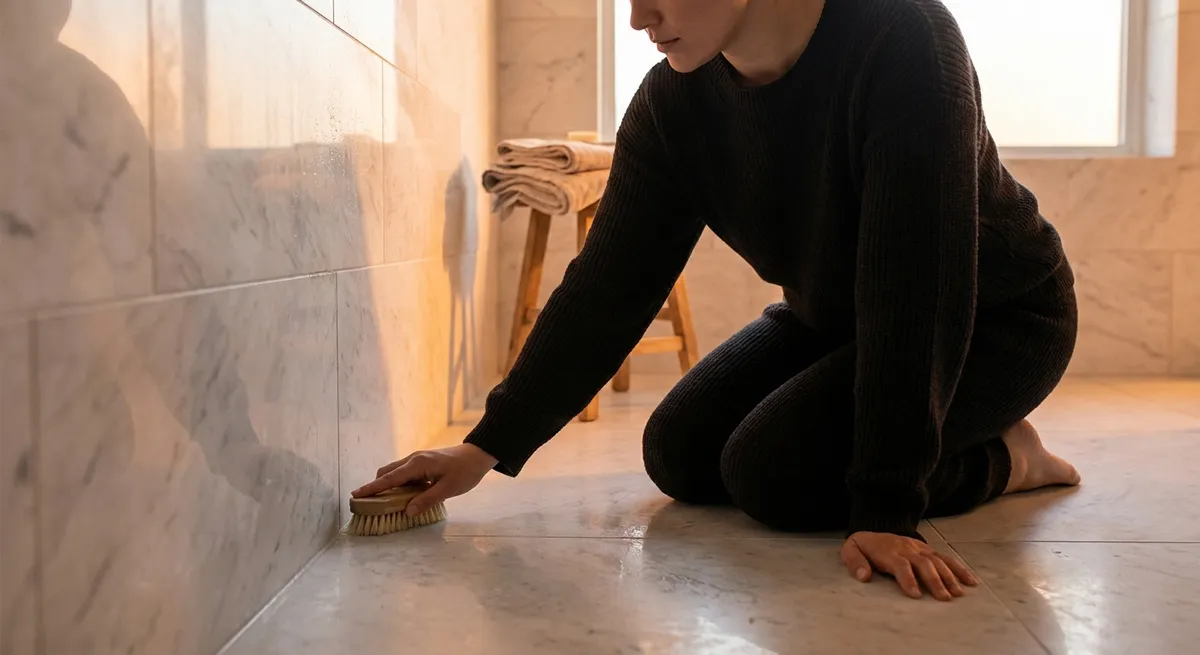
What follows is a maintenance philosophy designed for homeowners who expect their tile to age gracefully, not merely endure. These are not generic cleaning tips, but five exclusive insights that preserve precision lines, luminous finishes, and the understated luxury of a perfectly maintained surface.
Understanding Tile as a System, Not a Surface
Exquisite tile work is never just about the tile itself. It’s a carefully calibrated system of substrate, adhesive, grout, and, where appropriate, sealers—each layer influencing how the surface responds to daily life.
Ceramic and porcelain are generally less porous and more forgiving, yet their grout joints remain vulnerable to staining and moisture migration. Natural stones—marble, limestone, travertine, and others—offer unmatched character, but are fundamentally more reactive. Acids, oils, and even improperly formulated cleaners can etch or dull their finish in a single careless pass.
Seeing your tile installation as a system changes the way you maintain it. You’re no longer simply “cleaning the floor” or “wiping the shower.” Instead, you’re managing moisture exposure, protecting grout integrity, and preserving finishes that were carefully selected for texture, sheen, and depth of color. The goal is not sterility, but a cultivated patina—elegantly maintained, never neglected.
Insight 1: Curate a Dedicated Tile Care Arsenal (and Retire the Harsh Chemicals)
Refined tile care begins not with elbow grease, but with editing: removing any product under your sink that promises “industrial strength,” “acid power,” or “no-scrub” miracles. Those formulas are engineered for speed, not for the preservation of premium materials.
A sophisticated tile-care kit should be intentionally limited yet precise:
- pH-neutral cleaner specifically labeled safe for tile and stone. This should be your default for routine maintenance.
- Soft microfiber mop heads and cloths reserved solely for tile areas to avoid introducing grit from other rooms.
- Non-abrasive scrubbing pads (white or light-colored), never scouring pads with embedded abrasives.
- Stone-specific cleaner, if you have marble, limestone, or other calcareous stone, to avoid slow, cumulative etching.
- Grout-safe spot cleaner for targeted stain work, particularly in kitchens and entryways.
Once this system is in place, the key is consistency, not intensity. Gentle, regular cleaning preserves everything your installer calibrated: grout color uniformity, edge crispness, and nuanced surface sheen. Harsh cleaners, used even occasionally, can undo meticulous craftsmanship in a matter of minutes.
Insight 2: Respect the “Invisible Architecture” of Grout Lines
In a finely detailed installation, grout is not filler; it’s part of the design language. Joint width, color, and texture all contribute to the visual rhythm of the space. Yet grout is also the most vulnerable component of the entire assembly.
To maintain that invisible architecture:
- Prioritize dry maintenance first. Frequently vacuum or sweep with a soft-bristle attachment before any wet cleaning. Grit left on the surface acts like sandpaper on grout joints.
- Mop with precision, not saturation. Excess water left standing on grout accelerates discoloration and can gradually weaken the matrix. Use a well-wrung mop and work in smaller sections.
- Blot spills at the joint level. For wine, coffee, or oil, go directly to the grout line with a clean, dry cloth, then follow with a targeted, grout-safe cleaner. Rubbing aggressively pushes pigment deeper into the pores.
- Schedule seasonal inspections. Twice a year, inspect grout under natural daylight. Look for hairline cracking, localized darkening, or areas that appear chalky or powdery—early cues that a discreet, small-scale intervention is preferable to a future overhaul.
By treating grout lines as architectural elements rather than background texture, you preserve the clean geometry and visual discipline that defines high-quality tile work.
Insight 3: Make Sealer Part of Your Calendar, Not an Afterthought
If your home includes natural stone or cement-based tiles, sealing is not merely recommended; it is foundational to their longevity and beauty. Yet even for porcelain and ceramic, grout sealing can dramatically extend the crisp, uniform look of a newly finished installation.
A refined sealer strategy includes:
- Selective sealing based on material. Polished porcelain may not require it, but grout and most natural stones typically do. Always follow manufacturer guidance for your exact material and finish.
- A defined re-application schedule. Instead of waiting for obvious staining, mark your calendar: high-traffic kitchens and entryways every 12–18 months; lower-traffic powder rooms or guest baths every 18–24 months, or per product specification.
- The water-drop test. Once or twice a year, place a few drops of water on the surface and grout. If they darken the material quickly instead of beading on top, your sealer is likely past its prime.
- Meticulous surface prep. Sealer locks in whatever is present—dust, faint stains, cleaning residues. Before re-sealing, ensure the surface is absolutely clean and fully dry, often for 24 hours or more, especially in showers and around sinks.
This measured, scheduled approach transforms sealing from a reactive chore into a deliberate act of preservation, protecting the tonality, clarity, and tactile quality of your chosen materials.
Insight 4: Calibrate Cleaning to the Room’s “Moisture Profile”
Sophisticated tile maintenance is never one-size-fits-all; it responds to how each room lives and breathes. A steam-filled primary bath, a sunlit kitchen with daily cooking, and a seldom-used guest suite all impose different demands on the same materials.
Consider how environment guides your rituals:
- Bathrooms and showers. Here, the enemy is prolonged moisture. After each use, a quick pass with a squeegee across walls and glass, followed by running the exhaust fan for at least 20 minutes, dramatically reduces mildew pressure on grout and caulk. Weekly, use a pH-neutral cleaner, never bleach-based products on stone or colored grout.
- Kitchens. Oils, acids, and pigments dominate. Wipe spills immediately—particularly tomato sauces, citrus, wine, coffee, and turmeric. Use trivets and cutting boards religiously, especially on stone. Focus maintenance near cooktops, sinks, and dishwashers where micro-splatters accumulate unnoticed.
- Entryways and mudrooms. Grit is the main threat. Use high-quality walk-off mats at exterior doors and maintain a rigorous vacuuming schedule. This is where a sealed grout line pays real dividends; it resists embedded dirt and retains its intended color.
- Low-traffic, showcase areas. A more delicate touch is possible here—less frequent washing, more occasional dusting and spot cleaning, preserving the unhurried, gallery-like feel of a beautifully tiled space.
By matching your maintenance habits to each area’s “moisture profile” and use pattern, you maintain cohesion throughout the home while quietly responding to the subtle stresses each room imposes on your tile.
Insight 5: Protect the Micro-Details That Signal True Craftsmanship
In a premium installation, the details that separate “nice” from “remarkable” are often almost imperceptible: perfectly aligned transitions, gently eased edges, unfussy baseboard intersections, or a barely-there slope to a shower drain. Maintenance should respect and protect these micro-details.
Attention to these refined elements includes:
- Transitions and thresholds. Treat these as high-sensitivity zones. Avoid dragging luggage, furniture, or heavy baskets across them. When cleaning, do not let dirty water pool at thresholds—it can wick into grout or under trims over time.
- Edges and corners. These are more prone to chipping, particularly on natural stone. Use softer tools, avoid hitting them with vacuum heads or metal step stools, and consider felt or rubber bumpers where hard objects frequently meet tile.
- Metal trims and inlays. Brass, stainless, or aluminum accents require compatible cleaners; a stone-safe, pH-neutral product is typically the safest universal choice. Avoid glass or metal polishes that may drip onto adjacent grout or stone.
- Movement joints and caulked seams. Inspect seasonal expansion joints in large floors and flexible caulk in showers or where tile meets tubs and countertops. Early detection of cracking or separation allows subtle, almost invisible repairs before water intrusion or more noticeable damage occurs.
These seemingly small considerations maintain the original language of the installation—the straightness of lines, the clarity of transitions, the exactness of edges. Over years, this is what separates tile that merely survives from tile that continues to look intentionally curated.
Conclusion
True luxury in tile is revealed not by how a surface looks on the day it’s installed, but by how it presents itself, quietly and confidently, a decade later. When maintenance moves beyond generic cleaning and becomes an informed, almost ceremonial practice, tile stops being a background material and becomes an enduring architectural asset.
By curating a dedicated care arsenal, respecting grout as design, scheduling sealer with intention, calibrating routines to each room’s environment, and defending the micro-details of craftsmanship, you honor both the material and the hands that installed it. The reward is a home where every tiled surface continues to feel precise, composed, and effortlessly refined—day after day, year after year.
Sources
- Natural Stone Institute – Caring for Natural Stone – Guidance on proper cleaning, sealing, and protection of natural stone surfaces.
- Tile Council of North America (TCNA) – Grout & Cleaning FAQs – Technical insights into grout performance, cleaning practices, and tile system behavior.
- U.S. General Services Administration – Historic Tile & Terra Cotta Maintenance Brief – Best practices for preserving and maintaining tile in high-value settings.
- University of Tennessee Extension – Selecting & Caring for Ceramic Tile – Practical, research-based recommendations on tile selection, cleaning, and long-term care.
- Mapei – Guide to Sealing and Protecting Grout and Tile – Manufacturer guidance on sealers, grout protection, and maintenance strategies.