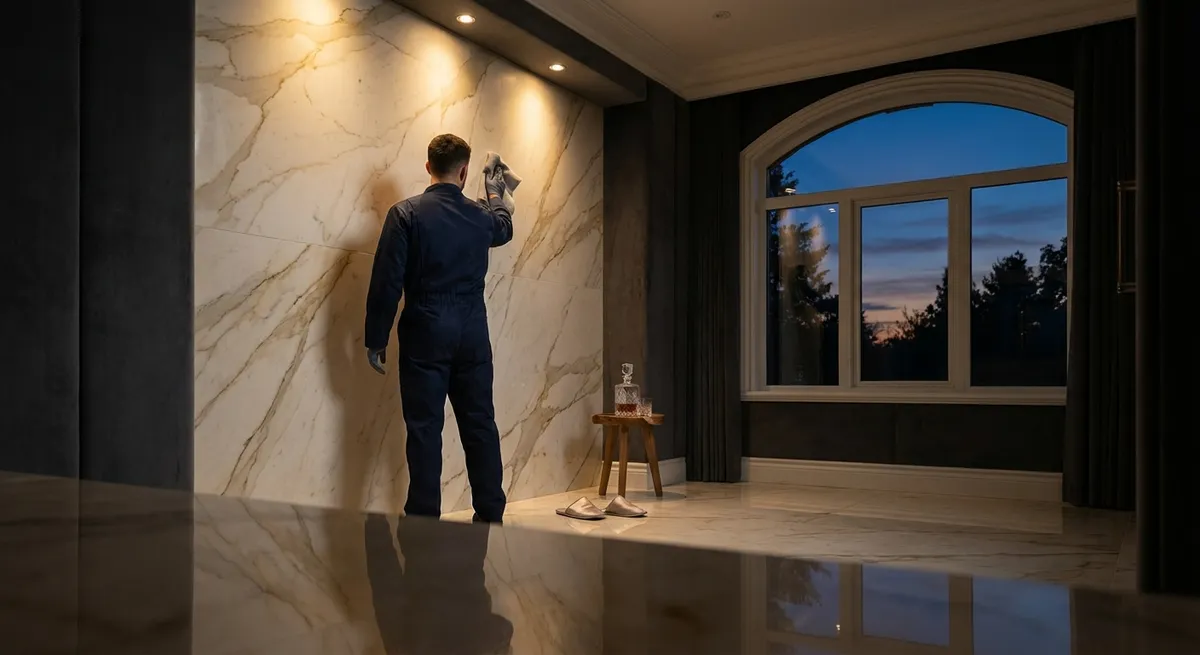
Below are five exclusive insights that move beyond basic “mop and bucket” advice and into the realm of discreet, high-performance tile care—designed for homeowners who expect their finishes to look composed and intentional for decades.
1. Curating a “Tile Wardrobe” of Cleaners by Material and Finish
Elegant tile maintenance begins with the understanding that there is no universal cleaner that respects all surfaces equally. A polished marble foyer, a honed limestone bath floor, and a rectified porcelain kitchen tile each respond differently to pH, surfactants, and abrasives. Treating them identically is the fastest path to dullness, etching, and premature aging.
For natural stone such as marble, limestone, and travertine, neutral pH cleaners are non‑negotiable. Even mildly acidic solutions—think vinegar or citrus-based products often touted as “natural”—can imprint subtle etch marks that flatten the stone’s optical depth. Porcelain and ceramic, by contrast, can typically tolerate a broader range of pH, but glossy glazes and metallic or luster finishes are still vulnerable to harsh chemistry and scouring pads.
Consider building a “tile wardrobe” of products, each carefully chosen for a specific surface and finish. Label them discreetly by room or material: “Primary Bath Stone,” “Kitchen Porcelain,” “Outdoor Porcelain Paver.” This simple refinement prevents the common error of grabbing whatever is closest and ensures every tile is treated according to its inherent characteristics. Over years, this curated approach preserves clarity of grout lines, crispness of edges, and the nuanced reflectivity that signals true quality.
2. Protecting Grout as a Design Element, Not a Construction Detail
In a sophisticated interior, grout is not merely filler; it is a graphic element that determines how the eye reads the surface—either as a seamless field or as a rhythmic pattern. When grout darkens, discolors, or erodes, the tile work loses its original composition, even if the tiles remain intact.
The most effective grout maintenance strategies are both preventive and aesthetic. Sealing cementitious grout with a high-quality penetrating sealer is an obvious step, but the refinement lies in timing and reapplication. Grout in a steam shower or busy kitchen floor may require resealing as often as every 12–18 months, whereas a low-traffic powder room might go several years between treatments. Rather than relying on guesswork, test by placing a small droplet of water on the grout: if it darkens quickly, your sealer is no longer providing meaningful protection.
Resist the temptation to “brighten” grout with overly aggressive cleaners or bleach solutions, which can weaken the joints and create an uneven, blotchy appearance. For persistent discoloration, a professional grout colorant—meticulously matched to the original shade—can restore visual uniformity and extend the life of the installation without the upheaval of regrouting. This elevated approach treats grout with the same intentionality as the tile itself, preserving the overall composition rather than merely spot-fixing a problem.
3. Controlling Micro-Abrasion: How Fine Dust Quietly Dulls Luxury Floors
In high-end interiors, visible scratches are surprisingly rare; the more common culprit is micro-abrasion—gradual, almost invisible wear caused by fine grit and dust acting like sandpaper underfoot. Over time, this diminishes the crisp reflection on polished porcelain and subtly clouds natural stone, especially in high-traffic axes such as entries, kitchen work zones, and corridors.
The most effective defense is not a stronger cleaner, but smarter interception. High-quality walk-off mats at entries—ideally with both a scraping surface and a softer textile layer—capture the majority of abrasive particles before they reach the tile. The difference between an ordinary floor and one that maintains its “newly installed” authority for years often comes down to a few extra steps of controlled foot traffic.
Inside the home, a gentle but regular dry maintenance routine is essential. Soft-bristle brooms or microfiber dust mops are kinder to tile surfaces than stiff bristles or low-quality tools that can themselves cause micro-scratching. Vacuuming is acceptable, but only with a hard-floor attachment and a canister or stick design that glides cleanly; rotating brush rolls intended for carpets can be unnecessarily aggressive. The goal is to remove abrasive particles before they are ground into the surface—not to scrub them across it.
4. Managing Water and Steam: Quiet Defense Against Haze, Etching, and Efflorescence
Water is the primary antagonist of refined tile work—not through floods and leaks alone, but through the everyday presence of moisture, minerals, and steam. Over time, these can create cloudy films, mineral deposits, and subtle surface changes that diminish the clarity and depth of both tile and grout.
In bathrooms and steam showers, the discipline of controlled drying is transformative. A simple but consistent ritual—wiping down glass, tile walls, and horizontal surfaces with a squeegee or soft microfiber cloth after use—prevents mineral-rich water from evaporating in place and leaving behind spots and haze. Adequate ventilation, whether through an appropriately sized exhaust fan or operable windows, accelerates drying and reduces the risk of mold in grout joints and silicone transitions.
On floors, be mindful of standing water from cleaning or small spills. Long-term exposure can encourage efflorescence (salts migrating to the surface) in cement-based grout and certain stone installations. Using slightly damp, well-wrung mops rather than overly wet methods helps protect the substructure and prevents moisture from lingering in the assembly. For households with hard water, consider a whole-home water softener or point-of-use filtration in spaces with delicate stone; such systems significantly reduce the mineral load responsible for stubborn residues and spotting.
5. Periodic “Reset” Treatments: Recalibrating Surfaces Without Over-Cleaning
The final refinement in elite tile maintenance is recognizing when a surface needs a true reset rather than more frequent everyday cleaning. Over-washing with even gentle products can, over time, leave behind surfactant films that attract dirt, dull finishes, and make soil appear to “re-stick” quickly—even on otherwise immaculate floors.
A reset treatment is not a deep scrub in the traditional sense, but a carefully planned, low-disruption recalibration. For many porcelain and ceramic floors, this may mean an occasional, professionally guided clean with an alkaline detergent designed to cut through accumulated residues, followed by a thorough clear-water rinse. For natural stone, the reset may be a professional honing and polishing service every decade or so, restoring the luminous surface without over-thinning the stone.
The key is restraint and precision: reset interventions should be infrequent, deliberate, and focused, not routine. During these sessions, details such as grout joint inspection, movement joint condition, and sealant integrity can be quietly evaluated. By treating these resets as scheduled “health checks” rather than emergency corrections, you maintain the original design intent and tactile quality of the tile while avoiding the cycle of harsh cleaning in response to preventable build-up.
Conclusion
Exceptional tile work is not defined solely by the day it is installed, but by how convincingly it holds its composure over time. When maintenance is elevated from a chore to a considered practice—tailored cleaners, protected grout, control of micro-abrasion, disciplined moisture management, and occasional strategic resets—tile surfaces retain their architectural calm and visual clarity for decades.
In the most refined homes, the luxury is not just in the materials chosen, but in the fact that they continue to look as though someone cares deeply about them. Thoughtful tile maintenance ensures that every step, every reflection, and every line of grout continues to affirm that impression.
Sources
- Natural Stone Institute – Care and Cleaning of Natural Stone - Authoritative guidance on appropriate cleaners, sealing, and long-term care for natural stone surfaces.
- Tile Council of North America (TCNA) – Ceramic Tile Care and Maintenance - Technical recommendations for maintaining ceramic and porcelain tile, including cleaning practices and product considerations.
- U.S. General Services Administration – Marble and Stone Maintenance Guidelines - Government-issued procedures for cleaning and preserving stone finishes in high-traffic, high-end environments.
- University of Florida IFAS Extension – Hard Water and Scale Buildup - Explains mineral deposits from hard water and their impact on surfaces, helpful for understanding spotting and haze on tile.
- Marmomacchine Magazine – Professional Maintenance of Stone Surfaces - Industry-focused publication offering technical insight into stone surface restoration, honing, and polishing best practices.