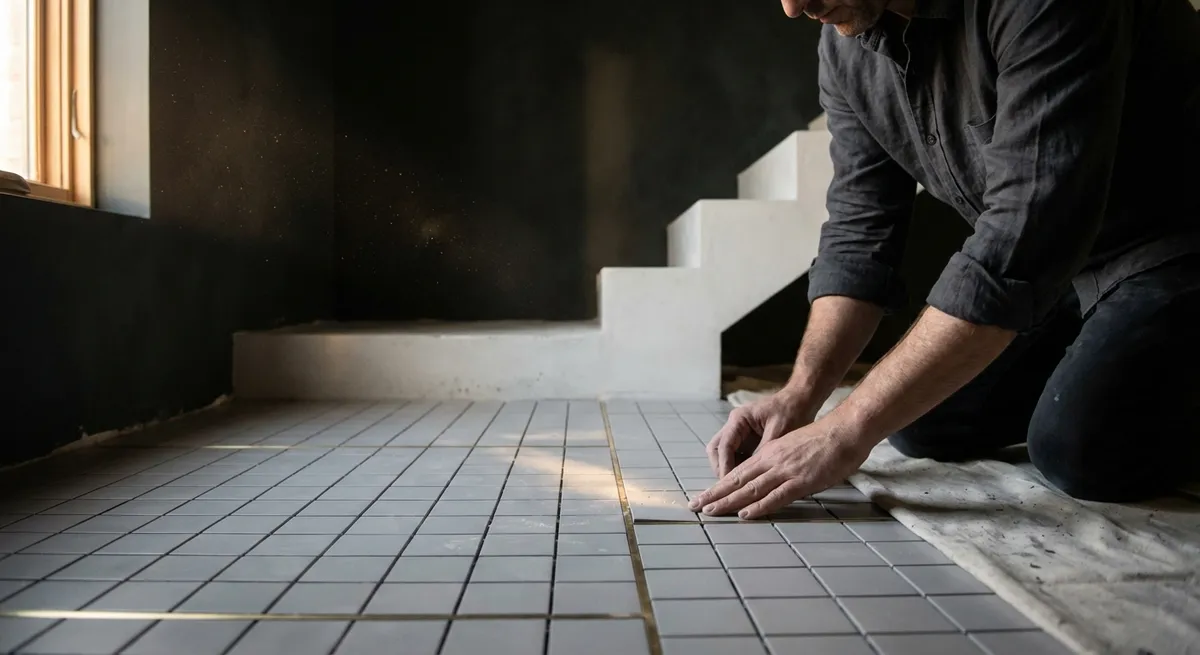
This guide explores tile installation from a perspective usually reserved for architects and high-end builders, distilled into five exclusive insights homeowners can use to confidently direct their projects and demand a higher standard of work.
Understanding Tile as an Architectural Element
Most homeowners think of tile as a finish; serious professionals treat it as part of the architecture. The tile plane—floors, walls, even ceilings—is a visual field that interacts with light, lines, and sightlines in the home. When you view tile this way, you stop choosing it like a decorative accessory and start orchestrating it like a core design component.
Consider how a tiled floor meets baseboards, thresholds, and built-ins. Think about what you see from the entry door, from your favorite armchair, or while standing at the kitchen island. A thoughtful layout makes grout joints align with key architectural features: door centers, window mullions, the centerline of a vanity or range, or the axis of a hallway. The result is a feeling of calm order that guests may not consciously identify, but always perceive.
This shift—from “What tile do we like?” to “How does the tile field live within the architecture?”—is the foundation of truly premium tile installation.
Hidden Precision: The Substrate as Your Silent Luxury
The most luxurious tile installations rarely call attention to themselves. They lie perfectly flat, edges are crisp, and light glides across surfaces without distortion. That level of quiet perfection is determined by the substrate: the unseen layers beneath the tile.
High-end installers treat substrate preparation like a precision craft. They check for flatness with long straightedges, not just a quick glance. Deviations of even a few millimeters matter, especially with large-format tiles or polished stone. Self-leveling underlayments, cement backer boards, uncoupling membranes, and properly installed waterproofing systems are not “extras”; they’re the support structure for a flawless finish.
As a homeowner, your advantage lies in the questions you ask. Before a tile is set, request:
- A flatness check for floors and walls, especially in large-format tile areas.
- A clear explanation of the underlayment or membrane system being used—and why.
- Confirmation that waterproofing meets or exceeds manufacturer and industry standards in showers and wet rooms.
When you invest in the substrate, you’re not paying for something you’ll never see—you’re paying for the absence of lippage, cracks, and future repairs.
Grout as a Design Instrument, Not an Afterthought
In many projects, grout is chosen at the last minute, usually from a tiny sample card under fluorescent store lighting. In refined installations, grout is treated as part of the composition, on equal footing with the tile itself.
Two decisions shape the entire character of a tiled surface: grout color and joint width. A tone-on-tone grout (closely matched to the tile) creates a seamless, monolithic effect, ideal for minimalist and contemporary interiors. A subtly contrasting grout emphasizes pattern, shape, and layout—particularly striking with mosaics, herringbone, or patterned floors.
Joint width, meanwhile, influences both aesthetics and maintenance. Narrow joints suggest precision and elegance but require exceptionally straight tiles and a precise substrate. Slightly wider joints can soften visual lines and accommodate natural stone or handmade tiles with minor sizing variations.
Premium insight: Request a small mock-up with full-size tiles and your proposed grout before final approval. View it in the actual room light at different times of day. You’ll often discover bolder or softer grout choices than you originally imagined, and you’ll avoid regrets set in cement.
Light, Reflection, and the Art of Choosing Tile Finishes
Luxury is often felt rather than seen, and nowhere is that more evident than in the way light interacts with tile. The same tile can feel clinical in one space and sumptuous in another, depending entirely on finish and lighting.
Polished and glossy tiles amplify light and reflection, making spaces feel brighter and more expansive. In powder rooms, feature walls, and formal entries, this can create a striking, gallery-like effect. Yet in large expanses or strongly lit areas, reflected glare and visible imperfections in the substrate become more noticeable. Matte and honed finishes, by contrast, offer a quieter, velvety presence that photographs beautifully and hides minor irregularities.
For homes pursuing a sophisticated, cohesive aesthetic:
- Align tile finish with the room’s purpose: matte or honed for everyday, high-traffic areas; polished or semi-polished for focal walls and formal spaces.
- Consider how natural light moves through the space. East-facing bathrooms, for example, may benefit from softer finishes to avoid harsh morning glare.
- Combine texture and finish strategically—using a subtly textured floor tile with a smoother wall tile—to add depth without visual noise.
When tile is selected with light in mind, your surfaces don’t simply look expensive; they feel atmospheric.
The Elegance of Continuity: Transitions, Thresholds, and Edges
The most telling details in any tile installation are not in the center of the room, but at the edges. This is where true craftsmanship reveals itself: at transitions, terminations, and intersections with other materials.
Thoughtfully executed transitions do three things: protect the tile, respect the architecture, and guide the eye. Consider:
- Room thresholds: Instead of a jarring metal strip, align tiles so the transition between rooms falls on a centered, deliberate line—possibly marked with a stone or wood threshold that feels intentional, not improvised.
- Edge trims: Metal profiles, bullnosed tile edges, or carefully mitered corners each convey a different level of sophistication. In premium spaces, sharp outside corners on shower niches, steps, or columns are often resolved with miters or low-profile edge trims in finishes coordinated with plumbing or hardware.
- Tile-to-wood or tile-to-carpet junctures: Elevation alignment is crucial. Slightly recessed wood abutting a tile floor can look purposeful; a proud tile edge reads as a mistake and invites chipping.
Request a “transition plan” from your installer or designer. This document need not be elaborate, but it should specify how every exposed tile edge and material junction will be treated. These micro-decisions are what separate a standard installation from one that feels architecturally composed.
Exclusive Insight: Designing for Maintenance Without Compromising Luxury
Truly refined interiors balance indulgence with practicality. Tile is often chosen for its durability, but luxury homes go further: they design for maintenance from the start, ensuring that the surfaces remain pristine with minimal visible wear over time.
This begins with selecting the right material for the right location. Porcelain—with its low porosity and high durability—is usually preferable in high-traffic floors and wet zones, particularly behind steam showers or around pools. Natural stone, while magnificent, demands rigorous sealing and more attentive care; in a family kitchen, a high-quality porcelain with stone-like veining may offer the visual depth of marble with far less anxiety.
Grout selection matters equally. Dense, high-performance grouts, or epoxy-based formulations in particular applications, can resist staining and discoloration far better than traditional sanded or unsanded grouts. Large-format tiles minimize grout lines overall, decreasing both visual fragmentation and cleaning effort.
The sophisticated homeowner doesn’t simply ask, “Will this look beautiful when it’s new?” but rather, “How gracefully will this age?” When materials, finishes, and installation methods are chosen with longevity in mind, the space retains its composure—and its value—year after year.
Conclusion
Exceptional tile work is never accidental. It is the result of choices that begin long before the first box of tile is opened: treating tile as architecture, respecting the substrate, orchestrating grout and finish, refining transitions, and designing for long-term grace.
As a homeowner, you don’t need to become an installer to achieve this standard. You simply need to ask better questions, insist on visible and invisible quality, and view each tile surface as a permanent, architectural investment in how your home feels. When every decision is made at this level, the tile quietly recedes into the background—leaving only a sense of refined ease and enduring sophistication.
Sources
- TCNA Handbook for Ceramic, Glass, and Stone Tile Installation – Industry-recognized standards and best practices for tile installation and substrates.
- Schluter Systems – Tile and Stone Installation Systems – Detailed technical guidance on underlayments, waterproofing, transitions, and edge profiles.
- Ceramic Tile Education Foundation (CTEF) – Articles and resources on qualified labor, large-format tile, and proper installation techniques.
- Porcelain Enamel Institute – PEI Ratings Explained – ASTM resource providing context on surface abrasion and durability ratings important in tile selection.
- U.S. General Services Administration – Flooring Guidelines – Government technical notes on flooring performance, durability, and maintenance considerations.