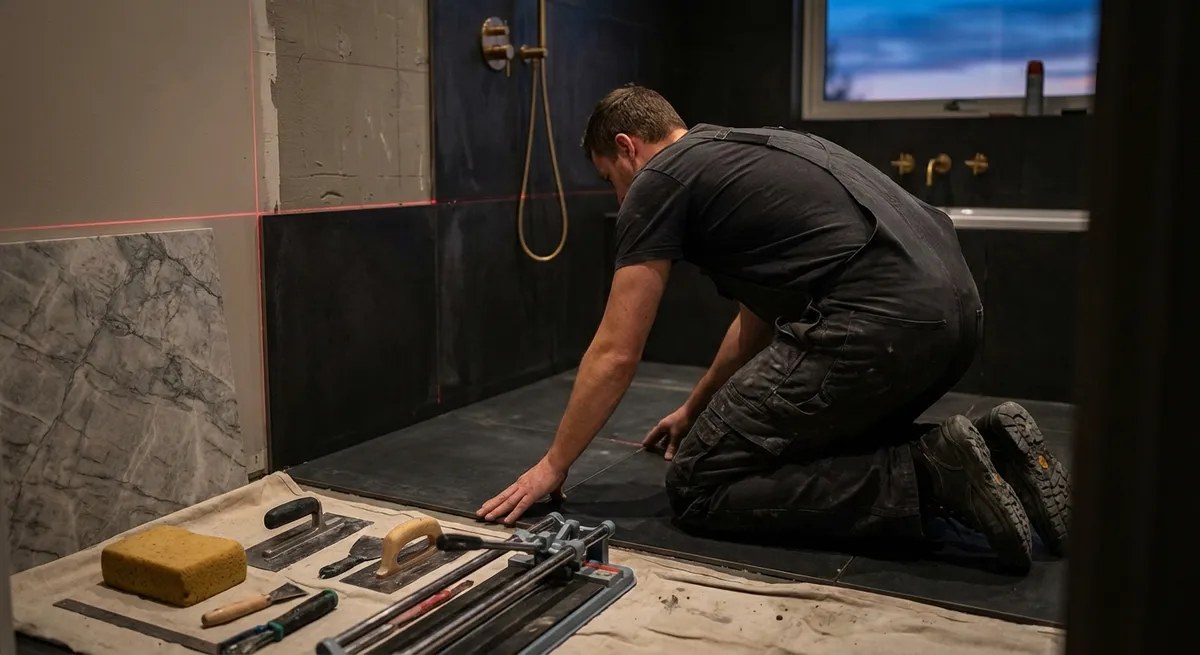
Below are five exclusive, behind‑the‑scenes insights that discerning homeowners should know before the first tile ever touches thinset.
The Invisible Foundation: Substrate as a Design Decision
To the untrained eye, tile begins at the surface. In reality, exceptional tile work begins with what you never see: the substrate. This is not simply a technicality; it is a design decision that dictates how refined your finished surfaces will feel years from now.
A premium installation starts with substrate flatness, not just “level.” For large‑format tile, even a minor dip or crown can telegraph as lippage—a perceptible edge between tiles that catches light and distracts the eye. A sophisticated installer will specify self‑leveling underlayments or precision‑planed mortar beds as needed, then verify flatness with long straightedges, not just a quick glance.
Moisture management is equally non‑negotiable. Wet‑area substrates should be treated as a system—backer board, waterproofing membrane, seams, and transitions that work together. This avoids the unsightly, moisture‑driven issues that undermine even the most expensive tile. When you interview an installer, ask not only what they’re using behind the tile, but why they’ve chosen that particular assembly for your project. Their answer reveals whether you’re getting commodity work or curated craftsmanship.
The Art of the Grid: Layout as Architectural Quiet
The most sophisticated tile installations feel calm because the layout is quietly resolved. This is where a true professional stops acting like a technician and starts thinking like an architect.
Exceptional layout begins with the room’s sightlines, not the nearest wall. A refined installer will align grout joints with key architectural elements—window centers, niche openings, room axes, or transitions between materials—so the tile supports the architecture rather than fighting it. They will avoid “sliver cuts” (narrow, awkward tile pieces) in prominent areas, even if that means adjusting the entire grid.
In premium work, aesthetics often outweigh convenience. Centering the layout on a focal feature—such as a freestanding tub, a fireplace, or a range hood—may require more intricate cutting, but the resulting visual balance is unmistakable. As a homeowner, you should expect a layout plan drawn or dry‑laid on site, with proposed joint locations, focal lines, and cuts reviewed before adhesive is mixed. This is the moment to insist on alignment that will look as considered in ten years as it does on installation day.
Precision in the Margins: Grout, Joints, and the Luxury of Restraint
Tile grabs the spotlight, but grout quietly decides whether the room feels refined or restless. Premium installations treat grout not as filler, but as a designed element—one that controls the visual rhythm of the surface.
Joint width should be intentional, not default. For rectified porcelain or carefully calibrated stone, a narrower joint can create a sleek, monolithic effect, but only if the substrate, tile quality, and cutting precision truly support it. For hand‑made or irregular tiles, a slightly wider joint allows the material’s character to read as artisanal rather than sloppy. The goal is coherence: grout lines that feel consistent, deliberate, and quietly elegant.
Color, too, is everything. High‑contrast grout can emphasize pattern and grid; tone‑on‑tone selections minimize visual noise and read more luxuriously in restrained interiors. For performance, advanced options such as epoxy or high‑performance cement grouts offer improved stain resistance and color stability—critical in kitchens, showers, and high‑traffic flooring. Ask your installer for a mockup board with your exact tile and grout colors; under real light, you’ll quickly see whether the combination feels elevated or unsettled.
Thresholds of Refinement: Transitions, Edges, and Meeting Other Materials
Where tile stops is just as important as where it begins. Sophisticated spaces are defined by their transitions—those quiet seams between tile and wood, stone, metal, or carpet that either read as intentional details or jarring afterthoughts.
A premium installation plans transitions as part of the original design brief. This includes finished edge strategies: mitered corners, minimal metal trims in harmonizing finishes, or custom stone profiles instead of generic plastic edging. At doorways, a refined installer will coordinate finished floor heights to avoid clumsy reducer strips, subtly feathering the substrate so tile and adjacent flooring meet almost flush.
Wall terminations and niche edges deserve equal attention. Clean miters on porcelain or stone, precisely aligned trims, and carefully planned grout joints around corners all communicate craftsmanship. During planning, insist on seeing how each transition will be treated—door thresholds, shower glass anchors, stair nosings, fireplace surrounds. These “minor” decisions are where a project quietly reveals whether it is truly custom or merely assembled.
Time as a Luxury Material: Curing, Movement, and Long‑Term Stability
In the most refined projects, time is treated as a material in its own right. Rushing an installation is one of the fastest ways to undermine even the most beautiful tile selection. Proper curing and movement planning are the unseen disciplines that allow an installation to age with grace instead of cracking under pressure.
Adhesives, self‑leveling compounds, and waterproofing membranes all have specified cure times. Ignoring them can lead to failed bond, hollow spots, or hairline cracks that surface months later. A serious installer will schedule in accordance with manufacturer data sheets, even if it means declining to grout, walk on, or set fixtures ahead of schedule. That restraint is the mark of a professional who respects longevity over speed.
Movement joints are equally critical and often overlooked in residential work. Tile assemblies expand and contract with temperature and humidity; without planned movement joints at perimeters and strategic intervals, the resulting stress can cause tenting, cracking, or debonding. In large spaces, sun‑exposed rooms, or heated floors, ask your installer where movement joints are planned and how they will be detailed. When done thoughtfully, they disappear visually—but their presence is precisely what allows your installation to remain impeccably composed over time.
Conclusion
Exceptional tile work is not an accident; it is the cumulative result of dozens of meticulous decisions made long before the first tile is set. The invisible substrate, the disciplined layout, the thoughtful grout strategy, the refined transitions, and the respect for curing and movement—each is a quiet contributor to a space that feels inherently “right.”
As a homeowner, understanding these nuances empowers you to ask sharper questions, set more precise expectations, and recognize genuine craftsmanship when you see it. Tile, executed at this level, stops being a surface and becomes part of the home’s architecture: calm, enduring, and subtly astonishing every time the light moves across it.
Sources
- Tile Council of North America (TCNA) Handbook – Industry‑standard guidelines for tile installation methods, substrates, and movement joints
- Schluter Systems – Shower System Technical Information – Details on waterproofing assemblies, substrates, and transitions for wet areas
- Custom Building Products – Surface Preparation Guidelines – Technical guidance on substrate flatness, leveling, and preparation prior to tile installation
- Laticrete – Grout and Sealant Products – Information on performance grout options, joint widths, and color considerations
- U.S. Department of Energy – Radiant Floor Heating – Overview of radiant floor systems and considerations that impact tile installations over heated substrates