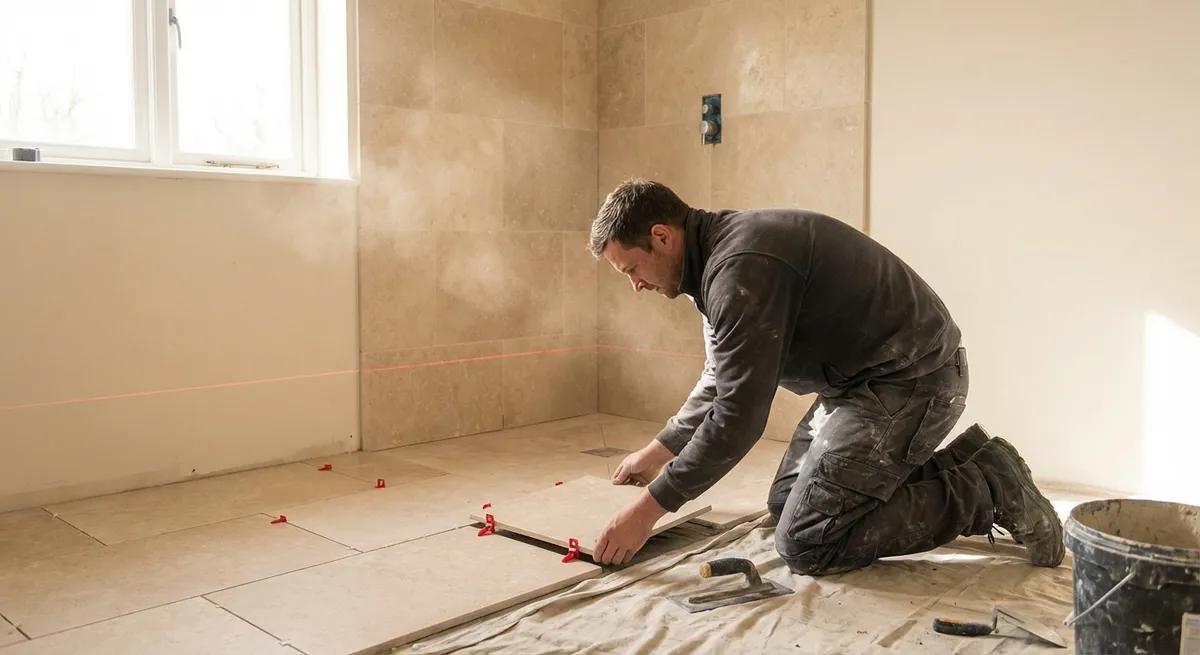
Below are five exclusive, often-overlooked insights that separate competent tile work from truly distinguished installation—insights that empower you to speak the language of your tile professional and to safeguard the quality of your home.
1. The Substrate Is the Invisible Signature of Quality
In exceptional tile work, the surface beneath the tile—the substrate—matters as much as the tile you see. Luxurious, large-format slabs and ultra-thin porcelain panels are unforgiving; even minor waviness in the substrate telegraphs through as uneven reflections, lippage, and unsettling shadows along grout lines. A refined installation begins with insisting on proper substrate preparation: flattening, leveling, and, where appropriate, decoupling membranes to manage movement.
Discerning homeowners should feel comfortable asking how their installer will assess and prepare the substrate. Are self-leveling compounds being used where needed? Will a crack-isolation or uncoupling membrane be installed over concrete or wood substrates? Is the floor being tested for excessive deflection before stone is considered? Those who treat substrate preparation as a line item to be minimized tend to deliver surfaces that look “acceptable” at first glance—but never quite read as architecturally calm. When the base is flawless, the finished tile presents as one continuous plane, quietly communicating quality without drawing attention to its own complexity.
2. Layout Is Design, Not Just Logistics
A truly premium tile installation begins long before the first tile meets mortar. The layout—how each tile is positioned, where cuts fall, how patterns resolve—functions as its own layer of design, equal in importance to the color or finish you choose. In refined spaces, the layout is considered in relation to sightlines, doorways, transitions, millwork, and even the way natural light travels across the room throughout the day.
Ask your installer or designer to walk you through a dry layout on paper or on site: where will the room “center” be established? Are grout lines aligning thoughtfully with architectural elements such as window mullions, cabinetry edges, or shower niches? Will there be balanced cuts at the perimeter instead of a full tile on one wall and a sliver on the opposite side? When layout is elevated from an afterthought to a priority, the result is a subtle visual calm—rooms feel intuitively “correct” even when guests cannot pinpoint why. That sense of rightness is not accidental; it is designed.
3. Grout as a Deliberate Design Material
In hurried installations, grout is treated as a necessary filler. In sophisticated projects, grout is a design material with its own color, texture, and performance profile. Its role is twofold: structurally, it bonds, locks, and protects; aesthetically, it can either fade into the background for a monolithic effect or gently articulate the rhythm of the grid or pattern.
Homeowners should consider grout choice with the same seriousness as paint or hardware. High-performance, stain-resistant or epoxy grouts can be invaluable in kitchens, showers, and high-traffic flooring, preserving the tile’s appearance over the long term. Color selection can visually enlarge or compress a space: tone-on-tone grout elongates walls and floors for a seamless feel, while a slightly contrasting shade can emphasize craftsmanship in layouts such as herringbone, chevron, or intricate mosaics. Equally important is joint width—too wide and the surface feels busy; too narrow, and movement accommodation and cleanability can be compromised. The most elegant installations are those where grout has been curated, not simply supplied.
4. Movement, Moisture, and the Discipline of Longevity
True luxury is not fragile. For tile, that means respecting the science of movement and moisture rather than relying on aesthetic choices alone. Exceptional installers design for expansion and contraction, for building shifts, and for the presence of water and steam. They integrate movement joints at room perimeters and strategic intervals in large expanses. They understand that showers, steam rooms, and wet rooms require layered waterproofing systems, not just “water-resistant” tile or grout.
As a homeowner, inquire specifically about how moisture will be managed behind and beneath the tile. Is a recognized waterproofing membrane being used in the shower and tied properly into drains and corners? How are transitions handled between tile and adjacent materials, such as hardwood or carpet, to allow for differential movement? Are soft joints (using sealant rather than grout) planned at changes in plane and along large expanses? These measures rarely appear in glossy inspiration images, yet they define whether your tile continues to feel opulent in ten years—or begins to show stress cracks, discoloration, or failure. Lasting luxury depends on technical discipline.
5. The Finish Details That Quietly Announce Craftsmanship
The difference between good and exceptional tile work often reveals itself at the edges. Corners, terminations, and intersections are where craftsmanship becomes unmistakable. Consider the refinement of mitred corners on stone or porcelain trims, or the discretion of well-chosen edge profiles that harmonize with the room’s hardware and fixtures. The way tile resolves into stair nosings, thresholds, and window jambs can elevate the entire composition or subtly diminish it.
Premium installations avoid awkward tile slivers at borders, misaligned mosaics in shower niches, or disjointed patterns at transitions. Instead, the details feel almost inevitable: a shower niche perfectly centered within a tile grid; floor tiles aligned with wall tiles to create continuous lines; metal trims that remain level and true without waves or distortion. Ask your installer to walk you through how these “small” conditions will be executed and finished. While they may appear minor on paper, they are often the very elements discerning guests notice first—and they quietly reveal how much respect has been given to your home.
Conclusion
Exquisite tile work is never the product of tiles alone. It emerges from a considered dialogue between design, technique, and discipline: an uncompromising substrate, a studied layout, curated grout, engineered longevity, and precise detailing. When homeowners understand these subtleties, they gain more than vocabulary—they gain agency. You can ask better questions, evaluate proposals with clarity, and ensure that every decision, from underlayment to edge profile, is aligned with the standard of quiet luxury you expect.
In the end, the most memorable tiled spaces do not strive for attention; they earn it, day after day, by remaining perfectly composed—underfoot, underhand, and under scrutiny.
Sources
- Tile Council of North America (TCNA) Handbook - Industry-recognized standards and guidelines for tile installation methods and best practices
- American National Standards Institute (ANSI) A108/A118/A136.1 - Technical standards governing the installation of ceramic tile and related materials
- Schluter Systems – Waterproofing and Uncoupling Membranes - Detailed information on modern waterproofing, uncoupling, and movement management solutions for tile assemblies
- Custom Building Products – Surface Preparation Guide - Practical guidance on substrate evaluation and preparation prior to tile installation
- The Natural Stone Institute – Design and Installation Resources - Technical documents on the proper installation and long-term performance of stone tile and slab surfaces