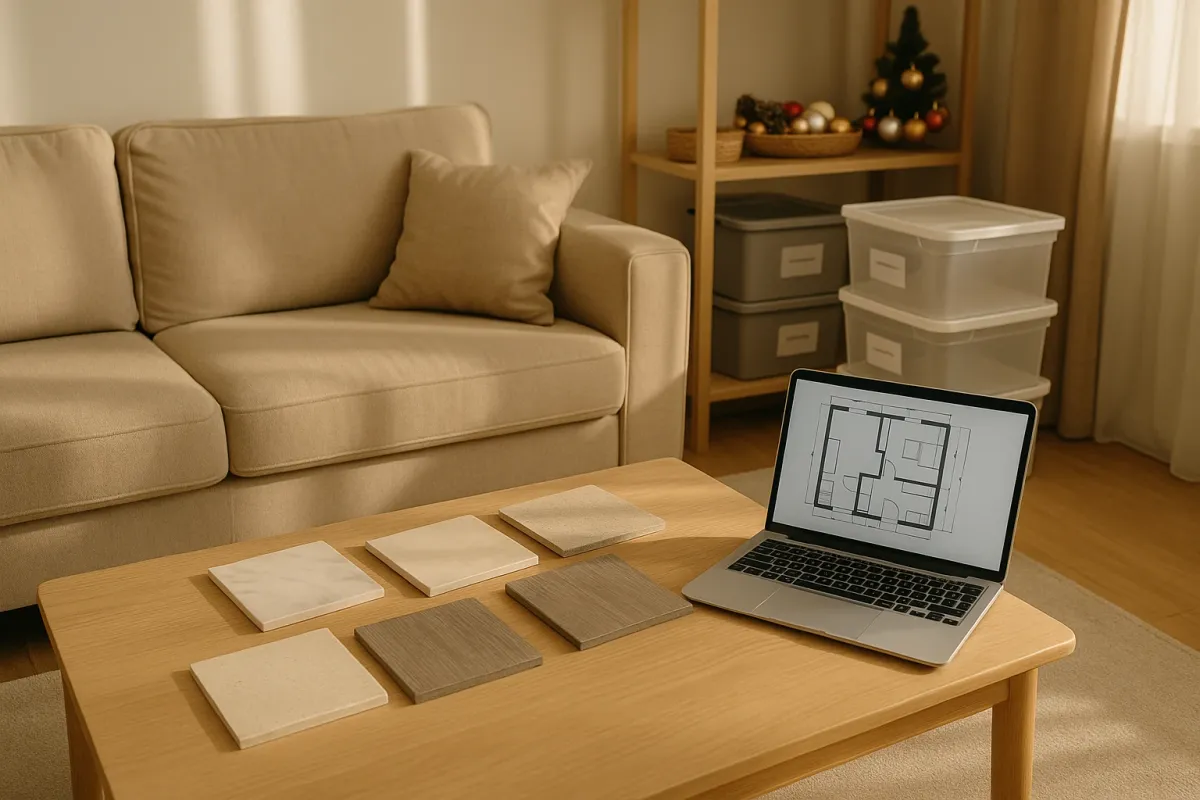
If you’re feeling that pre-holiday pressure—guests arriving, floors taking a beating, bathrooms working overtime—this is the perfect moment to think like a designer, not just a cleaner. Instead of reacting to the seasonal chaos, you can use tile as a deliberate, permanent framework for calm: surfaces that organize visual noise, withstand heavy use, and still look exquisitely composed in every photo you post.
Below are five sophisticated, tile-first insights inspired by the current obsession with order—designed for homeowners who want their spaces to feel curated, not merely “tidied up.”
1. Quiet Floors, Calm Mind: Using Tile to Visually Declutter Rooms
As organizing content explodes online, one thing is clear: visual noise is as exhausting as physical clutter. Tile can be your most powerful tool for creating mental calm—if you choose it with restraint. In high-traffic zones like entryways, kitchens, and family rooms, opt for large-format tiles in tonal, low-contrast palettes rather than busy patchworks. Think soft limestone-look porcelain, honed concrete-effect slabs, or wide plank-style porcelain that reads as a continuous plane. The fewer grout lines and pattern breaks you see, the quieter the room feels.
If you love pattern, focus it into deliberate “moments” rather than letting it dominate. A statement mosaic under a dining table, a defined porcelain “rug” in the entry, or a geometric panel behind open shelving can all anchor the eye without overwhelming the space. The rest of the floor can then recede, creating a composed backdrop for furniture and holiday décor. The key is hierarchy: one surface leads, the others support. When your floors are well edited, even a room full of relatives and gift wrap feels more considered than chaotic.
2. The New Command Center: Tile as Architecture for Everyday Systems
The trending push to “get your house in order” typically ends at labeled bins; sophisticated design goes further by making order architectural. Tile is the ideal medium for this. In mudrooms, drop zones, or side entrances, consider tiling not just the floor but also a partial height up the wall—then integrating hooks, shelves, and benches directly into that tiled band. You create a permanent, wipe-clean command center that can elegantly absorb daily mess: boots, school bags, wet umbrellas, and holiday deliveries.
Choose a tile that can handle grit and moisture: dense porcelain with a subtle texture for slip resistance, or a stone-look tile that masks dirt between cleanings. Use the grout layout to subtly “grid” the space: align grout lines with bench edges, locker dividers, or cabinet fronts so the entire wall reads as one tailored installation rather than an afterthought. In powder rooms or laundry rooms, a tiled wainscot with integrated ledges for hand soap, candles, or folded towels can double as both protection and display. The result is a room that organizes itself—not because you added more storage products, but because the surfaces were designed with systems in mind.
3. Holiday-Proof Luxury: Specify Finishes That Wear Beautifully, Not Perfectly
The seasonal surge in guests, parties, and family gatherings inevitably tests materials. Instead of chasing a showroom-perfect finish that stresses you out, choose tile and grout combinations that are engineered for elegant aging. Matte or honed surfaces are far more forgiving than high gloss—fingerprints, water spots, and micro-scratches will be dramatically less visible under soft light. In kitchens and bathrooms, consider porcelain or sintered stone that mimics marble veining but offers stain and etch resistance when red wine or citrus inevitably make an appearance.
Grout color is key. The current design conversation often stops at “use darker grout,” but sophisticated work goes a step further: choose a grout tone that is just one or two shades deeper than your tile. This minimizes the appearance of day-to-day discoloration without creating distracting lines that segment the floor. In high-use zones, specify epoxy or high-performance grout for stain resistance—you’ll notice the difference the first time someone drops a cranberry sauce spoon on your kitchen floor. The goal is not to preserve a museum piece; it’s to create a surface that looks luxuriously composed no matter what the holidays throw at it.
4. Seamless Surfaces for Social Media Moments: Designing the “Unbroken Shot”
With so much design content now being consumed in vertical video and single-frame snapshots, the most compelling rooms photograph as uninterrupted vistas. Tile can either fragment that view—or quietly extend it. When planning a renovation, think in terms of the “unbroken shot”: the angle from your kitchen island toward the living room, or from the bathroom doorway toward the vanity and shower. Aim to keep the flooring continuous across those sightlines, even if functional zones change.
A single tile style carried from the entry into the kitchen and down a hallway instantly elevates the home, eliminating the visual stutter of multiple materials. Where transitions are necessary—say, from tile to wood—treat them as a deliberate design line, aligning the break with a doorway, ceiling beam, or change in wall color. On walls, extend shower tile beyond the glass line or carry kitchen backsplash tile slightly past the last cabinet so the surface reads as architecture, not a patch. When you later photograph the space—Christmas tree, centerpiece, or New Year’s table included—the background will feel cohesive and premium, not pieced together.
5. Pattern With Purpose: Using Geometry to Impose Subtle Order
As people online debate how to keep their homes organized, one advanced move is to let geometry do some of the work. Sophisticated tile layouts introduce an underlying order that you feel before you consciously see it. Herringbone floors in an entry can guide movement toward the main living space; a linear stack-bond layout in a bathroom can emphasize height and serenity; a chevron or basketweave in a small foyer can define a “threshold” between outdoors and in.
To keep things elevated, limit yourself to one primary directional gesture per room. For example, use a large-format tile laid in a straight pattern on the floor, then contrast it with a vertically stacked slim tile on the shower walls. The change in orientation creates subtle rhythm without visual clutter. Align fixtures—drains, floor outlets, table legs, even freestanding tubs—with grout joints wherever possible. This is the level of attention you see in boutique hotels and well-resolved architect-designed homes. The geometry becomes a quiet framework that makes even busy holiday scenes look intentionally composed.
Conclusion
While today’s feeds are full of quick-fix organization hacks, lasting calm comes from the surfaces you walk on and live against every day. By treating tile as the backbone of order—rather than an afterthought finish—you build a home that supports seasonal chaos with poise: floors that mute visual noise, walls that organize routines, and patterns that gently structure how rooms are used and seen.
As the countdown to Christmas intensifies and “get your house in order now” becomes a mantra across social media, this is the moment to think beyond storage bins. Choose tile that doesn’t just survive heavy use but elevates it, turning the most demanding days of the year into a quiet showcase of considered, enduring design.