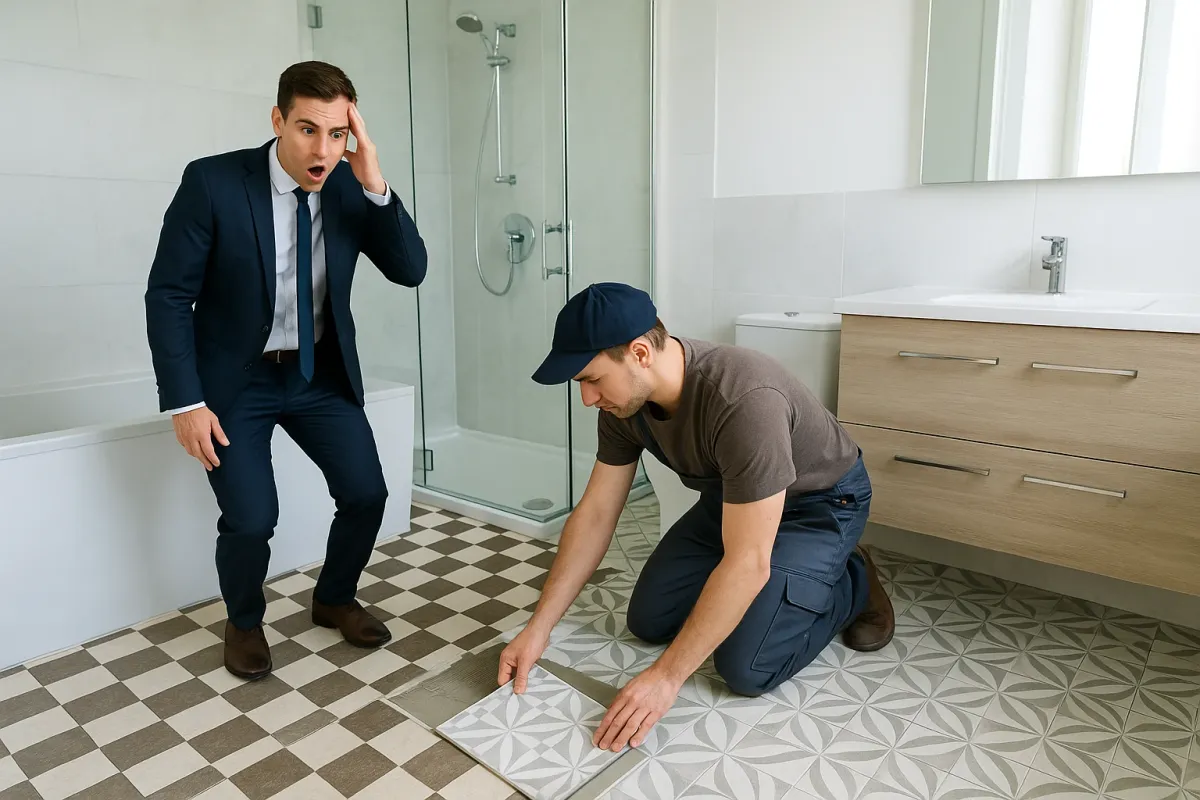
For homeowners, that means something crucial: tile work is no longer background décor. It’s a litmus test for craftsmanship, care, and long‑term value. In a market where one unflattering listing photo can circle the internet in hours, refined tile repair is less about covering damage and more about preserving architectural credibility.
Below are five exclusive, detail‑driven insights to keep your home firmly out of the “listing from hell” category—and squarely in “quietly luxurious” territory.
1. Repair for the Camera, Not Just the Naked Eye
The viral “Real Estate Listings From Hell” posts are a masterclass in how a camera punishes lazy fixes: misaligned tiles that looked “fine” in person suddenly warp under a wide‑angle lens; mismatched replacement pieces scream from a thumbnail; reflective glazes reveal every lippage shadow when lit by a phone flash.
Approach tile repair as though your bathroom or kitchen is being professionally photographed tomorrow:
- Match sheen, not just color. A perfect color match in a semi‑gloss tile will still look wrong if the surrounding field is matte. Always test replacement tiles under the same light at multiple times of day.
- Audit sightlines. Stand where a listing photo would be taken: doorway, entry hall, opposite corner of a shower. Any uneven plane, crooked cut, or jarring grout patch that reads from six to eight feet away should be corrected, not rationalized.
- Honor symmetry. When repairing partial areas (beneath a vanity, around a floor register, along a stair riser), extend the repair to the next natural break—an alcove, threshold, or cabinet line—so the field remains visually balanced in wide shots.
- Avoid “orphan tiles.” Replacing a single tile in the middle of a field often looks like a scar, especially on camera. If you cannot achieve an invisible match, consider a deliberate design insert (a framed inlay or defined patch area) rather than a lone misfit.
In a world where every home can be screenshotted and shared, your standard should be: would this repair survive a brutally honest zoom‑in on a 4K screen?
2. Treat Subfloor Integrity as a Luxury Finish
The most alarming viral listing photos often have one telltale sign: movement. Sloping floors, tented tiles, cracked grout “spider webs” around toilets or islands—these aren’t cosmetic headaches; they’re structural and moisture warnings. No amount of high‑end tile can disguise a substandard base.
Refined tile repair starts below the surface:
- Listen for hollows. Before repairing a cracked or loose tile, tap the surrounding field lightly with a metal object. Hollow sounds often indicate inadequate thinset coverage or failed bond; simply changing the visibly damaged tile ignores a wider failure.
- Insist on modern underlayment. Cement board screwed directly over irregular subfloors, without proper leveling or decoupling, is a common culprit behind those “roller‑coaster” floors seen in viral listings. Use self‑leveling compounds and quality uncoupling membranes where appropriate.
- Resolve moisture before aesthetics. Any soft grout, recurring efflorescence, or darkening stone deserves a moisture meter, not just new grout. A repaired shower pan or kitchen floor with proper waterproofing adds more long‑term value than any surface‑only refresh.
- Document the invisible. In a climate shaped by skeptical buyers and hyper‑aware inspectors, keep photos and notes of subfloor work, membranes, and waterproofing steps. They’re powerful reassurance when it’s time to sell—and a silent rebuttal to the “everything is cosmetic” skepticism born from bad listings.
Luxury today is as much about what you don’t see moving, flexing, or failing as what you do see gleaming.
3. Elevate Grout from Afterthought to Design Asset
Many of the most shared “listing from hell” images aren’t about the tile at all—they’re about grout: neon‑white regrout lines slathered over old joints, patchy colors that telegraph every prior repair, dingy corners smeared with silicone in a panic. Grout is where rushed fixes reveal themselves instantly.
A premium repair approach treats grout as a curated finish, not spackle:
- Color‑correct, don’t guess. Over time, grout ages, darkens, and patinates. When repairing, use a grout colorant or custom mix to blend new joints into the existing field, rather than defaulting to “whatever light gray is in stock.”
- Control joint widths. In repairs where tiles are replaced or re‑set, maintain the original joint width meticulously. Even a 1/32" variation becomes obvious in linear patterns when photographed under directional lighting.
- Reinforce movement areas elegantly. At changes of plane—floor to wall, tub to surround, countertop to backsplash—use a high‑quality, color‑matched silicone instead of grout. Done cleanly, it reads as seamless; done sloppily, it becomes instant “listing from hell” fodder.
- Polish, don’t just clean. After regrouting or color‑correcting, buff tile faces with microfiber once the haze is removed. That final polish differentiates “recently patched” from “intentionally maintained” in both person and photo.
Think of grout as the tailoring on a bespoke suit: invisible when perfect, impossible to ignore when done badly.
4. Respect Transitions as the New Focal Points
Scroll through the worst real estate images and a pattern emerges: chaos at transitions. Floor heights crashing into each other at doorways, three types of trim colliding at a shower niche, tile ended mid‑run around a newly added vanity. The eye is naturally drawn to corners, edges, and thresholds—and that’s precisely where many rushed repairs fail.
To keep your home firmly out of screenshot territory, give transitions architectural dignity:
- Unify thresholds. Where tile meets wood, vinyl, or carpet, choose a consistent transition profile throughout the home. A single elegant metal or stone threshold, repeated, looks intentional; a different solution at every doorway looks improvised.
- Reconcile mixed eras gracefully. When repairing or extending older tile into newly renovated areas, consider a clearly framed border rather than trying to “blend” eras. A slim contrasting band can bridge original 1950s mosaic with a contemporary porcelain in a way that feels curated, not accidental.
- Design with door swings in mind. Many infamous listing images show doors clipping tile edges or sweeping across a clumsy threshold. When repairing floors, study how doors move, including closet and shower doors, and adjust tile cuts and trims accordingly.
- Prioritize linear continuity. Where possible, carry grout lines through transitions and into adjoining tile zones (for example, from bathroom floor into curb and shower floor). Even when materials change, aligning pattern directions and joint spacing reads as sophisticated and composed.
In elevated interiors, transitions behave like punctuation: they quietly shape the rhythm of a space. Poorly handled, they turn a home tour into a run‑on sentence no buyer wants to finish.
5. Choose Repairs That Age Gracefully in a Resale‑Obsessed Era
The viral “Real Estate Listings From Hell” trend is reshaping what buyers fear most: not age, but bad decisions that will be expensive to undo. This is shifting how discerning homeowners should approach every repair: not “How do I hide this?” but “Will this still feel correct in 10 years—and simple to maintain until then?”
Refined repair strategy is about future‑proofing:
- Avoid overly specific patterns in small fixes. When addressing isolated damage, resist the temptation to insert trendy mosaics or bold accents into otherwise timeless fields. These can date faster than the original tile and feel like a patch instead of an upgrade.
- Invest in durability where traffic is most unforgiving. Entrances, mudrooms, and kitchen work zones are frequent offenders in “bad listing” compilations: chipped corners, worn glazes, cracked tiles at appliance feet. Choosing stronger tile bodies and proper underlayment in repairs here protects resale and daily ease.
- Standardize what you can. When feasible, keep a small reserve of your current tiles and grout for future spot repairs. A private “archive” allows you to address accidents without creating visible eras of patchwork.
- Repair toward coherence, not just novelty. When one area fails—say, a leaking shower pan—it’s often an opportunity to harmonize that room with the rest of the home. Let existing architectural language guide your choices instead of chasing whatever is trending in this month’s social feeds.
The most valuable homes in a hyper‑documented market are not the most flamboyant, but the most resolved. Every repair either contributes to that sense of resolution or undermines it.
Conclusion
The explosion of “Real Estate Listings From Hell” stories is more than entertainment; it’s a real‑time case study in how tile work and repairs shape a property’s reputation long before a buyer crosses the threshold. In an age where one unfortunate bathroom can turn into a viral meme, sophisticated tile repair is no longer optional—it’s reputational armor.
By elevating subfloor integrity, treating grout as a design finish, refining transitions, and selecting repairs that age with quiet confidence, you protect more than a surface. You preserve the narrative of your home as a place of care, craft, and considered detail—precisely the kind of story that never goes viral for the wrong reasons.