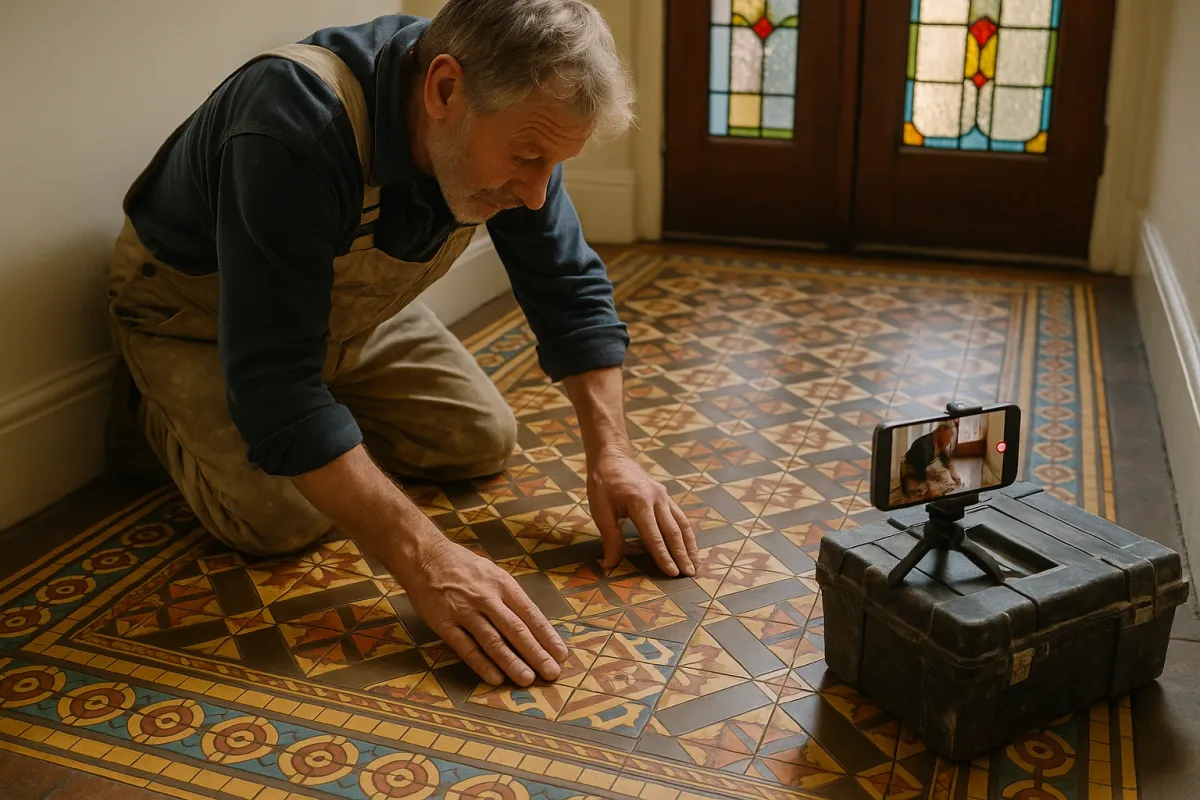
For homeowners planning a new tile installation or restoring an existing space, the renewed fascination with historic houses is more than aesthetic inspiration. It’s a reminder that a tiled floor or wall is not a “project”—it’s an architectural commitment. The difference between a surface that feels timeless and one that feels tired in five years often comes down to what you never see on Instagram: the substrate, the layout strategy, the grout chemistry, and the respect for how materials move over decades, not seasons.
Below are five exclusive, craftsmanship-driven insights—drawn from the lessons of long-lived interiors—that will help your next tile installation feel less like a renovation and more like the beginning of a legacy.
1. Design the Subfloor Like a Heritage Architect, Not a Weekend DIYer
Those century-old homes trending online rarely started with perfect structure, yet their surviving mosaic and stone floors share one secret: respect for the foundation. Before any tile is set, the subfloor must be treated as a precision-built system, not a flat-enough suggestion.
For modern installations, that means more than just checking for “level.” It demands checking for deflection (how much floors flex under load), using tools like deflection calculators and laser levels instead of simply relying on a long straightedge. An elegant marble or large-format porcelain can tolerate almost no movement—something historic craftsmen understood intuitively with thick mortar beds and rigid bases. Today, premium solutions like uncoupling membranes and properly fastened cement backer boards serve the same purpose: they separate brittle tile from the micro-movements of the structure. If a contractor shrugs off subfloor prep as “overkill,” remember: the homes we’re admiring now are the ones where overkill was the standard.
2. Layout Is the New Millwork: Treat Every Room Like a Formal Salon
The photos circulating from that old-house feature all have one thing in common: composition. Whether it’s finely aligned wainscoting or a perfectly centered stair runner, nothing feels accidental. Tile should be approached with the same level of intentionality.
Before a single tile is cut, insist on a dry layout and a conversation about sight lines. Where does the eye naturally travel when you enter the room? Where will furniture actually sit? In a hallway, the tile pattern should guide you, not fight you. In a bathroom, cuts should be gracefully “hidden” behind vanities and along less-visible walls, with full or near-full tiles greeting you at the threshold. Historic floors didn’t waste their visual center on awkward slivers of material; they framed fireplaces, anchored doorways, and aligned with architectural axes. A refined modern installation will do the same—whether with a running bond, herringbone, or a large-format stone-look porcelain. Layout is where you either whisper “custom” or shout “compromise.”
3. Grout as a Design Material, Not a Hardware Aisle Afterthought
Cross-sections of old tilework often reveal lime-rich mortars and hand-mixed grouts that mellowed beautifully with time. The contemporary temptation is to choose grout purely by color chip—often a trendy charcoal or stark white—and call it done. But if those trending historic interiors teach us anything, it’s that the space between tiles is as important as the tiles themselves.
Today’s high-performance grouts (epoxy, hybrid, or polymer-modified cementitious varieties) allow you to prioritize both aesthetics and longevity. A warmer, stone-toned grout can soften graphic patterns and help them feel integrated with natural materials like wood and plaster, just as many heritage homes do. Conversely, a crisply contrasting grout can deliberately highlight a pattern when used with intention. Beyond color, specify the correct joint width for your tile type and space use; tight joints may look sleek on social media, but in high-movement, high-moisture environments, a slightly more generous joint can dramatically improve durability. Elegant installations are rarely extreme—they’re measured and quietly intelligent.
4. Honor Movement: Why Timeless Floors Never Feel “Tensioned”
Those old-world floors you’re admiring online often occupy buildings that have settled, shifted, and breathed for decades. What’s remarkable is not that they’ve moved—it’s that they’ve survived the movement. The reason: the original installers worked with the building, not against it.
Modern tile systems must incorporate deliberate zones of flexibility—movement joints at perimeters, transitions, and large expanses—to prevent stress from building up and telegraphing into cracks. Large-format porcelain in vast open-plan spaces, especially popular in today’s luxury builds, is particularly unforgiving when movement is ignored. A premium tile professional will design in soft joints (using color-matched sealant rather than rigid grout at key intervals) and ensure that any change in substrate—slab to framing, hallway to great room—is treated as a structural event, not a casual boundary. It’s a quiet discipline you’ll never see in the final photographs, but you’ll absolutely feel it in the absence of hollow sounds, tented tiles, or hairline fractures five winters from now.
5. Think in Decades: Specifying Materials for Patina, Not Panic
One reason those historic house images are so arresting right now is that they challenge our obsession with “newness.” Stone steps worn to a silk-like softness, encaustic tiles with subtly faded pigments, and terracotta floors burnished by generations of footsteps all communicate the same message: authenticity outlasts trend.
For today’s homeowner, that doesn’t mean forcing a faux “aged” look. It means choosing materials and finishes that will wear elegantly, and pairing them with installation standards that respect their nature. Honed stone over ultra-glossy when slip-resistance matters. Porcelain that faithfully captures variation, instead of hyper-uniform prints that announce every scratch. Sealing protocols that protect without entombing surfaces in plastic-like sheens. Even in purely porcelain installations, selecting lines with intentional shade variation and nuanced edges creates the same sense of depth you see in historic floors. Then, work with your installer to document a maintenance plan—what to use, what to avoid, and how often—to ensure your tile doesn’t just survive; it evolves.
Conclusion
As beautifully preserved homes trend across social media and platforms spotlight the craftsmanship of earlier eras, there’s a temptation to treat them as romantic anomalies—products of a time we can’t quite recreate. In reality, their endurance is less about magic and more about method. Thoughtful substrate preparation, deliberate layout, intelligent grout strategy, respect for movement, and a long-view mindset are all available to today’s homeowner.
A tile installation executed with this level of care doesn’t scream for attention; it becomes the quiet backdrop to a life well-lived—just as those century-old interiors once did for families whose names we’ve forgotten, but whose floors we now admire. If you’re planning tile work now, use the current fascination with historic houses as a design directive: build something worthy of future photographers, not just this year’s feed.