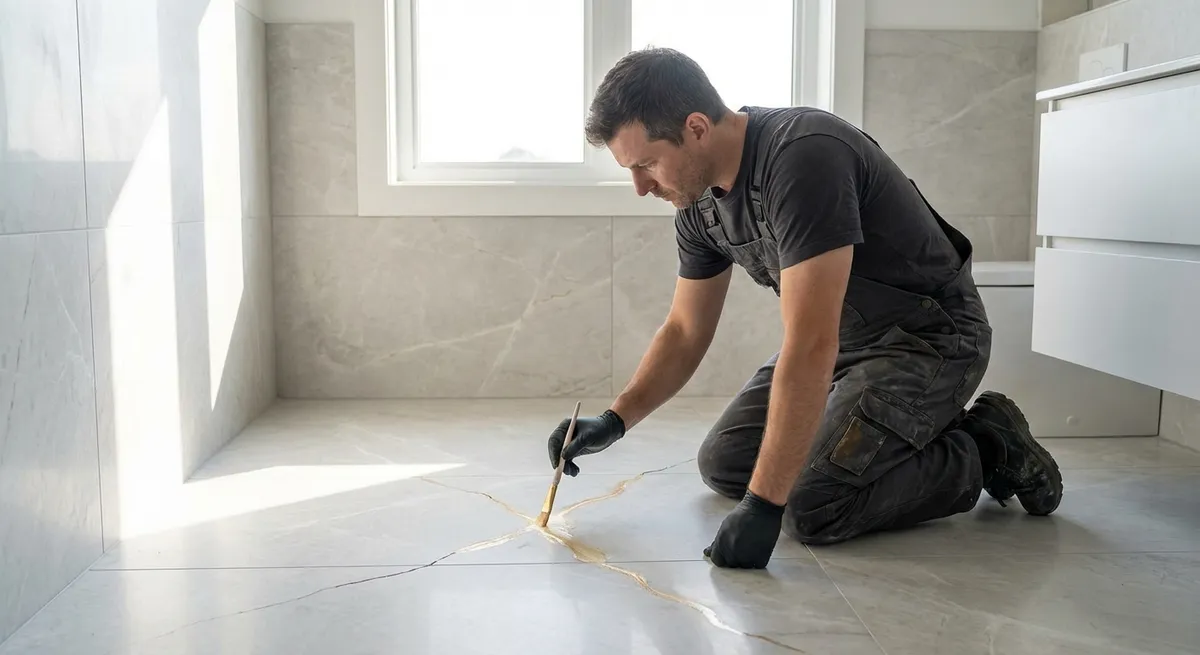
Thoughtful repair is less about quick fixes and more about preserving architecture, materials, and design intent. The following insights move beyond basic patchwork into a more cultivated approach—one that respects both craftsmanship and the refined environments it enhances.
Reading the Room: Diagnose the Cause Before Touching a Single Tile
Sophisticated repair begins with restraint. Before reaching for tools, the priority is to understand why the failure occurred at all. A cracked tile in a high-end primary bath, for instance, might be the symptom of structural deflection, a compromised underlayment, or an improperly placed control joint—not simply a defective tile.
Observe patterns: Are cracks radiating along a line or grid, suggesting movement in the subfloor? Do multiple tiles sound hollow when lightly tapped, hinting at insufficient coverage or debonded mortar? Has moisture infiltrated a wet area, evident in darkened grout lines or efflorescence near the shower base?
This diagnostic discipline safeguards you from cosmetic fixes that quietly allow a more serious problem to escalate. A single replaced tile may look adequate today, but if the substrate issue remains, the surrounding field will likely begin to telegraph the same distress. Homeowners who value their finishes should expect their tile professional to deliver a root-cause analysis—not just a patch.
Repair as Conservation: Blending Old and New Without Visual Noise
In premium interiors, repair is closer to conservation than renovation. The goal is not to draw attention to what has been fixed, but to preserve the continuity of the original vision. This is especially critical when working with natural stone, handmade tile, or discontinued lines where exact matches can be elusive.
Begin by sourcing surplus materials from the original installation if at all possible. Box-to-box variations in shade and pattern can be significant, particularly in stone and artisanal collections. If new material must be integrated, a refined approach might involve placing the replacement tile in a less conspicuous location and relocating an existing tile from a visually prominent zone to maintain harmony.
Grout selection is equally critical. A subtle shift in undertone—from warm gray to cool gray, or from neutral to slightly tinted—can create a visual “stutter” across the surface. Premium repairs often require custom grout blending, test boards, and viewing under both daylight and artificial lighting. The most successful repairs are those that vanish into the room’s overall rhythm rather than announcing their presence at first glance.
Protecting Value Through Documentation and Material Stewardship
One of the quiet luxuries of a well-managed project is future-proofing. Homeowners who treat their spaces as long-term investments should think of tile the way collectors think of art: accompanied by documentation and carefully preserved extras that make future interventions seamless rather than stressful.
At minimum, maintain a digital record of the tile manufacturer, collection name, color, finish, size, lot or shade number, grout brand and color, and installation date. Photographs of packaging and labels can be invaluable years later when the boxes are long gone. This information streamlines repair work and can significantly improve the chances of sourcing compatible material if a line is still in production.
Equally important is the intentional storage of surplus tile. Rather than relegating leftover boxes to a damp garage or unstable shed, store them flat in a dry, temperate area, clearly labeled and inventoried. This modest discipline transforms future repairs—from a single cracked foyer tile to a subtle layout adjustment around a new built-in—into curated corrections rather than compromise solutions.
Moisture, Movement, and Heat: The Invisible Forces Behind Many Failures
In refined spaces, the most damaging tile issues often arise not from dramatic impact, but from quiet, persistent forces: moisture infiltration, structural movement, and thermal cycling. Anticipating these forces—and addressing them correctly in repair work—is essential to protecting a premium installation.
In wet areas, tile is only as reliable as the waterproofing behind it. If grout is flaking, tiles are loosening, or discoloration appears, an elegant repair may require selective demolition to verify whether the waterproofing membrane remains intact. Simply re-grouting over a compromised assembly is akin to polishing a cracked foundation; it may look improved, but it remains vulnerable.
In heated floors and sun-drenched spaces, expansion and contraction place subtle stress on rigid finishes. Thoughtful repair considers the presence and adequacy of movement joints at transitions, perimeters, and large expanses. Where these are missing or insufficient, a refined repair strategy might discreetly introduce flexible joints at logical architectural breaks—between materials, around columns, or at room thresholds—so that performance is improved without sacrificing aesthetic coherence.
Five Exclusive Insights for Homeowners Who Expect More From Tile Repair
For homeowners who view their tile as an architectural asset rather than a disposable surface, these elevated practices can make the difference between a visible patch and an invisible restoration:
1. Prioritize removal techniques that preserve the surrounding field.
Premium repair avoids collateral damage. Advanced tile removal often uses controlled scoring, oscillating tools, and carefully managed impact to isolate only the failed piece. The aim is to protect neighboring tiles, grout joints, and waterproofing membranes—particularly in showers and over radiant heat.
2. Insist on substrate verification, not just surface correction.
A single cracked tile over concrete may merit a simple replacement. A repeating pattern of cracks or hollow sounds, however, warrants deeper inquiry: checking for substrate flatness, movement, improper underlayment, or insufficient mortar coverage. A meticulous repair plan addresses both the symptom and the structure beneath.
3. Consider micro-polishing and refinishing before full replacement in stone.
With natural stone, minor etching, light scratches, or subtle lippage can sometimes be resolved through professional honing and polishing rather than tile extraction. This approach preserves original material, reduces disruption, and maintains consistent veining and tone across the field.
4. Use color-matched sealants strategically at vulnerable transitions.
Where tile meets other materials—wood thresholds, metal frames, tubs, or large glass units—a rigid grout joint can be a future fracture line. Replacing select rigid joints with high-quality, color-matched silicone or urethane sealants creates flexible “relief zones” that absorb movement discreetly, supporting both beauty and durability.
5. Test every visible choice under actual lighting and viewing distance.
What appears to match under workshop lighting may read differently in a sunlit kitchen or softly lit ensuite. Sophisticated repairs always include small-scale mockups for grout color, replacement tiles, and finish levels, evaluated in situ and at typical viewing distances. This extra step is often what separates a technically adequate fix from a visually seamless restoration.
Conclusion
Tile repair, in its most refined form, is not an afterthought—it is a continuation of the original design conversation. For homeowners who have invested in exceptional materials and meticulous installations, the standard for repair should be equally elevated: investigative rather than impulsive, conservation-minded rather than purely cosmetic, and attentive to the quiet details that define a premium environment.
By approaching failures as opportunities to preserve and even refine the space, you protect not only the surface itself, but the architectural narrative and long-term value of your home. In the right hands, even a single replaced tile can reaffirm the overall excellence of the room, rather than compromise it.
Sources
- Tile Council of North America (TCNA) Handbook - Industry-recognized reference for tile installation standards and best practices
- American National Standards Institute (ANSI) A108/A118/A136 Installation Standards - Technical standards governing tile installation materials and methods
- Mapei: Causes of Tile and Grout Problems - Detailed discussion of common tile failures and how to address them
- Schluter Systems: Waterproofing in Tiled Showers - Guidance on building and repairing properly waterproofed tiled showers
- U.S. Department of Housing and Urban Development (HUD) – Residential Rehabilitation Inspection Guide - Broader context on substrate, structural, and moisture issues relevant to tile repair