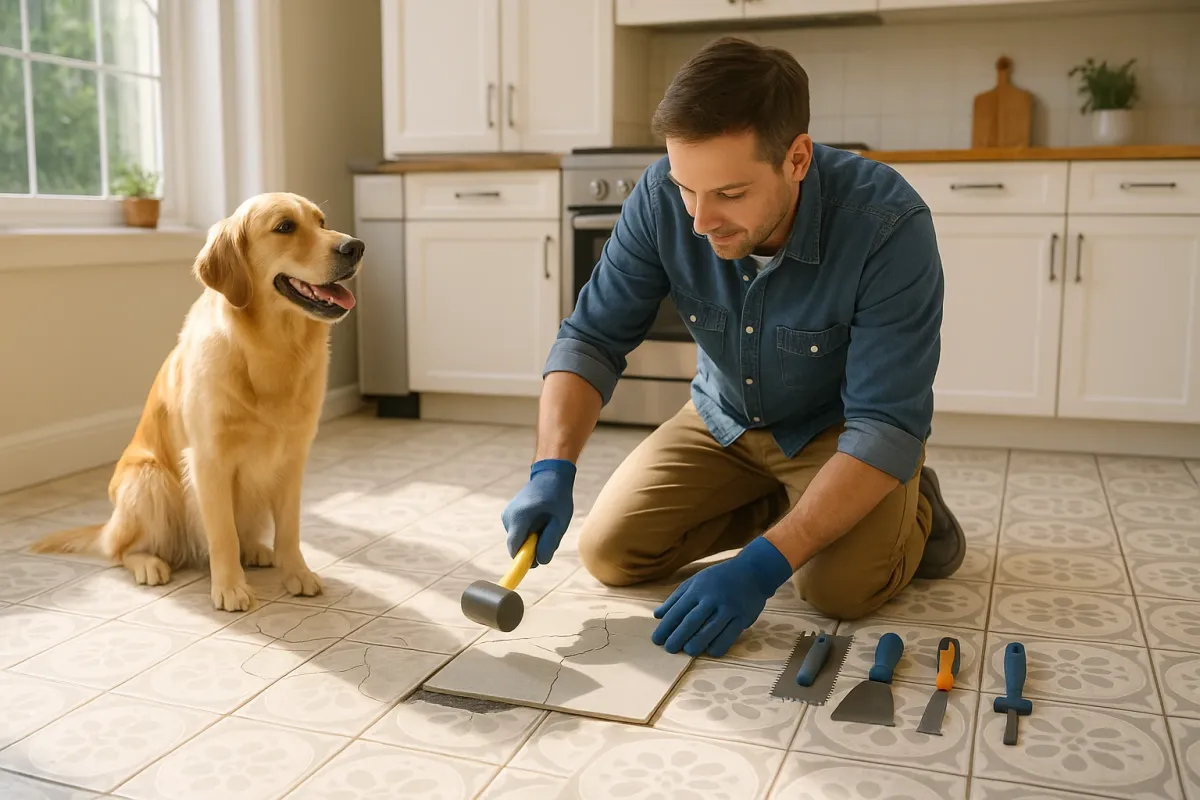
For homeowners with premium tile, that raises a timely question: how do you maintain a beautifully curated, quietly luxurious surface while living graciously with pets who are still learning the rules of the house? Below are five exclusive, detail‑driven maintenance insights tailored for tile‑centric homes that are welcoming rescue animals right now—because an elegant interior and a newly adopted companion should complement each other, not compete.
Elevate the Entry: Create a “Landing Zone” That Protects Your Grout
Newly adopted pets often arrive with nervous energy—and muddy paws. As adoption centers and shelters report increased winter placements, your entry sequence becomes a critical maintenance zone. Instead of reacting to every pawprint, design a discreet “landing zone” on your tile where dirt stops before it spreads.
Place a dense, low‑pile, washable rug directly over tile at the main entry pets use, extending at least three strides from the door. Choose a rug with a natural rubber backing that won’t stain or react with porcelain or stone. Immediately beyond the rug, keep a minimalist, well‑stocked “care tray” on the tile: a small, elevated tray with a microfiber towel, a soft-bristled boot brush reserved for paws, and a spray bottle filled with a pH‑neutral tile cleaner diluted per manufacturer directions. A quick, 30‑second wipe at this threshold dramatically reduces abrasion on your tile finish and grime loading in your grout, especially in matte or structured surfaces that tend to harbor fine grit.
In terms of maintenance, this ritual is the difference between occasional spot cleaning and regular deep scrubbing. Fine sand and road salt dragged across tile act like low‑grade sandpaper, dulling both glaze and natural stone over time. By intercepting the grit here, you preserve the crisp edges of rectified tile and the clarity of polished finishes—exactly the kind of detail that separates basic from truly premium interiors.
Train the Water, Not Just the Pet: Contain Bowls, Fountains, and Splashes
With adoption numbers holding steady—roughly 6.5 million animals entering U.S. shelters annually according to ASPCA estimates—water bowl corners are becoming high‑traffic micro‑environments in modern homes. Even if your pet’s feeding zone is on tile “for easy cleanup,” uncontrolled water is one of the quietest threats to grout and natural stone.
Replace the standard silicone mat with a rigid, shallow tray sized just larger than your bowls, preferably metal or high‑grade acrylic with a subtle lip. Place this tray on the tile and line it with a thin, removable, washable pad. The tray ensures that splashed water doesn’t migrate into grout joints where repeated wetting and drying can cause efflorescence, discoloration, and, over time, weakened joints—especially with cementitious grout. If you have marble, limestone, or travertine nearby, treat this zone as you would a bar top: absolutely no standing water left to evaporate.
As part of weekly tile maintenance, slide the tray aside, wipe the area with a barely damp microfiber cloth and a neutral cleaner, then fully dry. Look closely at the grout around the feeding area for early signs of dullness or micro‑cracking. This is one of the first places where you’ll see the difference between a home that simply “has tile” and one that treats tile as a long‑term, investment‑grade surface.
Quiet Scratch Management: Protecting Tile Finishes From Frenetic Play
This month’s wave of joyful “first day home” rescue posts is filled with scenes of indoor zoomies, sudden stops, and sliding paws. While porcelain tile is marketed as highly scratch‑resistant—and in most premium formats, it is—the reality is more nuanced when you pair it with heavy furniture, pet claws, and grit. Micro‑scratching rarely happens from claws alone; it happens when claws and furniture drag fine particulate across the surface.
Start by addressing contact points, not the pet. Felt pads under furniture on tiled areas are non‑negotiable, but they need maintenance just like grout. Inspect and replace them quarterly; once they’re embedded with grit, they become sanding pads. For rolling chairs and mobile pieces in tiled rooms where pets play, upgrade to soft rubber casters designed for hard surfaces.
For the tile itself, incorporate a “dry dust first” rule into your cleaning. Before any damp mopping, run an untreated microfiber dust mop across pet play zones to capture grit that claws can drive into the surface. On structured or textured tiles designed for slip resistance, pay particular attention—these textures hold fine particles that amplify wear. If you have glossy rectified porcelain and notice a path of micro‑swirls under low grazing light, consider rotating pet play zones or introducing a large, flat‑woven rug as a sacrificial layer. Elegant interiors aren’t about banning movement; they’re about directing it where it will age gracefully.
Odor Without Damage: Deep Cleaning Grout After “Accidents”
With so many rescue pets adjusting to new environments, indoor accidents are not a failure—they’re part of the transition story. The maintenance challenge is removing organic stains and odors from grout without destroying it. Many homeowners instinctively reach for bleach or aggressive enzyme cleaners designed for carpet, both of which can etch certain tiles, strip sealer, or permanently lighten grout.
Instead, work in quiet, layered steps. Immediately blot—not wipe—any liquid from tile and grout with a plain, white, absorbent cloth so you can read the true level of staining. Rinse the area with a small amount of cool water, blot again, and then apply a pH‑neutral, grout‑safe cleaner labeled for organic stains. Let it dwell precisely as long as the manufacturer recommends, then agitate gently with a soft nylon brush, working strictly within the joint lines to avoid fraying adjacent sealants or soft stone.
If odor persists, use an enzymatic product specifically rated as safe for tile and grout, testing in a discreet corner first. Once fully clean and dry, reassess whether your grout sealer needs renewal in that area. Patch sealing only where needed maintains protection without building up unwanted film on tile surfaces. The result is a floor that smells as composed as it looks, even in a house that’s clearly being lived in by an animal still learning where “outside” begins.
Annual “Pet Audit”: When To Reseal, Recaulk, and Refresh Tile Surfaces
As adoption stories continue to fill social media, an overlooked reality is that pets subtly accelerate the maintenance cycles of finely finished surfaces. A polished marble foyer that could go years between resealing in a low‑traffic home might need annual attention in a pet‑rich one. Similarly, silicone around tubs, showers, and laundry room bases works harder in homes where pets are bathed indoors.
Once a year—ideally after the hard use of winter—conduct a quiet, methodical “pet audit” of your tiled areas. Start where your animals spend the most time: near doors, in front of windows, around feeding zones, and in any tiled spaces used for bathing or grooming. Look for hairline cracks in grout, especially where two planes meet; this is where movement from animals jumping off benches or furniture transfers into rigid joints. Replace failing rigid grout at changes of plane with premium, color‑matched, mold‑resistant silicone.
For natural stone, test sealer performance with a single drop of water in an inconspicuous corner. If it darkens within minutes, it’s time for resealing. For porcelain and ceramic, focus on grout integrity and any matte seal coats specified by the manufacturer. Document your audit—photos on your phone with simple notes are enough. Over time, you’ll see patterns in wear that reflect your pet’s behavior, allowing you to anticipate rather than react. That’s the essence of luxury maintenance: not perfection, but calm, informed control.
Conclusion
The December flood of rescue pet photos is a reminder that the most beautiful homes are not static—they adapt. As more families open their doors to adopted animals, tile surfaces are quietly absorbing the story: the first nervous steps across a cool floor, the muddy return from a walk, the inevitable accident, the tentative nap in a sunlit corridor.
By refining your maintenance approach—controlling entry grit, containing water, managing scratches intelligently, cleaning accidents with restraint, and scheduling an annual “pet audit”—you protect not just the appearance of your tile, but its architectural integrity. Done well, your floors and walls become something more than surfaces; they become a durable, elegant backdrop to a life where rescue is celebrated, not hidden, and where premium finishes coexist gracefully with the very real joy of bringing a vulnerable animal home.