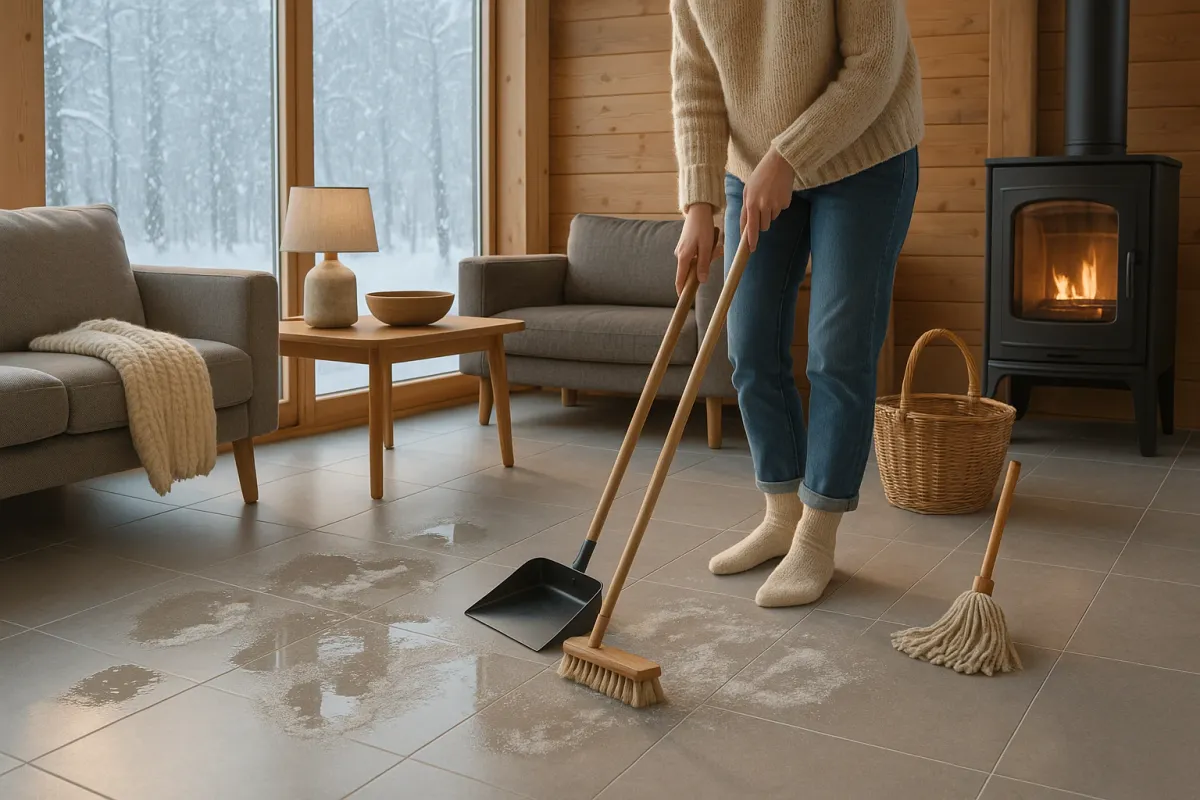
Today’s climate conversation isn’t just about energy efficiency; it’s about surfaces that can withstand months of moisture, grit from de-icing salts, and constant temperature swings without losing their quiet elegance. Think of this as the tiled equivalent of a well-made winter coat: understated, impeccably tailored, and built to perform in unforgiving conditions.
Below are five exclusive, climate-savvy maintenance insights inspired by the real-world “Finnish problems” of snow, slush, and darkness—refined for homeowners who expect their tile work to age gracefully, not just survive.
Design Your Entry Like Helsinki: A Snow-Season Maintenance Strategy
The viral “Very Finnish Problems” posts frequently revolve around snow mountains in front of doors, floors covered in slush, and the never-ending battle with wet boots. Your tiled entry must be designed—and maintained—as a system, not just a pretty surface. Start with a generous, high-quality exterior mat that removes grit and de-icing salts before they ever reach your tile. Pair it with a secondary, absorbent interior mat on top of the tile to capture meltwater; this simple two-stage “Finnish vestibule” dramatically reduces staining and micro-scratching on polished porcelains and natural stone.
Maintenance here is highly intentional. During active snow or heavy rain, step up your frequency of light cleans rather than waiting for dramatic soiling. Use a neutral pH cleaner formulated for tile and stone, applied with a well-wrung microfiber mop instead of a saturated one—water left pooling in grout joints during cold snaps can migrate, freeze, and begin to open microscopic pathways that weaken the grout over time. Finish by drying high-traffic zones with a clean microfiber towel. The result is an entry that feels composed, not chaotic, even when the weather is anything but.
Salt, Slush, and Porcelain: Protecting Surfaces From De-Icing Damage
In cold climates like Finland and across the snowbelt, de-icing salts are a quiet assassin. They ride in on boots and tires, dissolve into meltwater, and sit invisibly on tile surfaces. On quality porcelain, the visible damage may take years to show—but on natural stone, metal inlays, and cementitious grout, the chemical attack begins immediately. The solution isn’t panic; it’s precision.
First, treat any outdoor tiled zones—stairs, terraces, balcony thresholds—with a product specifically designed for freeze–thaw and salt exposure, and avoid generic rock salt where possible. Calcium magnesium acetate (CMA) or high-quality ice melts labeled as less aggressive to masonry are preferable. For indoor maintenance, schedule a weekly “salt reset” during peak winter: vacuum thoroughly with a soft brush head to remove dry crystals, then damp-mop with warm water and a neutral cleaner. Rinse the mop head frequently to avoid re-depositing salts. For premium grout, consider a penetrating sealer rated for salt resistance; this creates an invisible barrier within the pores, making it far easier to remove seasonal contamination before it etches or whitens the joints. Luxury isn’t about never seeing snow—it’s about ensuring it leaves no trace.
Low Winter Light, High Standards: Reading Your Floors Like a Professional
The “Very Finnish Problems” account often jokes about months of darkness—and that low, raking winter light that suddenly exposes every streak and flaw when the sun finally appears. Tile behaves the same way: under certain light angles, even well-maintained floors can look tired. Elevated maintenance means learning to read your surfaces under different lighting conditions, the way a professional finisher would.
Once a month, inspect your key tiled areas when natural light is lowest and again when it is brightest and most directional. Look along the surface, not down at it, to reveal subtle haze, fine scratches, or early etching on stone. This “light sweep” tells you where your routine is falling short. A persistent cloudy film often signals overuse of detergent or not enough rinsing; hairline scratches in highly polished porcelain may mean you need to introduce a better entry mat system or switch to a softer vacuum attachment. Adjust your chemistry—not stronger, but smarter: neutral cleaners for routine care, pH-balanced stone cleaners for marble and limestone, and distilled water for final rinsing in areas with very hard tap water. The reward is a floor that appears serene and uniform in any light, not just on listing photos.
Microclimate Matters: Humidity, Underfloor Heating, and Grout Longevity
Finland’s saunas and heated floors are globally admired, and underfloor heating has become a must-have in premium homes from Oslo to New York. Yet many homeowners treat these systems as purely mechanical, ignoring how they shape the microclimate around grout, adhesives, and sealers. Temperature swings, especially when floors cycle rapidly from cold to hot, can accelerate hairline cracking in poorly compacted grout and shorten the life of topical sealers.
A more refined approach is to treat underfloor heating as part of your maintenance strategy. Keep temperature changes gradual—use programmable thermostats to avoid aggressive overnight jumps. In dry winter interiors, consider using a humidifier to maintain a stable, moderate relative humidity; extremely dry air draws moisture from grout and can exacerbate micro-cracking over time. For spa-like spaces—saunas, steam showers, or wet rooms—schedule an annual inspection of silicone movement joints and re-seal grout where recommended by the installer or manufacturer. In climates that swing from frozen winter to humid summer, this attention to microclimate often doubles the perceived lifespan of grout and sealers, keeping lines crisp and color-consistent.
From Everyday Chaos to Nordic Calm: Curating a Discreet Maintenance Ritual
The charm of “Very Finnish Problems” lies in its quiet acknowledgment of daily inconveniences—and the stoic, almost minimalist way people just get on with it. High-end tile maintenance should feel similar: a discreet, repeatable ritual that keeps chaos at bay without becoming a spectacle. Instead of reacting to visible dirt, design a weekly routine that’s as considered as your material palette.
Begin with zoning: kitchens, entries, and bathrooms get a different cadence than guest rooms or formal lounges. Equip each zone with a dedicated, well-labeled kit: a soft-bristle brush for grout lines, a pH-neutral cleaner appropriate to the material, a microfiber spray mop, and separate cloths for drying and buffing. Keep the color-coding elegant but clear so staff or family members cannot mistake a stone-safe product for a generic one. Once every quarter, introduce a “quiet reset”: move rugs and furniture, vacuum edges and corners, clean baseboard-to-floor junctions, and inspect transitions between different materials (tile to wood, tile to carpet) where grime and moisture tend to accumulate. This curated ritual, repeated calmly throughout the year, preserves the visual stillness and tactile luxury of your surfaces—even when the climate outside is writing its own list of “very local problems.”
Conclusion
As the world laughs along with Finland’s viral “Very Finnish Problems,” it’s worth remembering that these jokes are rooted in real conditions—snow, salt, low light, and long winters—that put every surface to the test. For discerning homeowners, the answer is not to fear harsh climates, but to meet them with intelligent, understated care.
Thoughtfully managed entries, salt-aware cleaning, light-informed inspections, microclimate control, and curated maintenance rituals together create a form of quiet resilience. Your tile work stops being a vulnerable finish and becomes a considered element of architectural performance—elegant, composed, and entirely prepared for whatever “problems” the season brings to your doorstep.