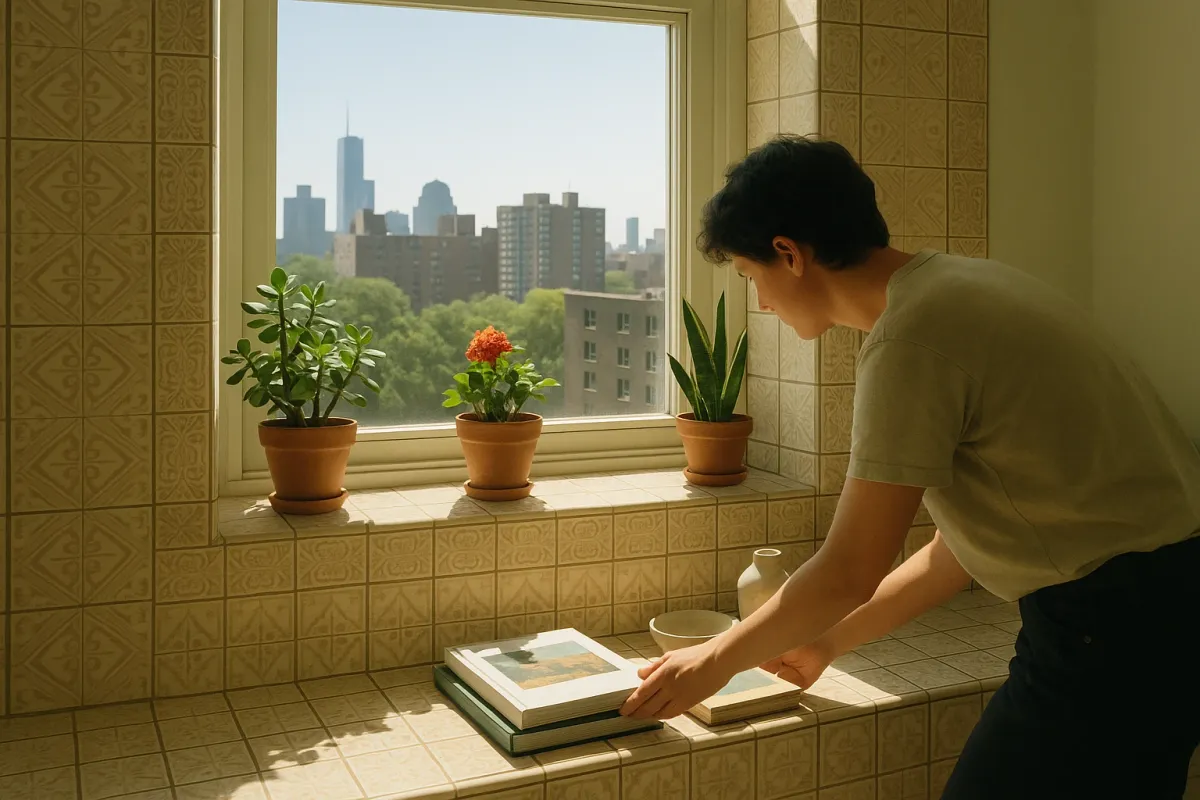
As homeowners and designers lean into this obsession with framed views, silhouettes, and natural light, an elegant opportunity appears for the tile connoisseur: treat the window wall as a curated, tiled vignette. Instead of reserving premium tile only for floors, showers, and backsplashes, the most sophisticated spaces now extend that luxury to the very edges of the glass, turning everyday views into gallery-worthy compositions.
Below are five exclusive, design-forward ways to translate this window-centric cultural moment into extraordinary tile work in your own home.
1. The “Picture Frame” Reveal: Tiling to the Window, Not Just the Wall
In a world where people are photographing windows almost as often as they photograph what’s outside them, the trim surrounding your glass deserves couture-level attention. A tile “picture frame” around a window instantly elevates even the simplest view, making the aperture itself feel like an art piece. Instead of stopping tile shy of the window casing, continue it inward, right up to the frame, or even replace traditional trim with meticulously mitered tile edges.
Select slim, elongated formats—such as 2" x 10" or 3" x 12"—and run them perpendicular to the window, so your eye naturally travels inward toward the light. A soft-contrast grout, just a shade darker than the tile, keeps the look crisp without appearing sterile. In kitchens, frame the sink window with a refined zellige or honed porcelain; in bathrooms, wrap the shower window in the same stone-look tile as the walls for a spa-like continuity. This technique photographs beautifully from every angle—precisely the sort of detail that stops social scrollers mid-swipe.
2. Sill as Stage: Tile-Clad Perches for Pets, Plants, and Sculpture
Those viral images of cats perched on windowsills speak to a universal impulse: we love small, elevated ledges that hold what we cherish—pets, plants, and treasured objects. A tile-clad sill transforms that casual ledge into a composed, intentional “stage.” It also stands up far better than painted wood to claws, water from watering cans, or condensation on cold mornings.
For a premium effect, extend the sill outward beyond the depth of the wall, using a large-format porcelain or a single piece of stone-threshold tile. Bullnosed or mitered edges maintain a tailored silhouette. Pair a subtly veined porcelain in a soft greige with matte black window frames for a modern European look; or, in sun rooms and garden-facing spaces, opt for a warm terracotta or handmade-look tile whose slight irregularities catch the light and add texture. The key is to treat the sill not as an afterthought, but as a micro-platform—designed for vases, sculpture, or yes, your resident feline—and to ensure the tile pattern and color reinforce that sense of quiet luxury.
3. Vertical Vistas: Floor-to-Ceiling Tile as a Backdrop for Light
Social media’s fixation on “that perfect window shot” has dramatically shifted how we think about vertical planes. Instead of isolating tile to localized splash zones, upscale projects are now creating full-height tiled window walls—especially around large picture windows, corner glazing, and sliding doors. This approach reframes sunshine and shadows as active participants in your design.
Choose a tile whose surface subtly responds to light: a satin or honed finish rather than high gloss, or a gently textured porcelain that reveals depth as the sun moves. Run planks or large rectangles vertically to echo the height of the glazing; this visually elongates the wall and accentuates the drama of the view beyond. If your outlook is lush and green, consider a quiet, stone-inspired palette that doesn’t compete; if your view is urban and graphic, a minimalist, tone-on-tone grid with razor-sharp grout joints can underscore the architecture. By wrapping the entire window wall in tile, you create an immersive “vista frame” that feels editorial—and will age with far more grace than painted drywall.
4. Shadow Play: Using Relief Tile to Echo Silhouettes in the Glass
Those whimsical images of animals and people silhouetted in windows are popular for a reason—they’re studies in contrast and shadow. You can harness that same visual drama inside by choosing relief or three-dimensional tile that interacts with natural light across the day. Think fluted, ribbed, or softly faceted tiles that create a subtle chiaroscuro effect as the sun slants through your glass.
Position these relief tiles on the piers between windows, or wrap them around a single focal window in a reading nook. When daylight rakes across the surface, the resulting pattern of shadow and highlight echoes the silhouettes framed in the glass, creating a quiet dialogue between interior and exterior. For sophisticated restraint, keep the color palette monochromatic: warm ivory, deep ink, or muted sage all work beautifully when the interest comes from form and shadow rather than bold pattern. Pair this with a sharply defined, color-matched grout to preserve the sculptural purity. The result is a space that feels almost cinematic at sunrise and sunset—perfectly aligned with today’s image-driven design culture.
5. The “Gallery Window” Concept: Curated Tile Niches Beside the View
As feeds fill with charming snapshots of life at the window, designers are responding by building micro-galleries into the walls that flank the glass. Tile-lined niches—slender, vertical recesses set to one or both sides of a window—create the ideal place to display a rotating cast of objects: a single branch in a minimalist vase, a small sculpture, or a stack of beautifully bound books.
Finish the back of these niches in a tile that either complements or deliberately contrasts the primary wall tile. For example, if your window wall is dressed in a restrained limestone-look porcelain, line the niche with a deeply glazed, jewel-toned ceramic to create a quiet moment of saturation. Use ultra-thin grout lines and aligned joints to maintain architectural precision, and consider integrating a minimal LED strip at the top of each niche for evening drama. The interplay between the daylight pouring through the window and the controlled glow of the niche transforms an ordinary wall into a layered composition—one that feels at once personal, polished, and remarkably photogenic.
Conclusion
The cultural fascination with windows—captured in endless streams of pets, people, and views framed in glass—has quietly rewritten the rules of refined interior design. For those who appreciate exceptional tile work, this shift opens up a world of sophisticated possibilities: framing the glass with meticulous detailing, elevating sills into stages, extending tile floor-to-ceiling, sculpting walls with light-responsive relief, and carving gallery-like niches beside the view.
When you begin to see each window not just as an opening, but as a curated scene surrounded by tile, your home transforms. The result is a series of lived-in vignettes—elegant, resilient, and irresistibly shareable—where craftsmanship and daylight meet in perfect, enduring balance.